

Truck mounted cranes combine transportation and lifting functions, offering flexible relocation and high efficiency construction, and are widely used in municipal, power, building materials, mining, landscaping, relocation, and leasing projects. However, many customers only consider tonnage when selecting a truck mounted crane, neglecting the matching of working radius and boom length. This leads to mismatches in working conditions, such as being able to lift at short distances but lacking the power for long distances, or insufficient height, seriously affecting construction progress and equipment safety.
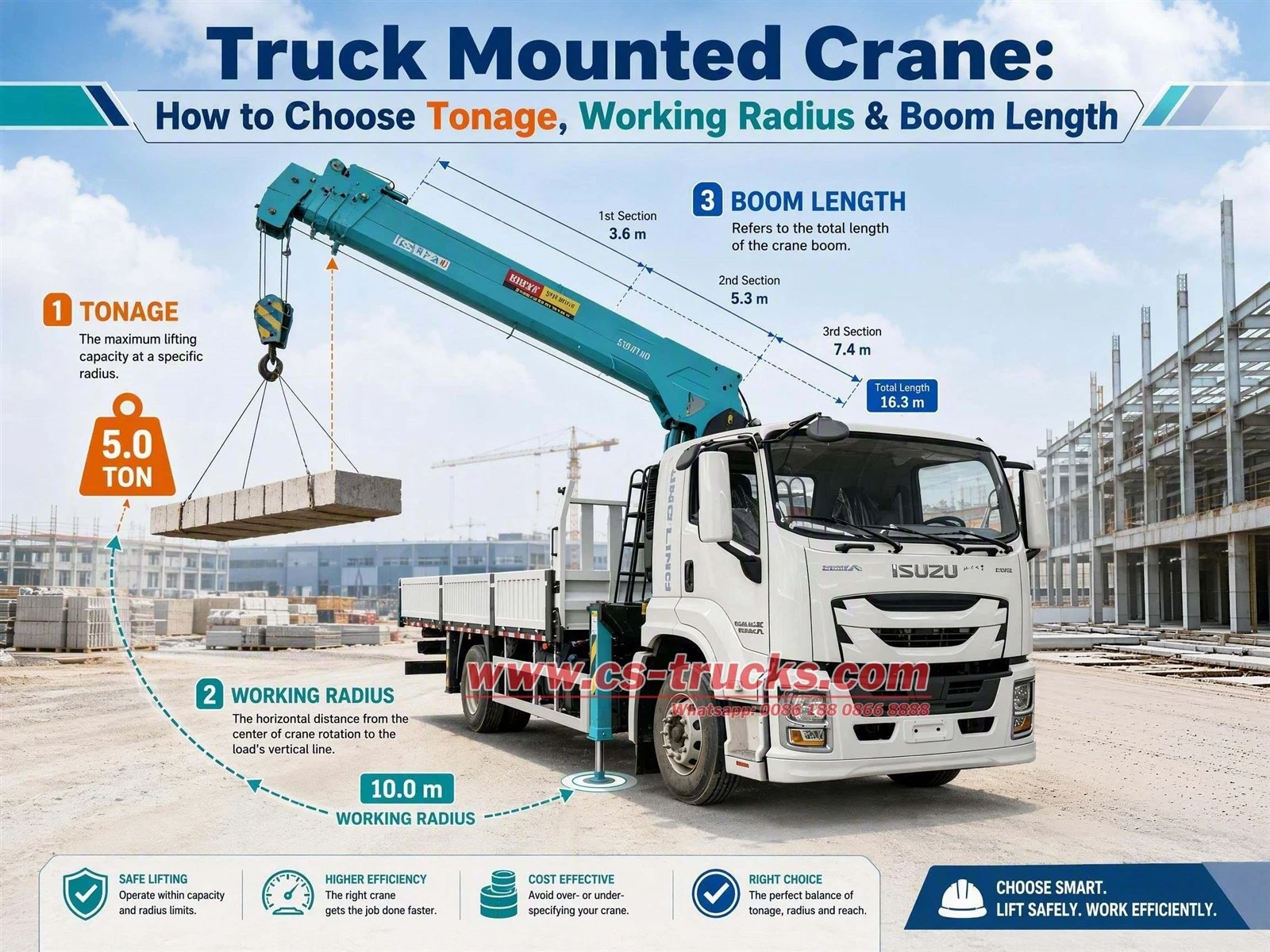
This article will systematically explain the selection logic, parameter relationships, scenario matching, and key points for avoiding pitfalls regarding truck mounted crane tonnage, working radius, and boom length from a practical foreign trade perspective, helping purchasers, general contractors, equipment dealers, and leasing companies to make accurate selections.
I.Basic Definition of Three Core Parameters
1. Rated Tonnage
The tonnage indicated on the nameplate of a truck mounted crane only represents the maximum lifting capacity at the minimum working radius (usually 2 m), not a constant lifting capacity throughout the entire operation. The actual lifting capacity decreases as the boom extends further and the working radius increases.
For example, a 12 tons truck mounted crane can lift 12 tons at a 2m radius, but at an 8m working radius, the actual lifting capacity may be less than 4 tons. This is a common selection misconception among customers worldwide.
2. Working Radius
The working radius, the horizontal distance from the crane's slewing center to the load, is the primary factor determining actual lifting capacity. A larger radius results in a greater overturning moment, lower overall crane stability, and a smaller safe lifting weight.
For all long distance lifting, road crossing lifting, exterior wall construction, and ditch work, the selection standard must be based on the load corresponding to the actual working radius, not the rated tonnage.
3. Boom Length
Crane booms come in two main structures: straight booms and folding booms. Common boom configurations include 3 sections, 4 sections, and 5 sections booms.
- Longer boom length: Higher operating height and larger coverage radius.
- More boom sections: Wider operating range, but weaker lifting performance at the far end.
Straight booms are suitable for outdoor, high altitude, and long distance heavy load construction; folding booms have a compact structure and are suitable for narrow construction sites, urban alleyways, indoor operations, and container operations.
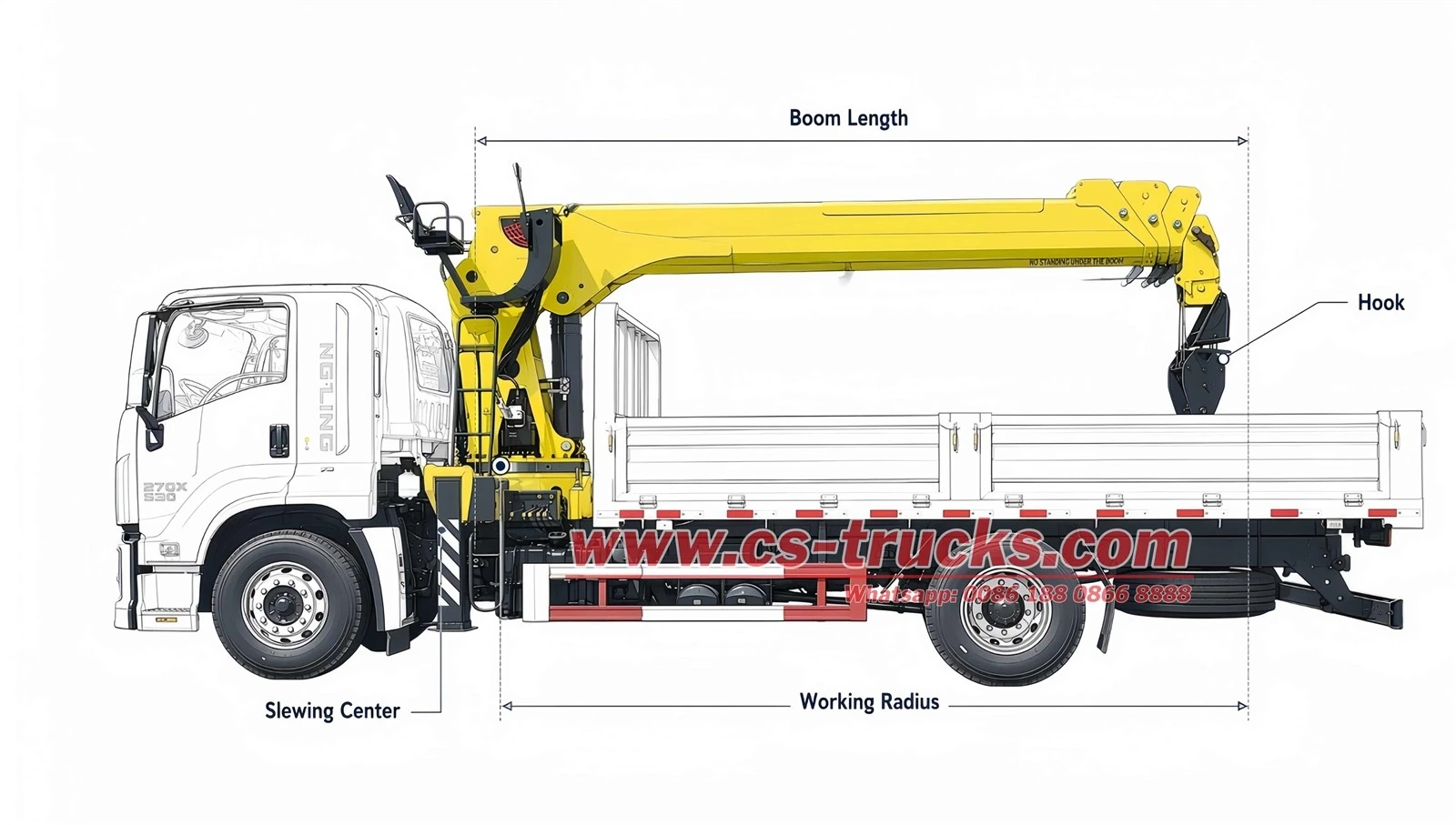
II.Core Principle: Lifting Moment, The Primary Selection Rule
All truck mounted crane selection follows a single golden formula: Lifting torque = Lifting weight × Working radius
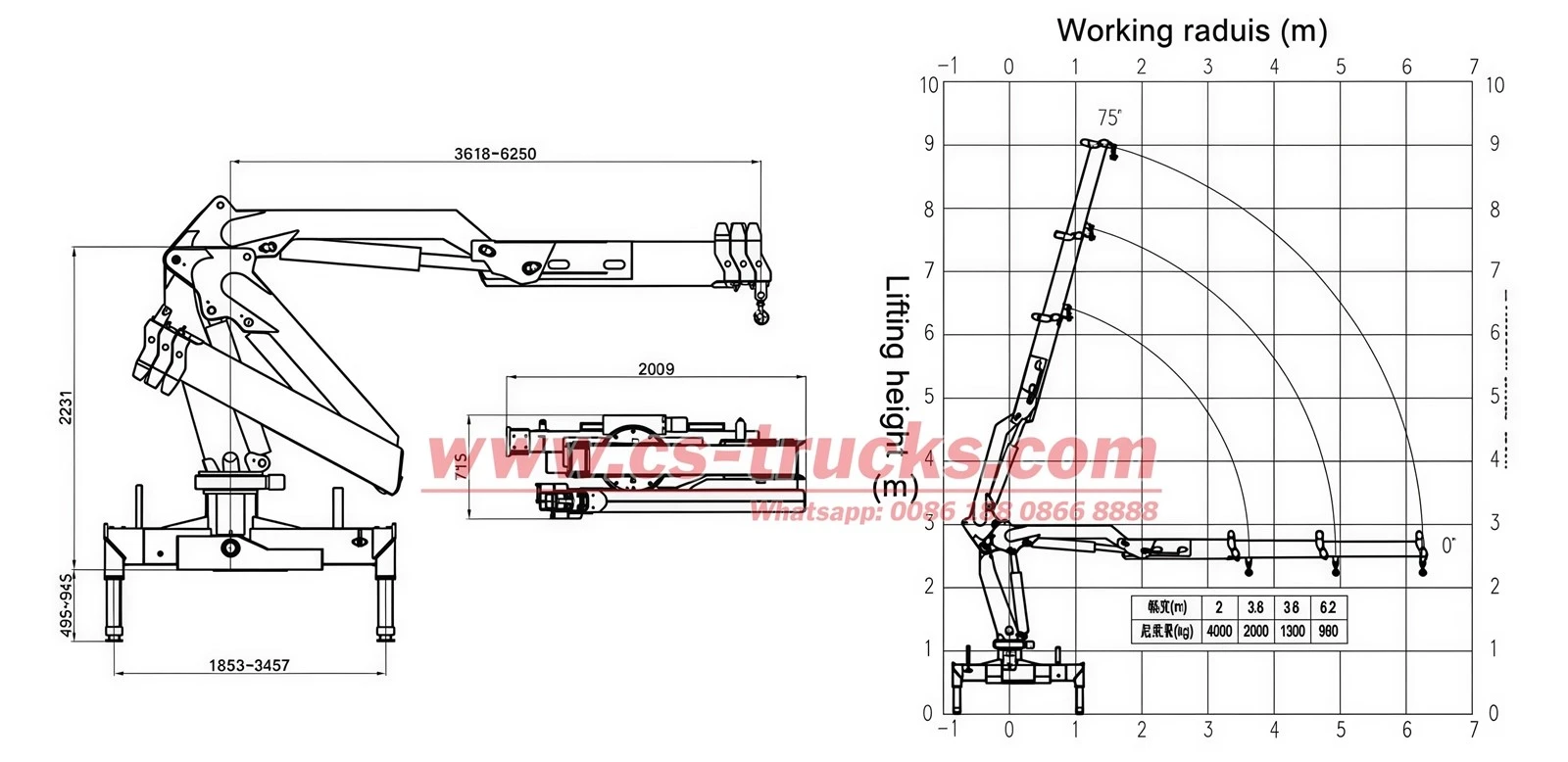
The torque of each crane is fixed at the factory, representing a hardware upper limit. A larger working radius inevitably means a smaller lifting capacity-this is the fundamental reason why "tonnage alone cannot suffice."
Therefore, tonnage is only a reference; the load chart is the basis for selection. Formal overseas project acceptance, site safety inspections, and engineering approvals all rely on the load chart.
III.Selection by Working Condition: Tonnage, Radius & Boom Length Matching
| Working Condition | Adapted Scenarios | Working Radius / Boom Type | Advantages And Positioning |
| Small Scale Conditions(5-8 tons) | Rural infrastructure construction, street light repair, small scale building material loading and unloading, short distance transportation | Radius 3–6m 3–4 sections straight boom |
High cost performance ratio, simple structure, inexpensive maintenance, and universal parts make it suitable for small and medium sized overseas leasing markets. |
| Medium Duty Working Conditions(10-16 tons) | Power pole hoisting, pipeline engineering, municipal maintenance, factory equipment relocation | Radius 6–12m 4–5 sections of extended boom |
It combines lifting capacity, height, and coverage, making it suitable for 90% of conventional engineering projects worldwide, with large shipment volume and high residual value. |
| Large Scale Working Conditions (20 Tons and Above) | Heavy equipment hoisting, steel structure installation, mining engineering, large scale infrastructure construction | Multisection extended straight boom / heavy duty folding boom (radius over 10m) | It has high requirements for chassis, outriggers, and foundation, and is suitable for general contracting of large projects and high standard municipal procurement. |
⭕Quick Scenario Assessment: For confined spaces and dense urban construction, choose a folding boom truck mounted crane; for high altitude, long distance, and heavy duty field operations, choose a straight boom truck mounted crane.
IV.Key Conditions to Verify During Selection
Besides tonnage, radius, and boom length, the following five conditions determine whether the equipment can truly operate at full capacity on site:
Outrigger Extension Space
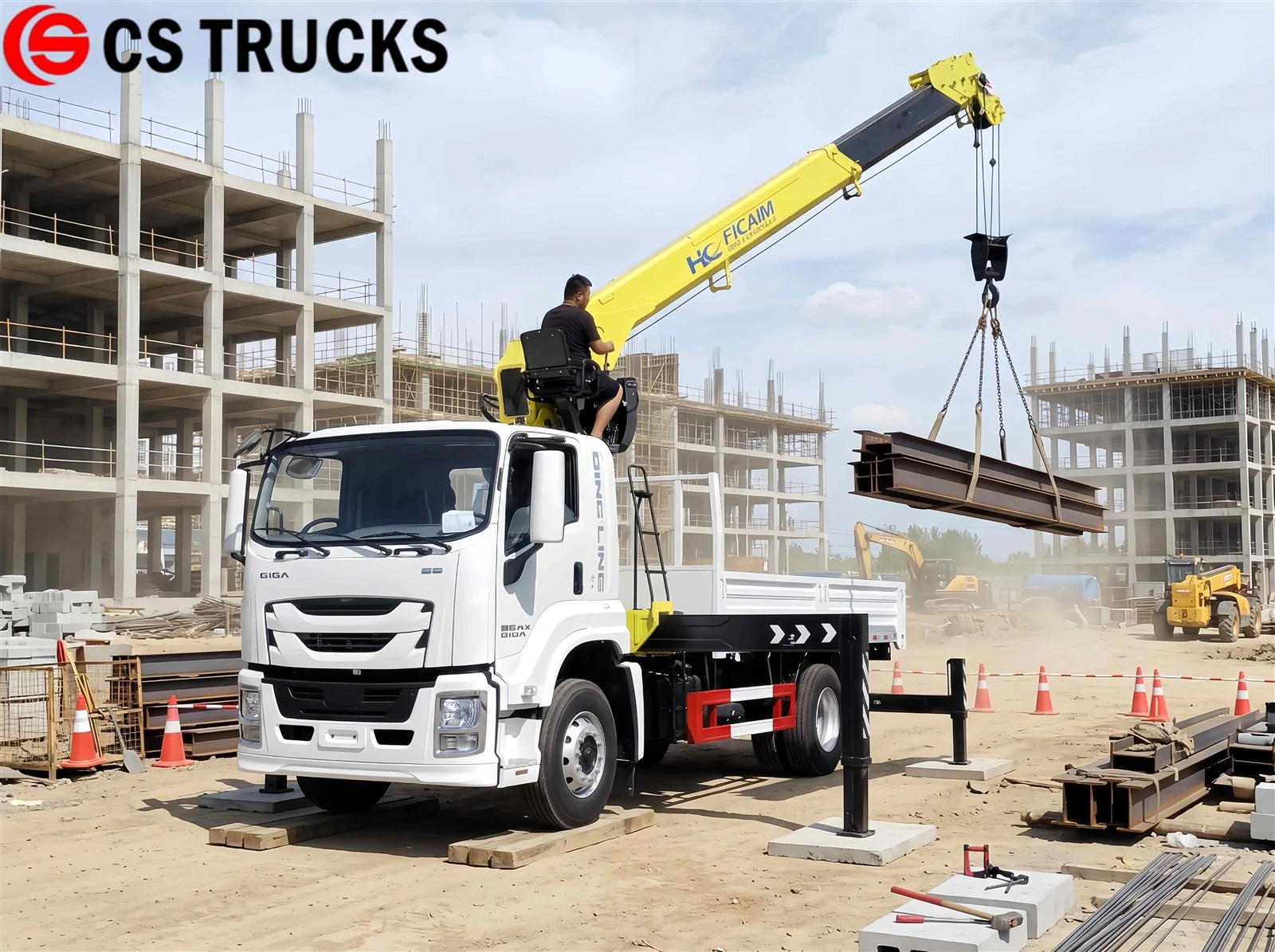
The outrigger span determines the overall stability of the crane. When space is limited and the outriggers cannot be fully extended, the actual load capacity of the crane must be reduced; in soft soil foundations, additional padding is required.
Chassis Load Capacity
Large tonnage cranes must be matched with compliant chassis to avoid frame deformation, overloading violations, and to circumvent risks associated with annual road inspections and enforcement overseas.
Actual lifting height
In addition to the horizontal radius, the height occupied by the lifting equipment and wire rope must be reserved to prevent insufficient height on site from making it impossible to work.
Local Regulations and Certifications
Different countries have specific standards for vehicle size, load capacity, safety devices, and exhaust emissions. Matching these standards in advance can avoid customs clearance failures and acceptance obstacles.
Safety Margin Reserve
It is recommended to reserve a 15%–25% safety margin when selecting equipment for engineering projects to cope with uncertain working conditions such as wind force, ground tilt, and hoisting sway.
V.Common Misconception For Buyers
Misconception 1
Nameplate tonnage = Total lifting capacity. Focusing solely on tonnage while ignoring the load curve corresponding to the working radius will result in overloading during long distance lifting operations.
Misconception 2
The longer the boom, the better. However, extending the boom will sacrifice the lifting capacity at a distance. Blindly choosing a long boom is not only unnecessary for most working conditions, but also increases procurement costs.
Misconception 3
Ignoring the limited space for outrigger deployment. Many urban construction sites have limited space, preventing the outriggers from fully extending and necessitating a reduction in the rated lifting capacity.
Misconception 4
Load charts are not required. Safety officers and supervisors at overseas construction sites must review load charts; the absence of such data will result in the immediate prohibition of hoisting operations.
VI.Frequently Asked Questions
Q1: How to choose between a straight boom truck mounted crane and a folding boom truck mounted crane?
A: Choose a straight boom crane for open construction sites and long-distance high altitude operations; choose a folding boom crane for narrow spaces, indoors, and urban alleyways.
Q2: Why is there such a large price difference for cranes of the same tonnage?
A: The differences come from boom length, number of boom sections, hydraulic system, torque parameters, and brand craftsmanship. The load curve, not the tonnage number, truly determines performance.
Q3: What is the most important parameter for selection?
A: Lifting capacity at the actual working radius, followed by working height and overall vehicle compliance.
Q4: What technical documents are required for overseas projects?
A: Product certificate, load curve diagram, parameter table, chassis information, and export compliance documents.
VII.Conclusion
The selection of a truck mounted crane is not about "the bigger the better" or "the longer the better," but rather a scientific matching of tonnage, working radius, and boom length.
Precise parameter matching can avoid wasting procurement budget, ensure construction safety, improve equipment utilization, and meet overseas project acceptance standards.


