

Garbage Truck
A garbage truck is a specialized vehicle designed to collect and transport waste materials from residential and commercial areas to waste disposal facilities. These trucks come in various sizes and configurations, including front-loaders, rear-loaders, and side-loaders. They use hydraulics to lift and dump trash containers into the truck's compactor or hopper, which compresses the waste to maximize space. Garbage trucks play an essential role in maintaining public health and preventing environmental pollution by removing waste from communities.
Advantages of Garbage Truck
Large Capacity
Garbage trucks are designed to carry a large amount of waste, making them suitable for cleaning up after large-scale events, construction sites, or commercial waste.
Efficient collection
The garbage truck has an efficient collection system that can quickly pick up garbage and load it into the truck, saving time and labor.
Environmentally friendly
Many modern garbage trucks use compressed natural gas (CNG) or other eco-friendly fuels to reduce emissions and protect the environment.
Improves sanitation
Regular garbage collection helps to discourage littering and dumping of trash in unauthorized areas. This contributes to the overall health and well-being of the community by reducing the risk of disease transmission.
Saves time and labor
The use of garbage trucks eliminates the need for manual collection and transportation of waste, which can be time-consuming and labor-intensive. This allows for more efficient and cost-effective waste management practices.
-
 HOWO NX Model Garbage Truck CompactorHOWO 20 CBM 6x4 Garbage Compression Truck. Engineered for dependable waste management operations, the HOWO NX garbage compactor integrates essential elements including a reinforced SINOTRUKAdd to Inquiry
 -
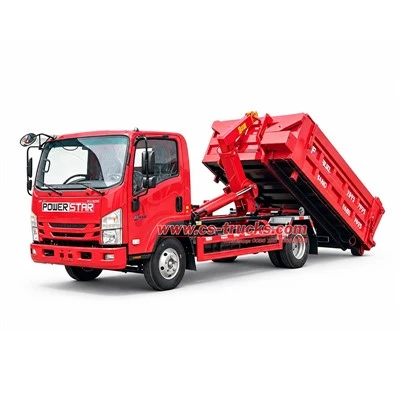 ISUZU 5 Ton Arm Roll Hook Lift TruckISUZU 5 Ton Hook Loader Dumpster Garbage Truck. The ISUZU 5-ton hook lift truck pairs a 131 HP 4KB1-TCG60 engine with a 6-speed manual transmission on an ISUZU 4×2 chassis, built around a 5-ton Q235BAdd to Inquiry
 -
 Zimbabwe Factory Price HOWO Trash CompactorHOWO 6CBM Rear Loader Garbage Truck for Sale. This HOWO 4×2 waste management rear loader is based on a 4×2 drive system and a 126horsepower D20TCIF15 engine, with a 6CBM capacity, which offersAdd to Inquiry
 -
 PTO Driven Septic Service Trucks HOWOHOWO 12 CBM Sewage Disposal Truck. The HOWO 12 CBM vacuum sewage truck combines an SK-15 vacuum pump with a PTO-driven hydraulic system on a HOWO 4×2 chassis, built around a 12000L carbon steel tank.Add to Inquiry
 -
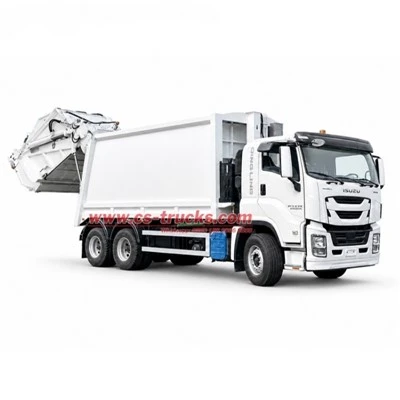 ISUZU 30 CBM Rear Loading Compactor VehicleISUZU GIGA Model 30 CBM Rear Loader Garbage Truck. The ISUZU 30 CBM rear loading compactor pairs a 380 HP 6UZ1-TCG61 engine with a FAST 12-speed transmission on a rugged 6×4 chassis, built around aAdd to Inquiry
 -
 30tons Roll Off Dumpster Garbage Truck HOWOHOWO 8×4 Drive Hooklift Dumpster for SaleThe HOWO 350HP hooklift garbage truck is equipped with an MC07H.35P-61 350HP engine, a rated load of 30 tons, providing ample power and outstanding heavy dutyAdd to Inquiry
 -
 16CBM Bin Lifters Garbage Trucks FAWFAW JK6 4×2 Waste Management Rear Loader. This FAW JK6 4×2 trash truck rear loader features a large 16CBM garbage container and a powerful 260HP engine, offering advantages in both loading andAdd to Inquiry
 -
 10Ton Hook Arm System Truck From ISUZUISUZU 10Ton Hook Truck DumpsterThis ISUZU 190HP hook lift dump truck is equipped with a 190HP 4HK1-TCG61 engine, matched with a 4x2 drive configuration, featuring a robust chassis and powerfulAdd to Inquiry
 -
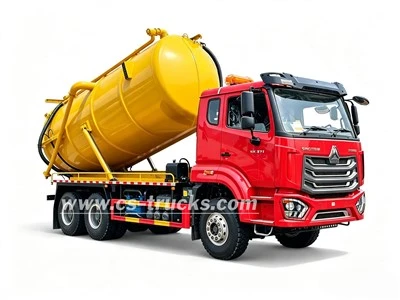 5000 Gallons Industrial Super Sucker Vacuum Truck HOWOHOWO 6×4 Drive Truck Vacuum Cleaner. This HOWO 5000 Gallons septic tank vacuum truck is equipped with a WD615.47 engine, producing 371 horsepower, and features a 6×4 drive configuration, offeringAdd to Inquiry
 -
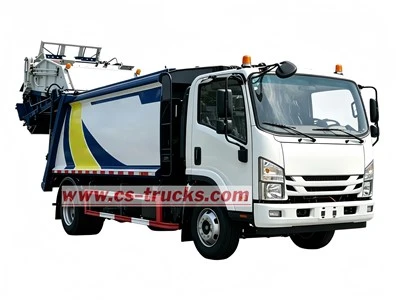 Philippines 10CBM Rear End Loader Compactor Truck ISUZUPhilippines ISUZU 10CBM Rear Load Trash TruckThis Philippines ISUZU 4×2 loadmaster rear loader is equipped with a 190HP 4HK1-TCG61 engine and 4×2 drive, which combines strong power and fuel economy.Add to Inquiry
 -
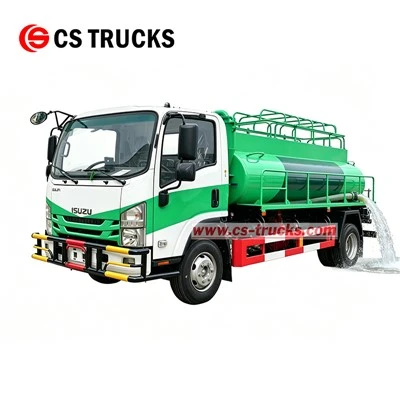 ISUZU MEC6500 Septic Tank Pumper TrucksISUZU MEC6500 10 CBM Vacuum Septic Sewage Truck. The ISUZU MEC6500 septic tank pumper pairs a Battioni Pagani MEC 6500 vacuum pump with a PTO-driven system on an ISUZU 4×2 chassis, all built around aAdd to Inquiry
 -
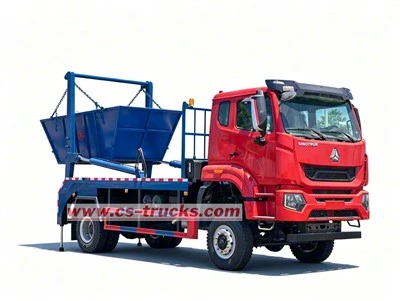 Tahiti HOWO 4X4 8Ton Skip Loaders FactoryHOWO 8CBM Arm Swing Refuse Truck. The HOWO 4x4 tipper garbage truck is equipped with a 220 horsepower Yuchai engine, offering powerful performance and excellent off road capabilities, making it idealAdd to Inquiry


- Tel: +86188 0866 8888
- Email: info@cs-trucks.com
- Add: No.9, Jiliang avenue,Economic zone, Suizhou city, Hubei province, China.
Why Choose Us
Factory
In line with the tenet of "quality first, credibility first, service first", we always develop with the goal of "creating the best supplier".
Professional team
The members of the team are highly skilled and proficient in their respective roles and possess the necessary education, training, and experience to excel in their jobs.
Advanced equipment
A machine, tool or instrument designed with advanced technology and functionality to perform highly specific tasks with greater precision, efficiency and reliability.
Global shipping
Our products support global shipping and the logistics system is complete, so our customers are all over the world.

Types of Garbage Truck
Front loading garbage truck
Front-loading garbage trucks use a pair of hydraulic arms to lift a commercial dumpster to the front of the vehicle and place its contents into the rear dumpster. They are a great option for any type of dumpster-based waste hauling route.
Side loading garbage truck
Side loading trucks are most commonly used in residential areas. use electronically controlled hydraulic arms to accomplish the same task with greater efficiency and safety.
Rear loading garbage truck
Rear loaders are also used to collect residential waste, but are occasionally used to transport commercial waste. They do require manual dumping of trash into onboard bins.
Roll-off garbage truck
Roll-off trucks are used to transport dumpsters to local landfills, empty their contents, and then return them to designated waste collection points. They are used for commercial and rural/small town waste management.
Grapple truck
These trucks are equipped with a large claw-like attachment to pick up bulky waste such as tree branches, logs, and other large debris.
How Does a Garbage Truck Work?
Workers put the trash in the truck which is compacted by means of hydraulic cylinders and moveable steel plates referred to as blades by most workers repeat this over and over again until the truck can no longer compact the trash and it is now full then it goes to a landfill or transfer station where it is unloaded and compacted by heavy machinery called compactors which have large teeth sticking out of the rollers and breaks it down even more after a while it is covered with dirt and repeated over and over again

How garbage trucks dispose of garbage
Step 1
Drive or back the garbage truck squarely in front of the trash collection bin. If using a side loader, bring the truck parallel with the garbage bin on the side with the loader. Leave about 12 inches between the truck and the bin.
Step 2
Activate the loader so it can grab the trash bin. Look at the dashboard in front of you to accomplish this. This will vary according to the make and model, but in general search for a lever that allows you to lower and extend the arms of the loader.
Step 3
Raise the hopper up and over the truck in a slow, smooth motion and dump the bin into the compactor. Do not jerk the lever up and down or back and forth. Doing so could cause the loader to drop the bin.
Step 4
Maneuver the lever to lower the bin back to the ground. Make sure you operate the lever smoothly so you don't drop or slam the bin on the ground.
Benefits of driving a garbage truck
Work stability
The waste management industry is critical and relatively recession-proof. Regardless of the economy, people will continue to generate garbage, which means there will always be a need for garbage truck drivers.
Competitive salary
Garbage truck drivers can earn competitive salaries, especially those with experience and certifications. Many waste management companies offer good hourly wages, benefits, and overtime pay opportunities.
Benefits and job security
Full-time garbage truck drivers typically receive benefits such as health insurance, retirement plans, and paid time off. Job security is also a significant benefit due to the stability of the industry.
Predictable schedule
Garbage collection typically follows a fixed schedule, giving drivers a predictable work routine. This is advantageous for those who prefer a stable routine.
Local routes
Many garbage truck routes are local, allowing drivers to get home each night. This may be attractive to individuals who value family time and work-life balance.
Minimum academic requirements
While a commercial driver's license (CDL) is required, education and training for garbage truck driving is typically less time-consuming and less costly than other jobs that require a commercial driver's license (CDL), such as long-distance trucking.
Environmental impact
Waste management efforts contribute to environmental sustainability. Garbage truck drivers play a vital role in recycling and proper disposal, helping to reduce the impact of waste on the environment.
Community connections
Garbage truck drivers often become familiar faces in the community, interacting with residents on a regular basis. This can lead to a sense of belonging and community involvement.
Physical activity
This job involves physical activity including lifting and manipulating waste containers. For those who like to stay active, this can be a positive aspect of the job.
Job satisfaction
Some people take satisfaction from knowing they contribute to public health and safety by eliminating waste and maintaining clean communities.
Application of Garbage Truck
Environmental management
Garbage trucks play a crucial role in keeping the environment clean and free from pollution. They ensure proper disposal of waste materials, which can lead to a cleaner environment and prevent soil and water pollution.
Sanitation services
In addition to collecting and transporting garbage, many garbage trucks are equipped with brushes and blowers that allow them to sweep streets and remove debris from public areas like parks and plazas.
Recycling
This helps minimize the amount of waste that ends up in landfill and can be reused to make new products. Recycling also conserves natural resources and reduces the energy required to produce new products from raw materials.
Landfills
The process of landfilling starts when garbage trucks transport waste materials to the landfill facilities. The garbage is then dumped into designated areas, where it is systematically compacted and covered with soil or other materials, known as daily cover. This helps to contain and limit the amount of pollutants and odors released into the air.
Disaster response
In the event of a natural disaster, garbage trucks can be used for debris removal, helping to clear roads and streets of fallen trees, rocks, and other debris.
Waste collection
Garbage trucks are primarily used for collecting household waste, commercial waste, and industrial waste. They can collect a variety of waste materials such as paper, plastics, organic waste, and hazardous waste.

1. Collection
These trucks are equipped with special mechanisms that can lift and empty large containers of waste into their storage compartment. They may also have compactors that compress the waste to make more room for additional collections.
2. Compaction
Compaction also helps to control odors and prevent littering during transportation. It also reduces the volume of waste that needs to be disposed of in landfills or incinerators, reducing the environmental impact of waste management.
3. Transportation
The transportation of waste is a critical stage in the waste management process as it involves moving large quantities of waste across various locations. It is essential to ensure that the waste is transported in a manner that is safe for the environment, the workers, and the public.
4. Unloading
If the facility has an automated system, the garbage truck dumps its contents into a large pit or hopper. The waste is then transported via conveyor belts to separation and recycling stations.
5. Disposal
Finally, the waste is disposed of at the chosen location. This could include burying the waste in a landfill, burning it in an incineration plant, or processing it for recycling and re-use.
Components of Garbage Truck
Compactor
The compactor is typically located at the rear of the truck and uses a hydraulic mechanism to push and compact the garbage into a smaller volume. This allows for more garbage to be collected and transported in a single trip, increasing efficiency and reducing the number of trips required to dispose of the waste.
Storage tanks
These tanks are usually located behind the cab of the truck and are used to collect liquids such as oils, greases, and other liquids that may be found in garbage. The tanks are made of durable materials such as high-density polyethylene or stainless steel to prevent leaks and corrosion.
Hopper
It is usually covered with a lid or flap to keep the garbage contained while in transit. The hopper is designed to make it easy for the garbage truck to collect and transport large volumes of waste material efficiently. Once the hopper is full, the driver takes the load to a disposal site where the garbage is unloaded and processed.
Hydraulic system
The system consists of a hydraulic pump, cylinders, and hoses that transmit pressurized fluid to move the compacting mechanism. As the hydraulic fluid is pumped into the cylinder, it pushes a piston, which in turn pushes the compacting plate.
Lift mechanism
It is typically mounted on a garbage truck and uses hydraulics to raise and lower the arm that holds the container. The lift mechanism helps to minimize the physical strain and injury that can occur from manually lifting heavy garbage containers, while also improving efficiency and speed of waste collection.
Control panel
This contains various controls and displays that allow the driver to operate the truck.
1. Carbon fiber
Carbon fiber is a composite material made from carbon fibers and a binding resin. The fibers are typically woven together to create a rigid structure that is incredibly strong and lightweight. This combination of strength and low weight makes carbon fiber an ideal material for reducing the weight of vehicles while maintaining their durability and performance.
2. Aluminum
Aluminum is a popular choice for garbage truck manufacturers because it is a lightweight and durable metal that can withstand harsh environmental conditions. By using aluminum, manufacturers can reduce the weight of the truck, which in turn increases fuel efficiency and reduces operating costs.
3. Plastic
Some garbage trucks use plastic components, such as the front grille and fenders, to reduce weight and increase fuel efficiency.
4. Steel
It can withstand the wear and tear of daily use and can handle heavy loads of trash without denting or bending. Steel also has a high resistance to corrosion, making it suitable for use in different weather conditions.
5. Fiberglass
It is made of glass fibers that are reinforced with plastic resin. Garbage trucks with fiberglass parts are resistant to dents, scratches, and corrosion, which makes them easier to maintain and increases their lifespan.

How to maintain Garbage Truck
Regular cleaning
Cleaning your trash truck regularly will help prevent corrosion and rust. Use a pressure washer to clean the exterior and interior of the vehicle.
Inspect the tires
Check the tire pressure and tread depth regularly. Replace any worn-out tires immediately to avoid accidents.
Check the fluids
Check the oil, transmission fluid, brake fluid, and coolant regularly. Replace any fluids that are low or contaminated.
Inspect the hydraulics
Inspect the hydraulic system regularly to ensure that it is functioning correctly. Replace any damaged or worn-out parts immediately.
Maintain the brakes
The brakes are a critical component of your trash truck. Regularly check the brake pads, drums, and rotors. Replace any worn-out parts immediately to avoid accidents.
Check the electrical system
The electrical system of your trash truck is essential for the vehicle's operation. Regularly check the batteries, alternator, and starter. Replace any damaged or worn-out parts immediately.
What materials can be collected by a garbage truck?
A garbage truck is a type of vehicle specifically designed to collect and transport waste materials from residential, commercial and industrial areas. It can collect a variety of materials including domestic garbage, recyclables, hazardous waste and yard waste. Domestic garbage refers to household-generated waste such as food scraps, paper products, plastic containers, and other non-recyclable materials. Recyclables include items such as cardboard, newspapers, glass, metal cans and plastic bottles. Hazardous waste consists of items that are considered harmful to human health and the environment such as chemicals, batteries and electronic waste. Yard waste includes items such as tree branches, grass clippings, and leaves. In summary, a garbage truck can collect a variety of waste materials that can be reused, recycled or disposed of appropriately.
Our Factory
Chusheng Vehicle Group CO., LTD (also shorted as CS Trucks Group Limited) was founded in 2002, is premium national special purpose vehicle manufacturing enterprise with independent research and development capabilities under the CRRC City Transportation Co., Ltd.

certificate


As one of the most professional garbage truck manufacturers and suppliers in China, we're featured by quality products and competitive price. Please rest assured to buy garbage truck for sale here from our factory. Contact us for customized service.
