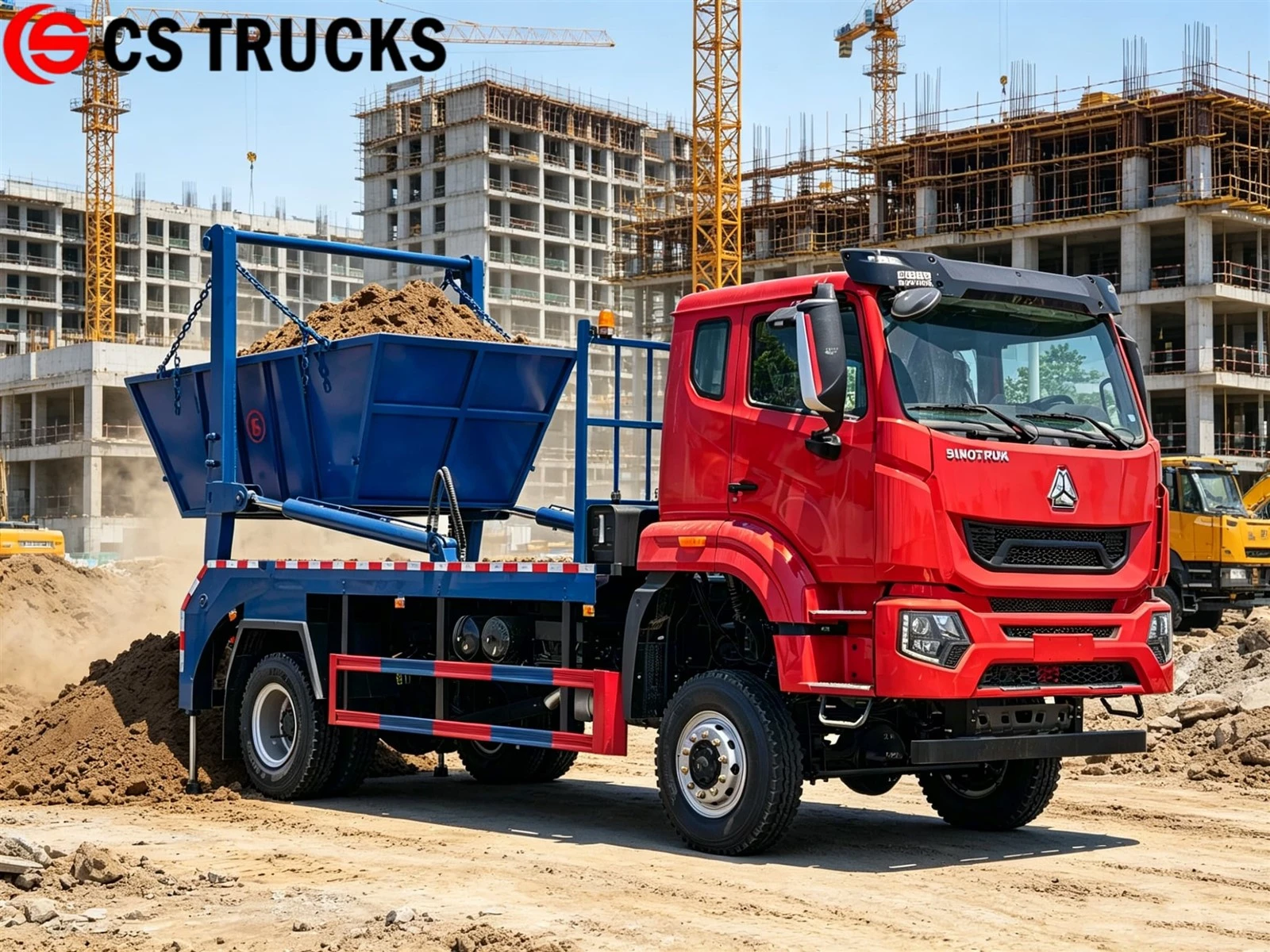
Swing arm garbage trucks utilize a hydraulic swing arm system to lift, load, transport, and unload garbage containers, offering advantages such as ease of operation, high efficiency, and detachable containers. Their separate truck body and garbage container design allows one truck to carry multiple containers: empty containers are placed at designated locations, and full containers are collected and transported, improving vehicle utilization.
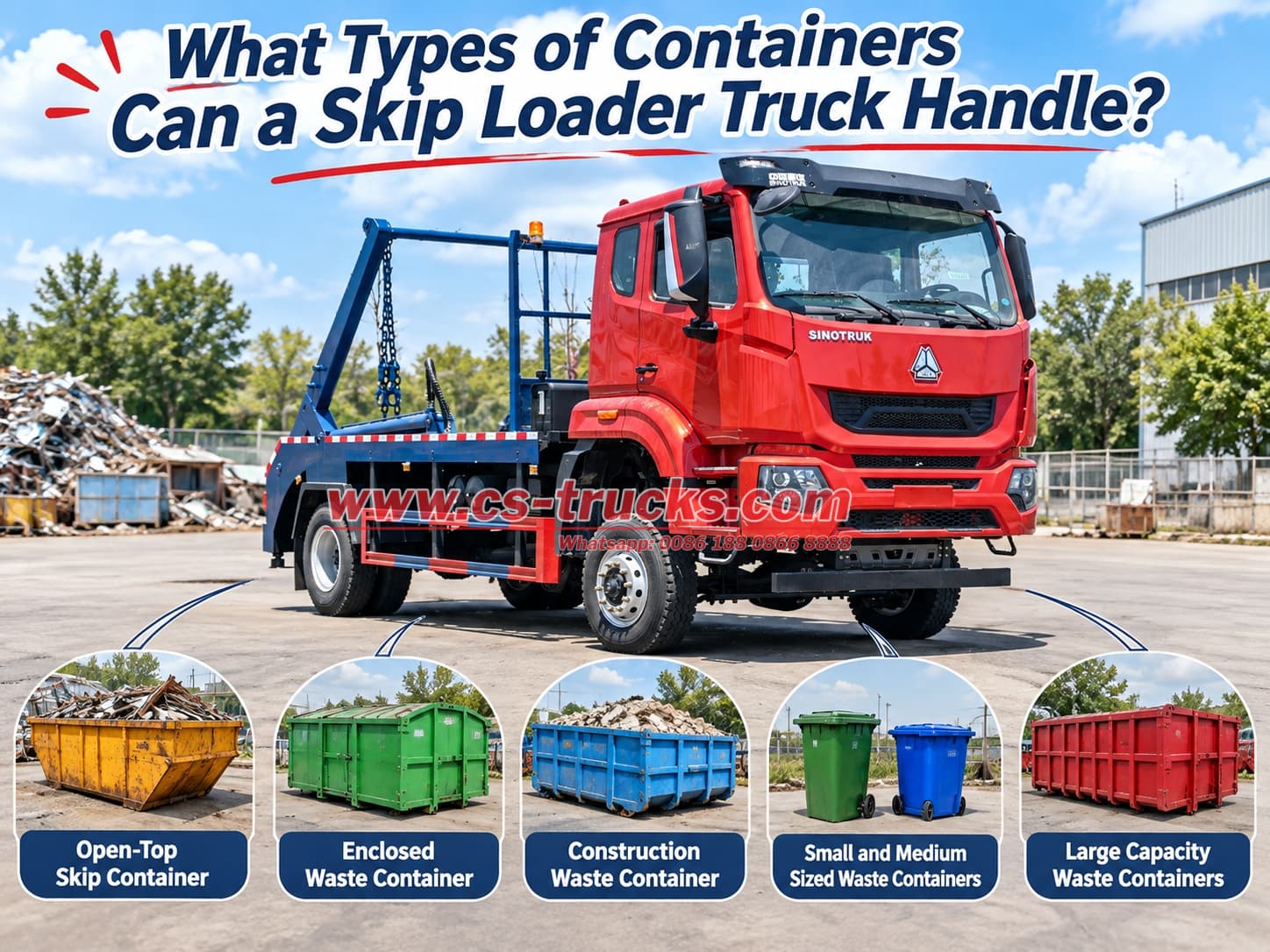
So, what types of garbage containers can swing arm garbage trucks be equipped with? And what scenarios are suitable for different types of garbage containers? This article will provide a detailed introduction.
Common Types of Containers for Skip Loader Trucks
Depending on the structure, capacity, and usage requirements, swing arm garbage trucks can be equipped with various types of garbage containers. Common types include open garbage containers, closed garbage containers, construction waste containers, and small, medium, and large garbage containers of different sizes.
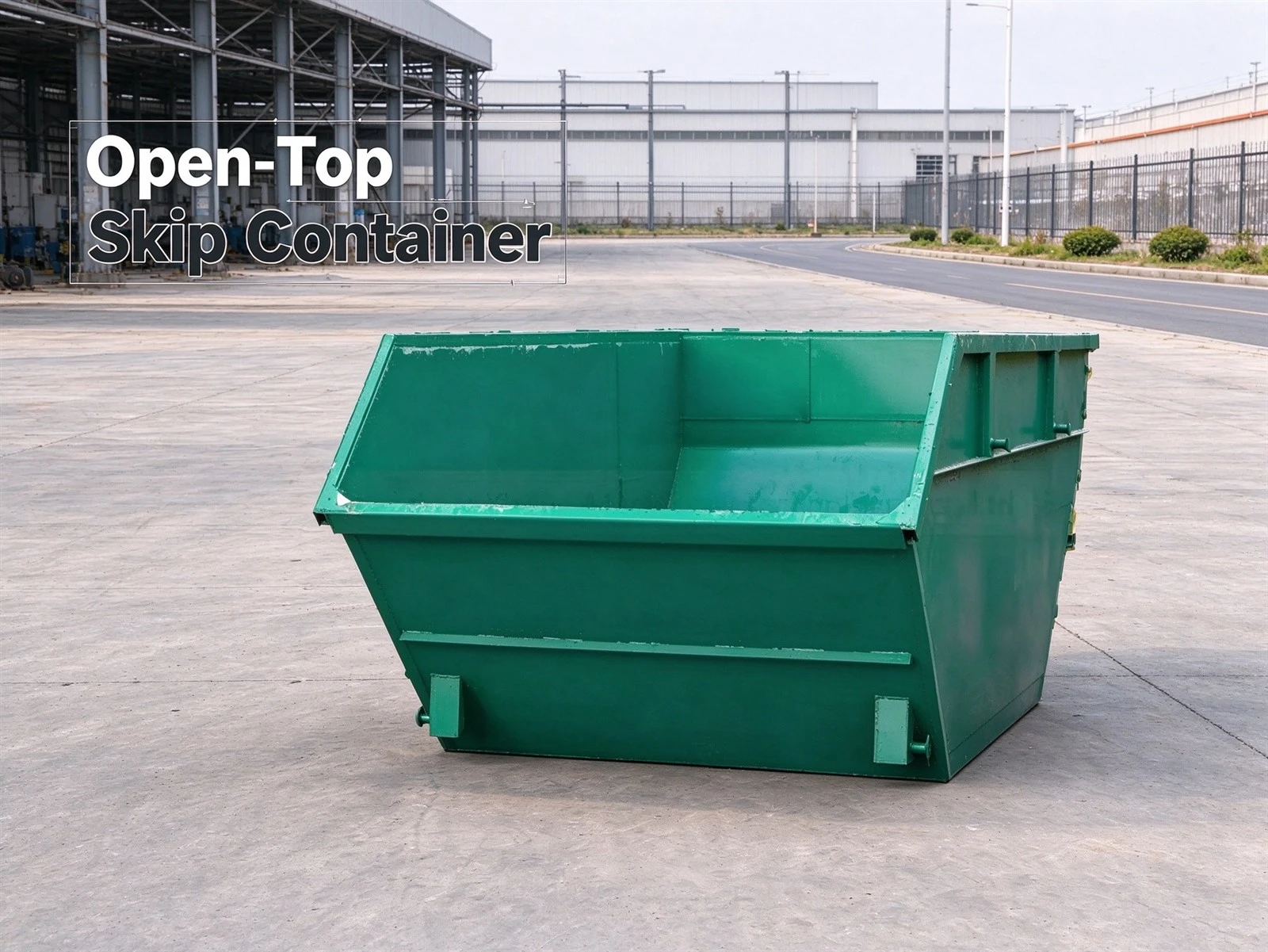
1. Open-Top Skip Container
Open-Top Skip Containers are a common type of container for swing arm garbage trucks. They feature an open top design without a fixed top cover, making it easy to load garbage directly into the bin manually, using a loader, or other equipment.
Key Features:
- Open top for easy waste loading.
- Relatively simple container structure, easy to manufacture and maintain.
- Flexible capacity options to suit operational needs.
- Suitable for loading various types of solid waste.
Main Application Scenarios:
- Construction site waste collection.
- Municipal road waste cleaning.
- Centralized collection of residential waste.
- Commercial area waste transportation.
Applicable Garbage: Bricks, concrete fragments, wood, packaging waste, and general solid waste.
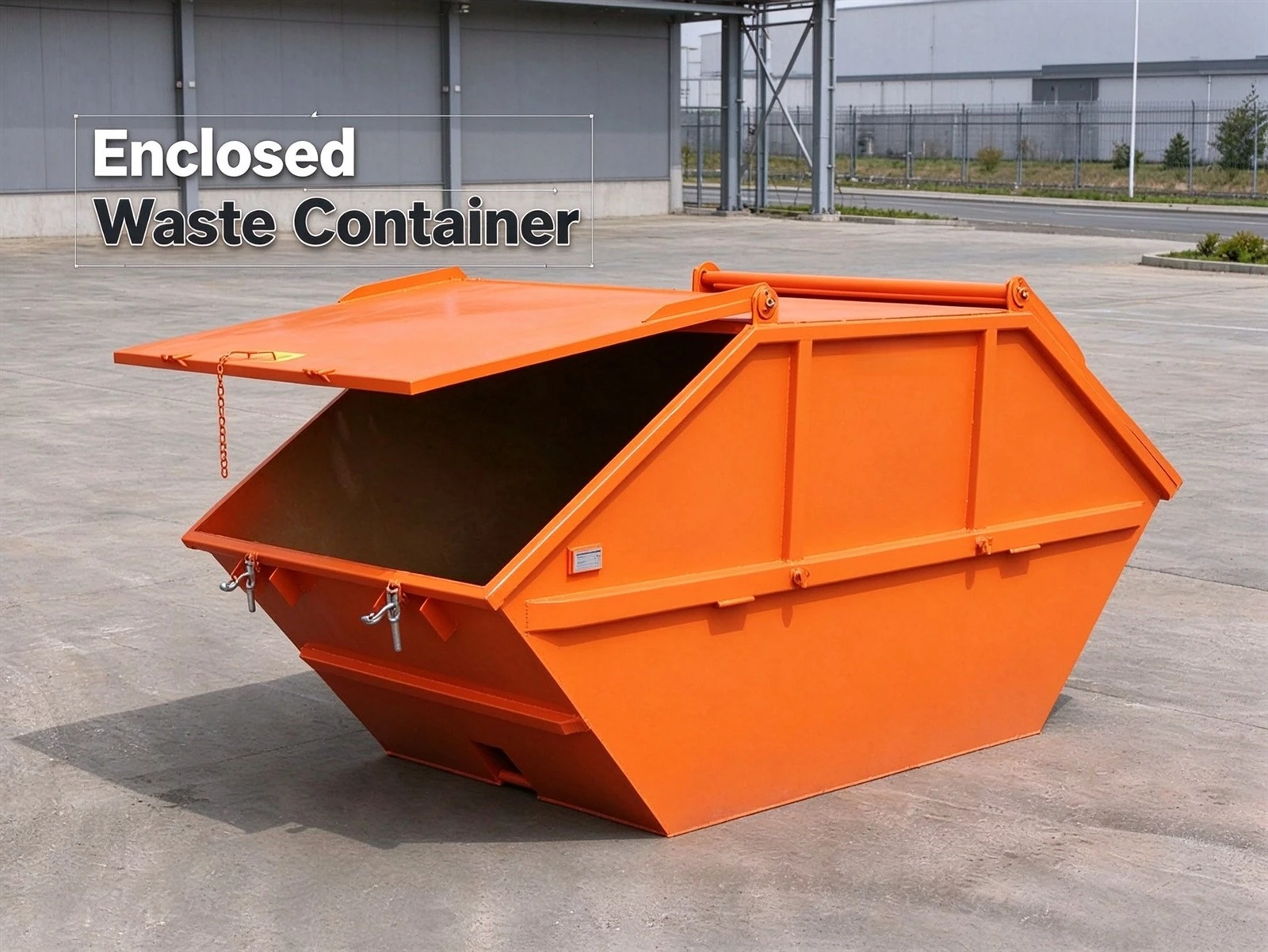
2. Enclosed Waste Container
Enclosed trash cans feature a top covering structure, which can reduce trash overflow and minimize the impact of external environmental factors such as rain and wind on the trash.
Key Features:
- Features a top covering structure to reduce waste exposure.
- Helps prevent rainwater from entering the container.
- Reduces the risk of lightweight waste being blown away by the wind during transportation.
- Contributes to improved sanitation in waste collection areas.
Main Application Scenarios:
- Urban residential communities.
- Commercial districts and shopping malls.
- Factory and industrial parks.
- Waste collection points with high sanitation requirements.
Applicable Garbage: Household waste, commercial waste, packaging waste, and some industrial solid waste.
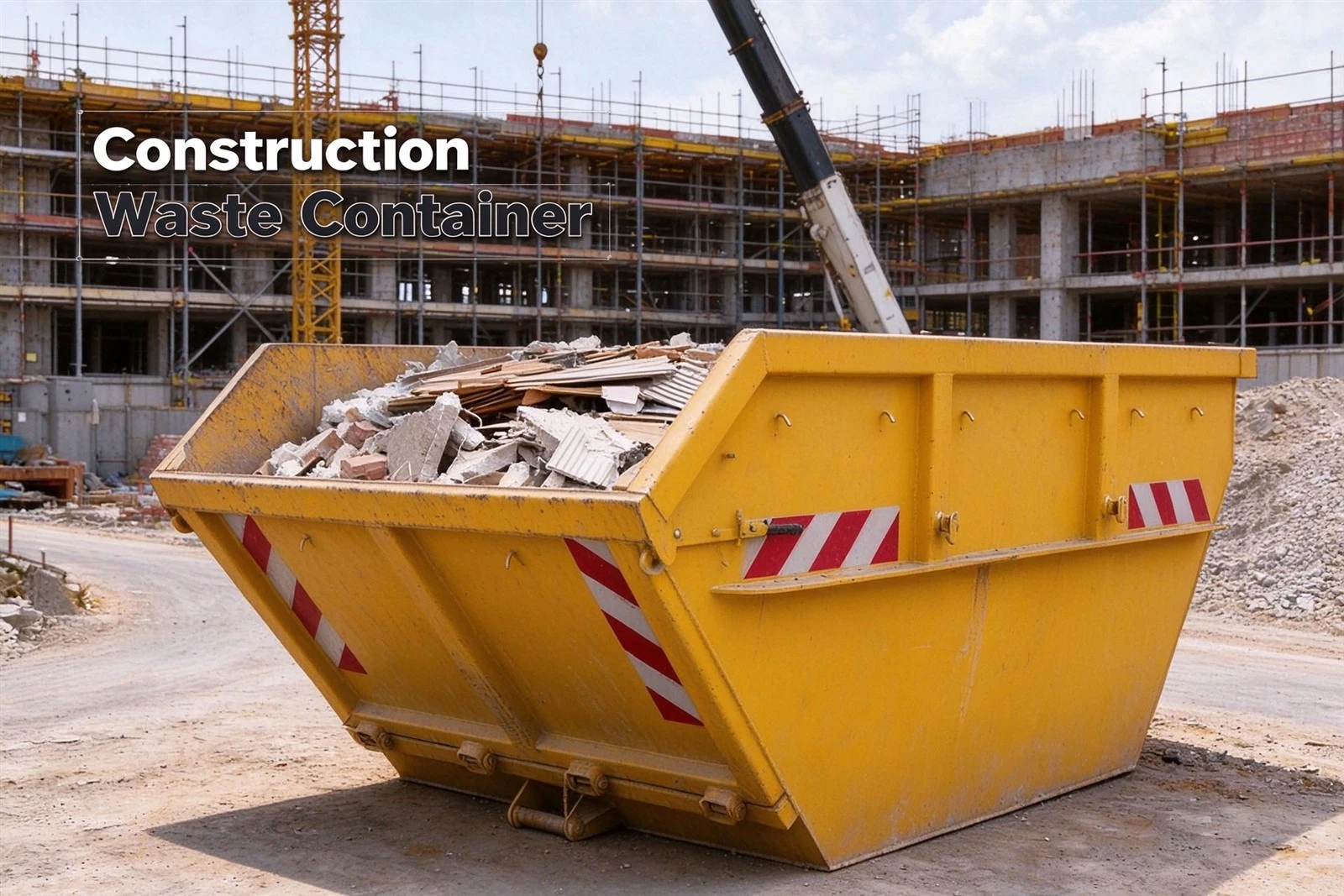
3. Construction Waste Container
Construction waste bins typically use thicker steel plates and reinforced structural designs to meet the needs of collecting and transporting construction waste and heavier materials.
Key Features:
- Constructed with a robust steel plate structure.
- The bottom and side panels of the container can be reinforced according to usage requirements.
- It has good impact resistance and abrasion resistance.
- It can meet the collection needs of heavier solid waste.
Main Application Scenarios:
- Construction sites.
- Building demolition projects.
- Road reconstruction and infrastructure construction.
- Construction waste collection points.
Applicable Garbage: Concrete, bricks, stones, mortar, and other construction waste.
Note that construction waste has a high density; when selecting a container, volume should not be the only consideration. The actual weight of the waste and the vehicle's rated lifting capacity must also be considered.
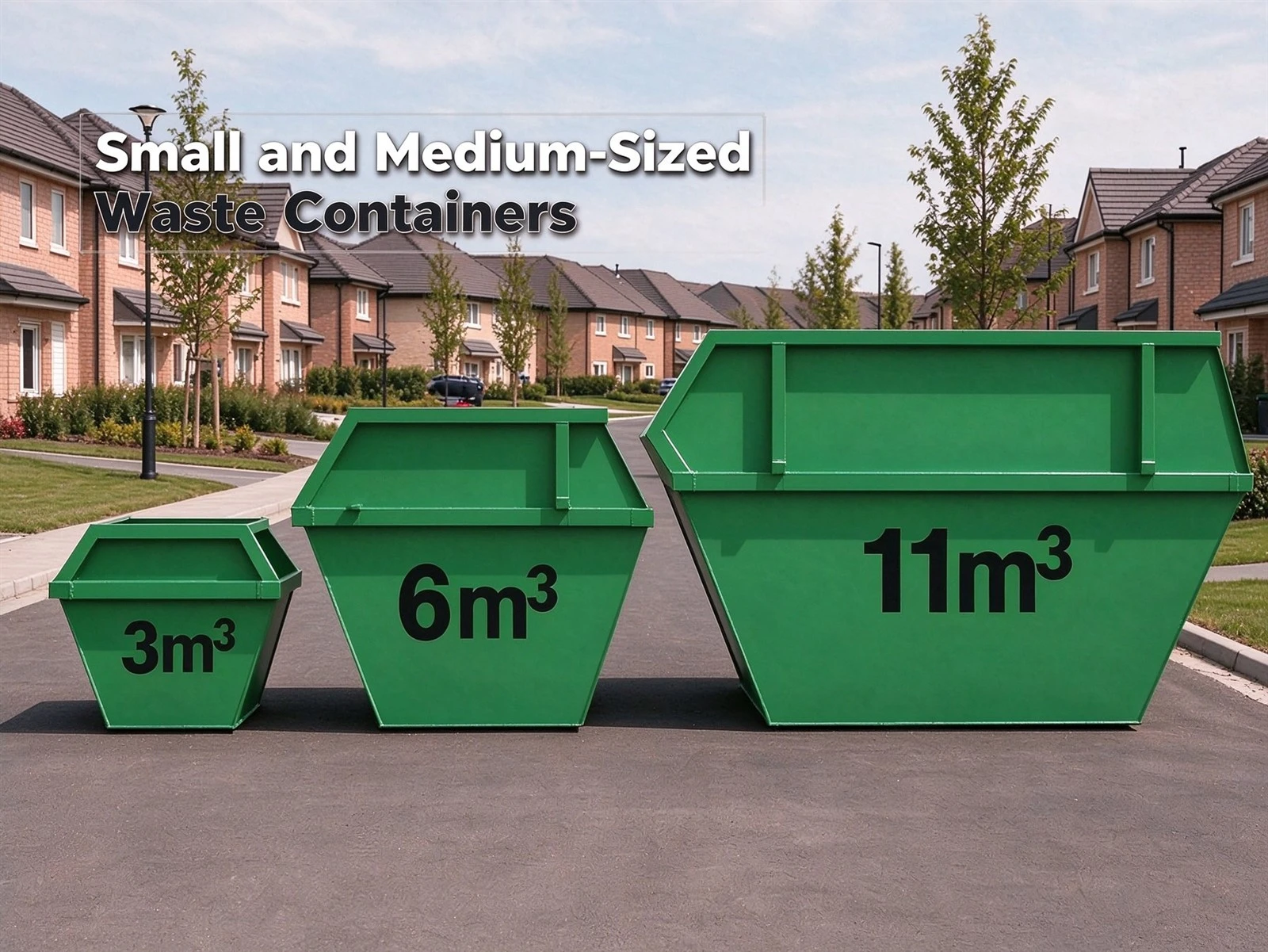
4. Small and Medium Sized Waste Containers
Small and medium sized trash cans are mainly used in places where the amount of trash generated is relatively small and the operating space is limited. Their overall size is small, making them easy to place in residential areas, commercial areas, and around city roads.
Key Features:
- Relatively small container size, minimizing space footprint.
- Suitable for small volume, centralized waste collection.
- Easy to deploy in areas with limited space.
- Specifications can be flexibly selected based on vehicle lifting capacity.
Main Application Scenarios:
- Residential community waste collection points.
- Small commercial establishments.
- City streets and public areas.
- Small factories and storage areas.
Applicable Garbage: Household waste, cardboard boxes, plastic packaging, and general commercial waste.
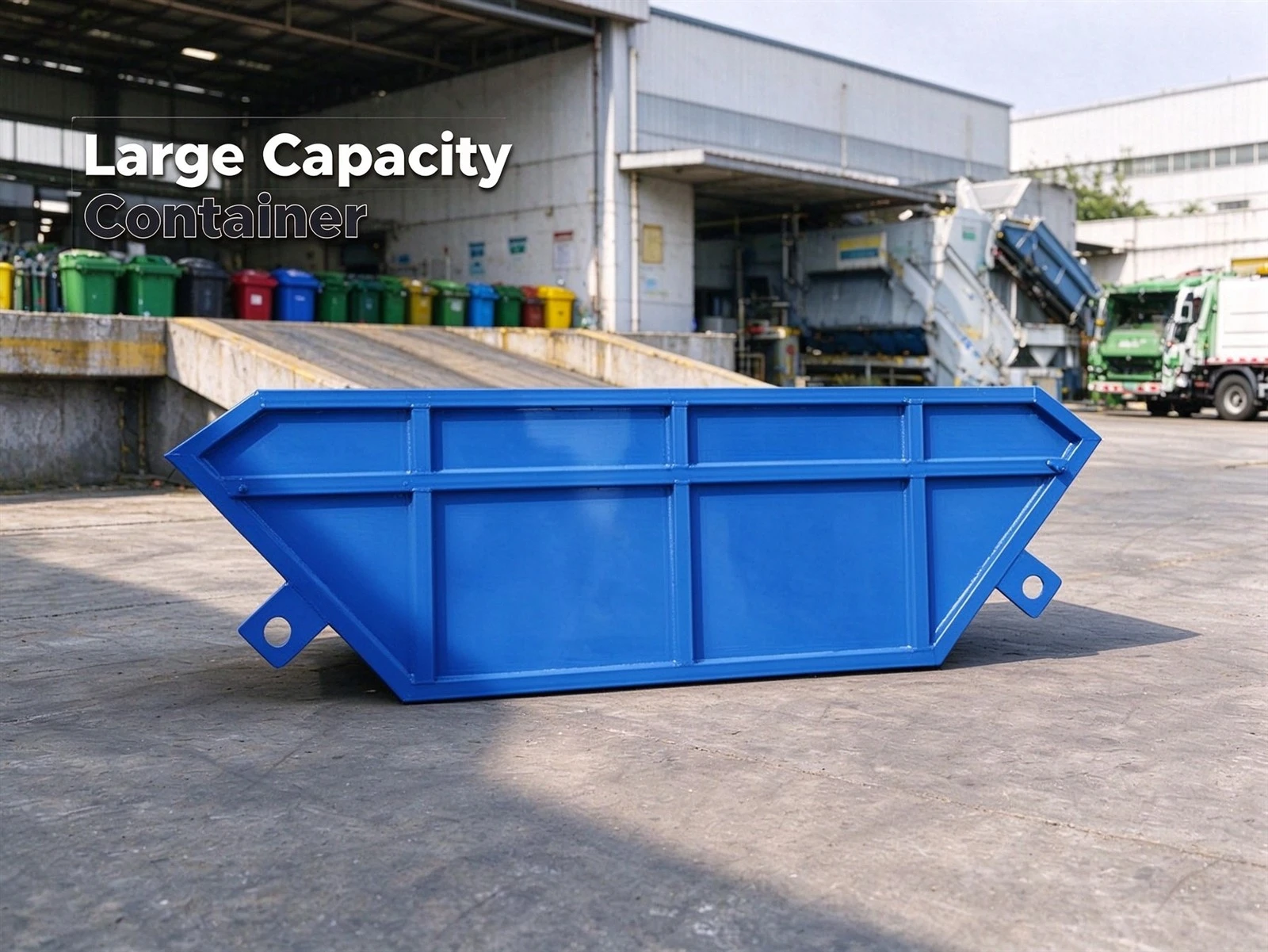
5. Large Capacity Waste Containers
Large capacity trash cans are mainly used in places with large amounts of waste, which can reduce the frequency of waste collection and improve the efficiency of centralized collection and transportation.
Key Features:
- Large internal volume to meet centralized collection needs.
- Suitable for continuous collection operations over extended periods.
- Reduces transportation costs associated with frequent collection.
- Suitable for use with swing-arm garbage trucks with corresponding lifting capacity.
Main Application Scenarios:
- Large construction sites.
- Industrial parks.
- Centralized garbage collection stations.
- Large commercial and public facility areas.
Applicable Garbage: Large quantities of domestic waste, industrial solid waste, and construction waste.
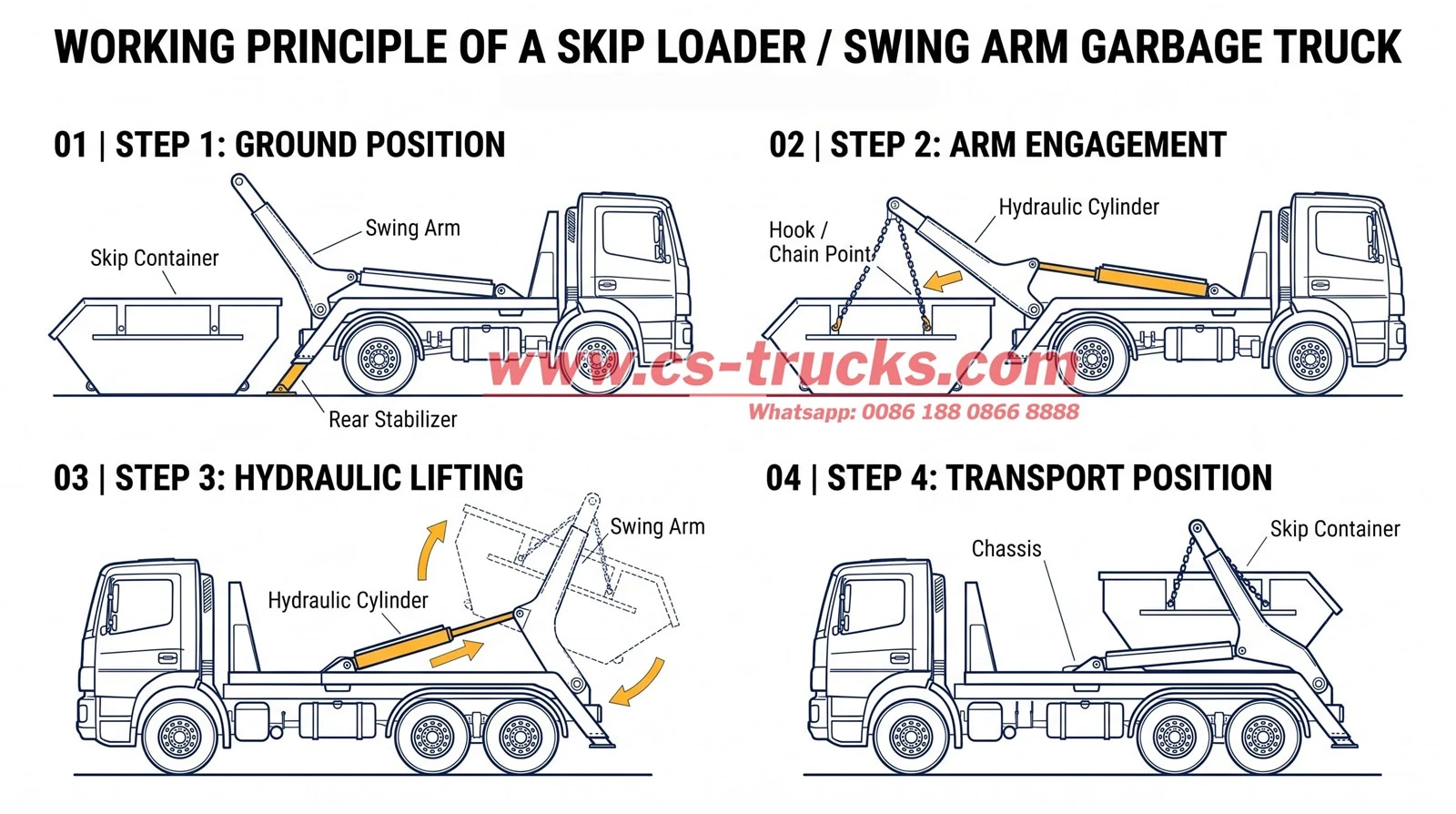
How Does a Skip Loader Truck Load and Unload a Container?
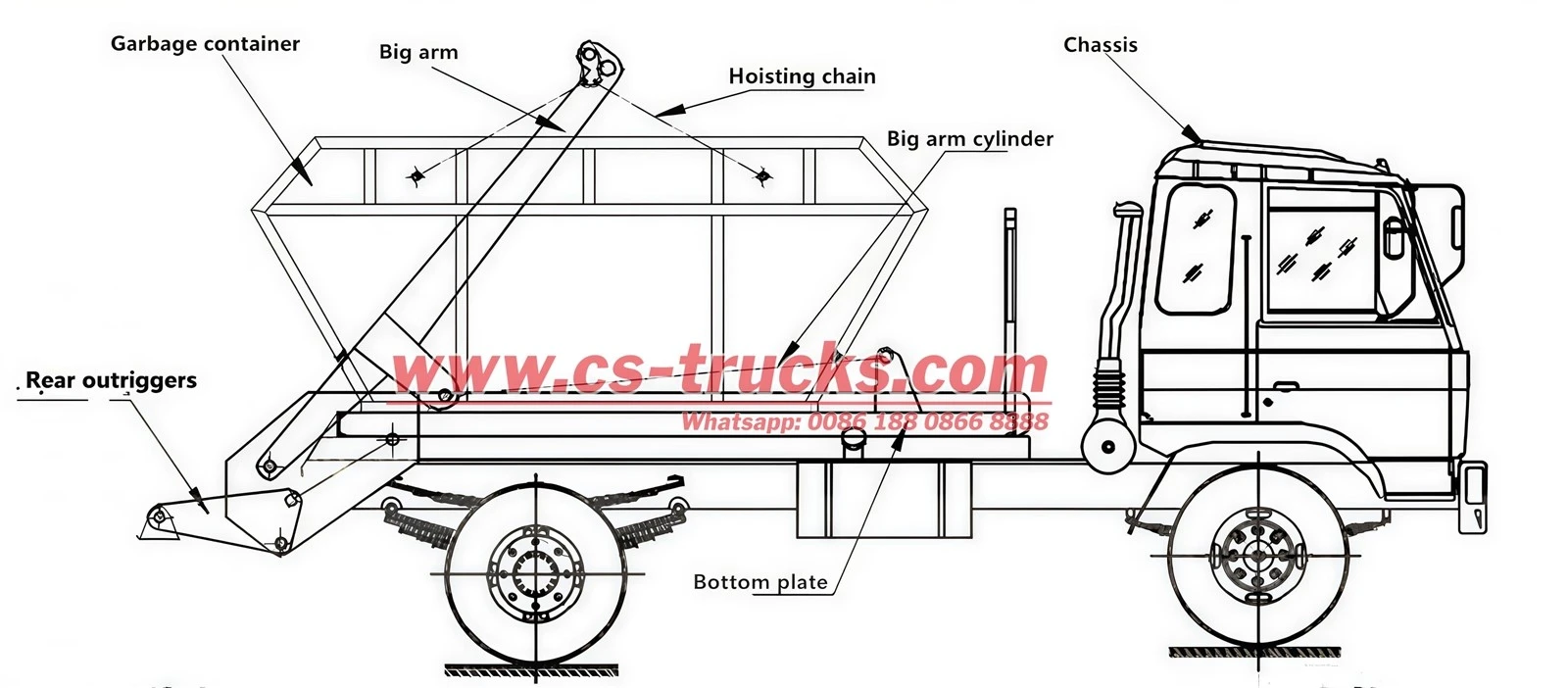
Swing arm garbage trucks primarily rely on a hydraulic system to drive the left and right swing arms or corresponding lifting mechanisms to load and unload garbage containers. Specific structures and operating methods may vary depending on the vehicle model design.
The general workflow is as follows:
1) Garbage Bin Positioning
Reverse the vehicle to the front of the garbage bin, ensuring that the vehicle and garbage bin are in a proper working position and that the hoisting mechanism can be correctly aligned with the connection point of the garbage bin.
2) Swing Arm Connection
Operate the hydraulic control system to connect the swing arm mechanism to the lifting position of the garbage container, and confirm that the connection is secure.
3) Garbage Bin Lifting
Activate the hydraulic system, which drives the swing arm via hydraulic cylinders to gradually lift the garbage bin and move it to the vehicle's carrying position.
4) Garbage Bins Are Securely Loaded
After the garbage bin is smoothly placed on the vehicle's carrying position, check whether the can is in place and lock and secure it according to the vehicle's design requirements.
5) Waste Transportation and Unloading
Ensure the garbage containers are securely fastened during transportation. Upon arrival at the designated location, release the containers according to the operating procedures and unload them using the swing arm mechanism.
Proper operating procedures not only improve loading and unloading efficiency but also reduce abnormal wear on the hydraulic system and swing arm mechanism.
How to Choose the Right Container for a Skip Loader Truck?
When choosing a trash can, you shouldn't just focus on its appearance and capacity; you also need to consider the vehicle's structure, lifting capacity, and the actual type of trash. The following factors are particularly important.
| Selection Factors | Specific Requirements |
| Garbage Bin Capacity | Choose the appropriate volume based on the amount of waste generated daily |
| Garbage Bin Weight | The full load weight must not exceed the vehicle's rated lifting capacity |
| Bin Dimensions | Confirm that the length, width, and height match the vehicle |
| Hoisting Structure | Ensure that the garbage bin's lifting position is compatible with the swing arm mechanism |
| Bin Material | Choose the appropriate steel plate thickness and structure based on the type of waste and the intensity of use. |
Important Tips for Using Skip Loader Containers
To extend the lifespan of trash cans and vehicles, the following points should be noted during daily use:
- Avoid Overloading: The weight of the garbage loaded must not exceed the rated load bearing capacity of the vehicle and the garbage container.
- Check Lifting Position: Before loading and unloading, check the lifting connection positions to ensure reliable connections.
- Distribute Garbage Properly: Load garbage as evenly as possible to avoid concentrated accumulation that could cause uneven loading of the container.
- Regularly Inspect the Container: Inspect the bottom plate, side plates, welds, and lifting structure of the container for deformation or cracks.
- Keep Clean: Clean the inside of the container promptly to reduce corrosion and odor.
Frequently Asked Questions
Q1: Can a single swing arm garbage truck be equipped with multiple garbage containers?
A: Yes. Swing arm garbage trucks typically feature a separate truck body and container design, allowing users to equip multiple compatible garbage containers according to their actual needs. Empty containers can be strategically placed at different collection points, improving vehicle utilization.
Q2: Can a swing arm garbage truck use garbage bins of different sizes?
A: Yes, but only if the size of the trash can, its lifting structure, and its load-bearing capacity are compatible with the vehicle. You cannot determine suitability solely based on the can's volume.
Q3: Are swing arm garbage trucks suitable for transporting construction waste?
A: Yes. Swing arm garbage trucks can be equipped with reinforced construction waste containers for collecting and transporting construction waste such as bricks, concrete, and stones, but it is essential to ensure that the actual loaded weight does not exceed the vehicle's rated lifting capacity.
Q4: What's the difference between closed and open garbage bins?
A: The main difference lies in the top structure of the container. Open garbage bins are easier to load and suitable for materials like construction waste; closed garbage bins have a lid or covering structure, making them more suitable for collection scenarios where minimizing waste exposure and scattering is crucial.
Q5: Is a larger garbage bin capacity always better?
A: Not necessarily. The trash can capacity needs to be matched to the vehicle's lifting capacity, the density of the waste, and the actual operational requirements. For dense construction waste, even a smaller container volume may reach the vehicle's rated lifting limit.
Conclusion
Swing arm garbage trucks can handle a variety of detachable garbage containers, including open-top containers, closed containers, construction waste containers, and containers of different capacities.
Choosing the right garbage container depends on the type of waste, container size, lifting capacity, and operating conditions. Selecting the appropriate container helps improve collection efficiency, transport safety, and equipment durability.
If you are looking for a swing arm garbage truck and matching containers, consider your specific application and lifting requirements before selecting the appropriate configuration.