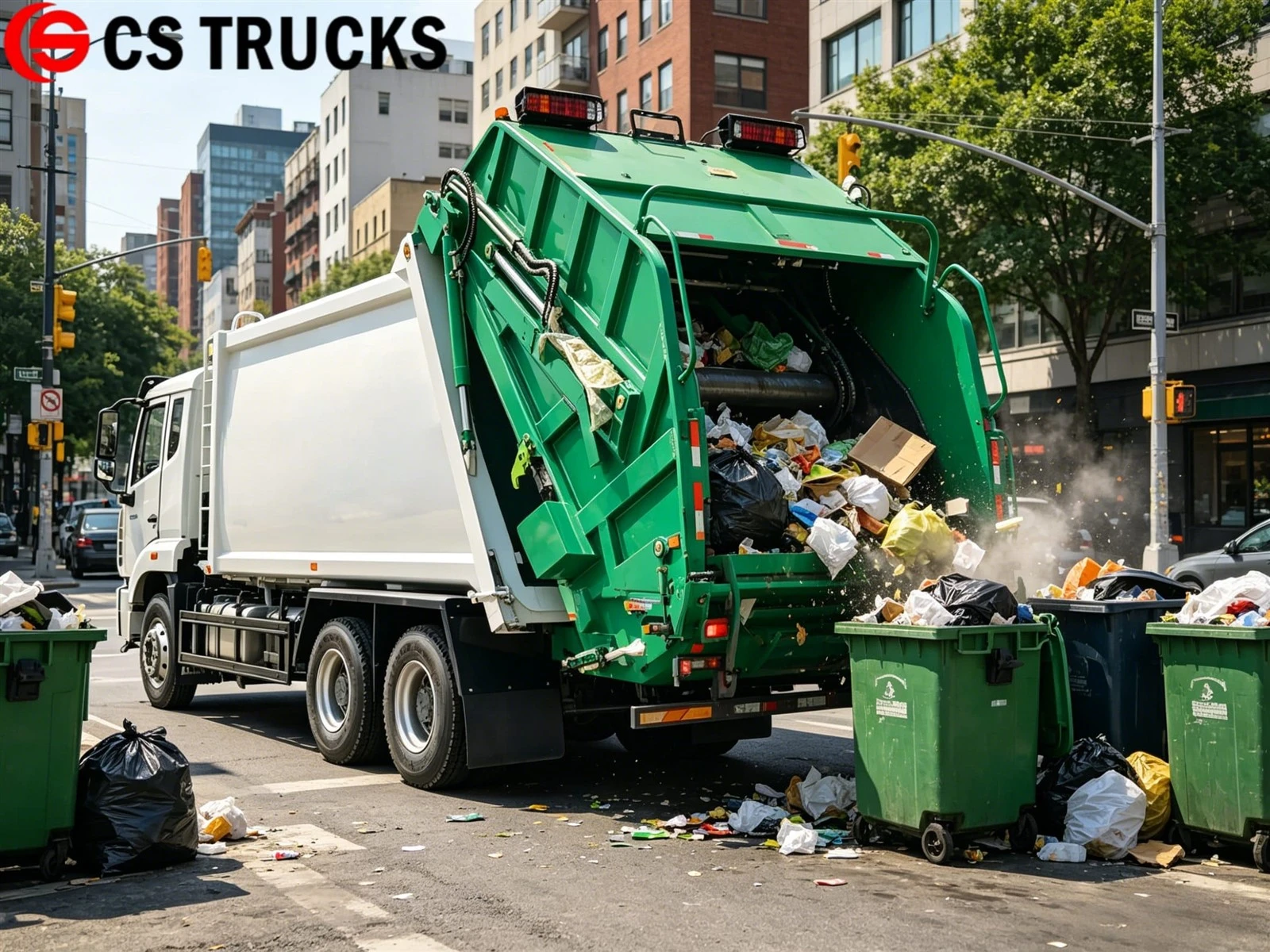
Compression ratio is one of the key performance indicators of a garbage compactor truck. It determines the amount of volume reduction of garbage during the compression process, directly affecting space utilization and garbage transportation efficiency.
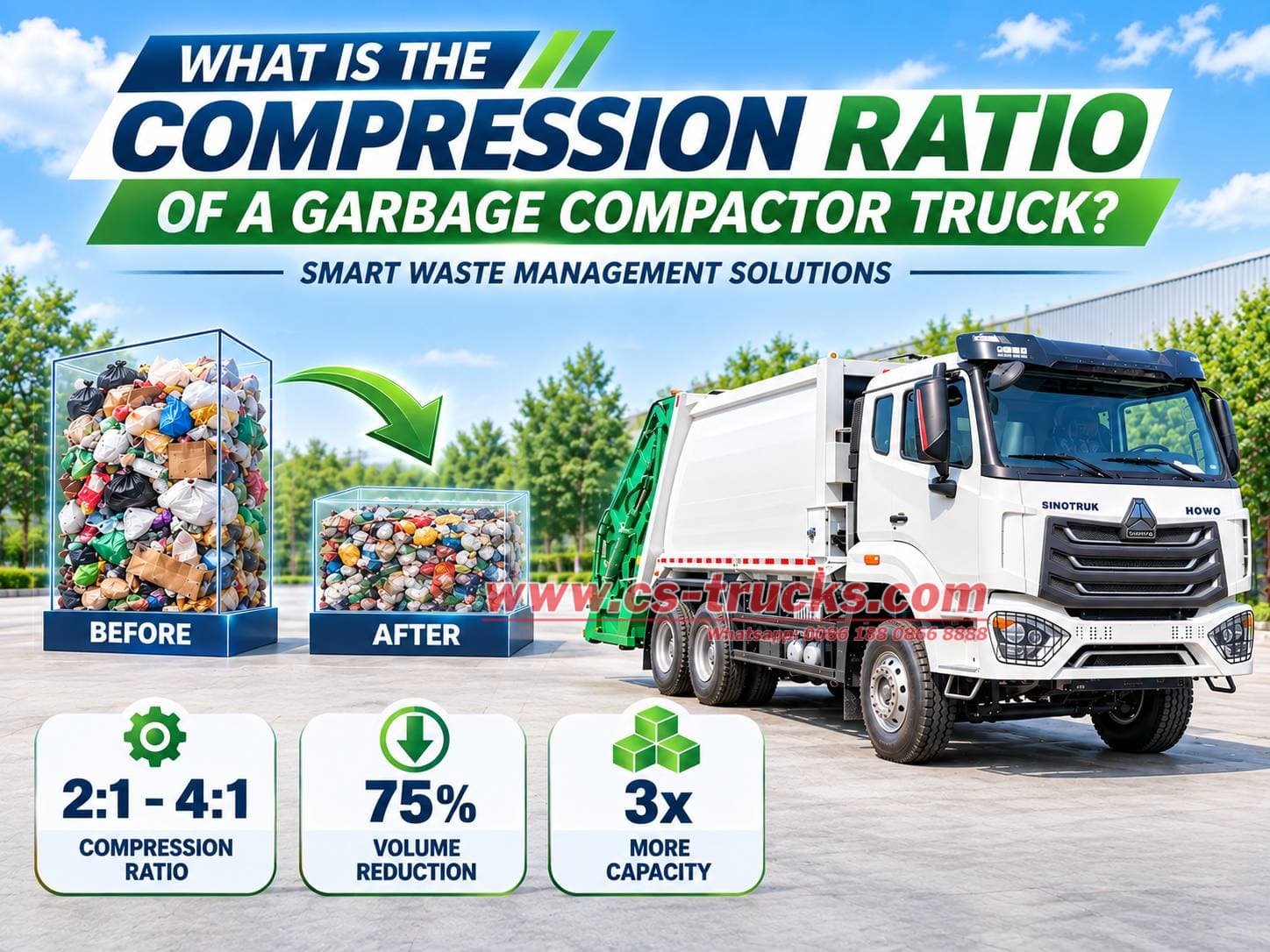
However, how is the compression ratio calculated? What factors affect it? And how does it affect the actual loading capacity of a garbage truck? This article will explain the working principle, influencing factors, calculation method, and practical significance of the compression ratio.
I.What Is the Compression Ratio of a Garbage Compactor Truck?
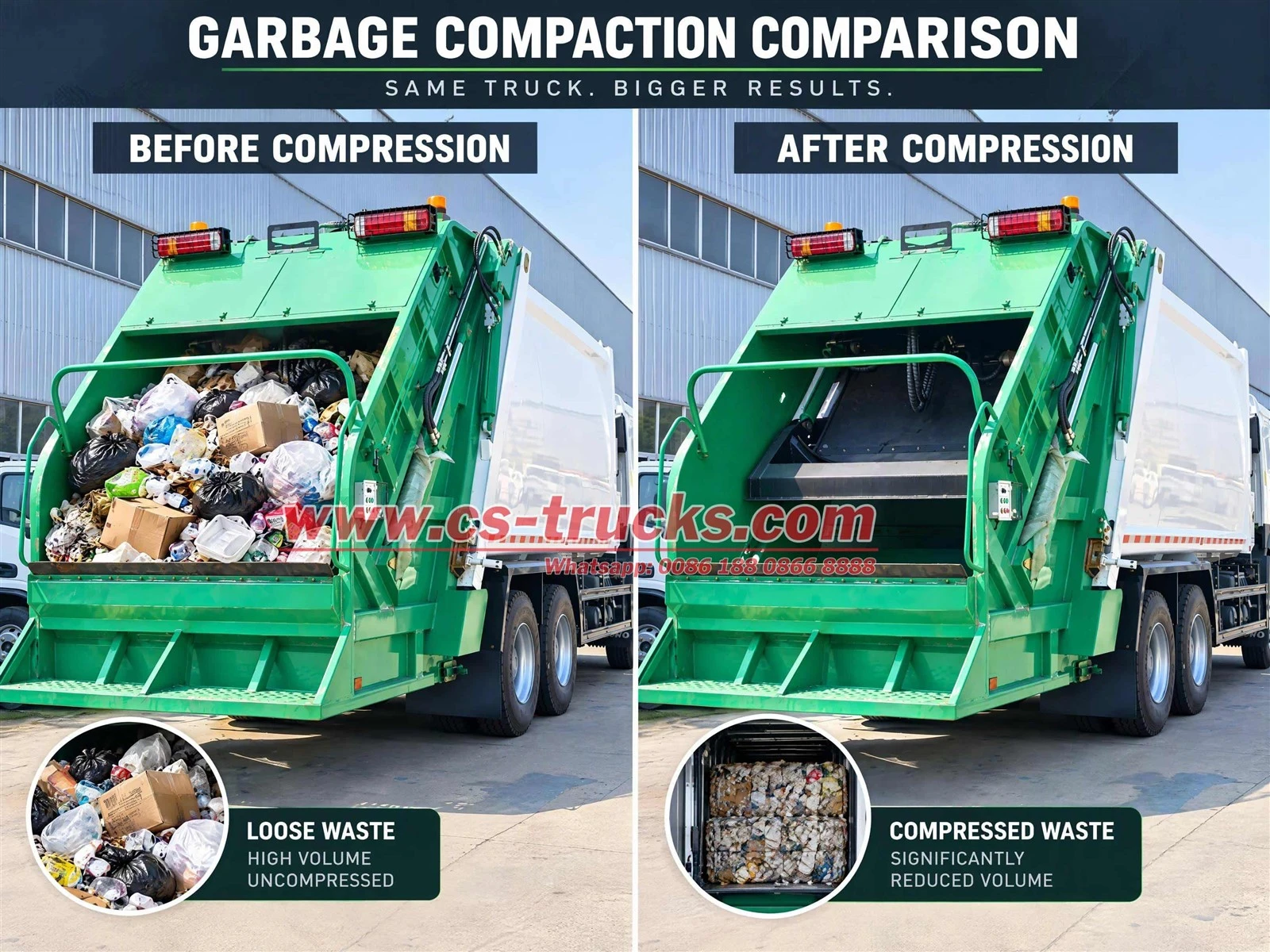
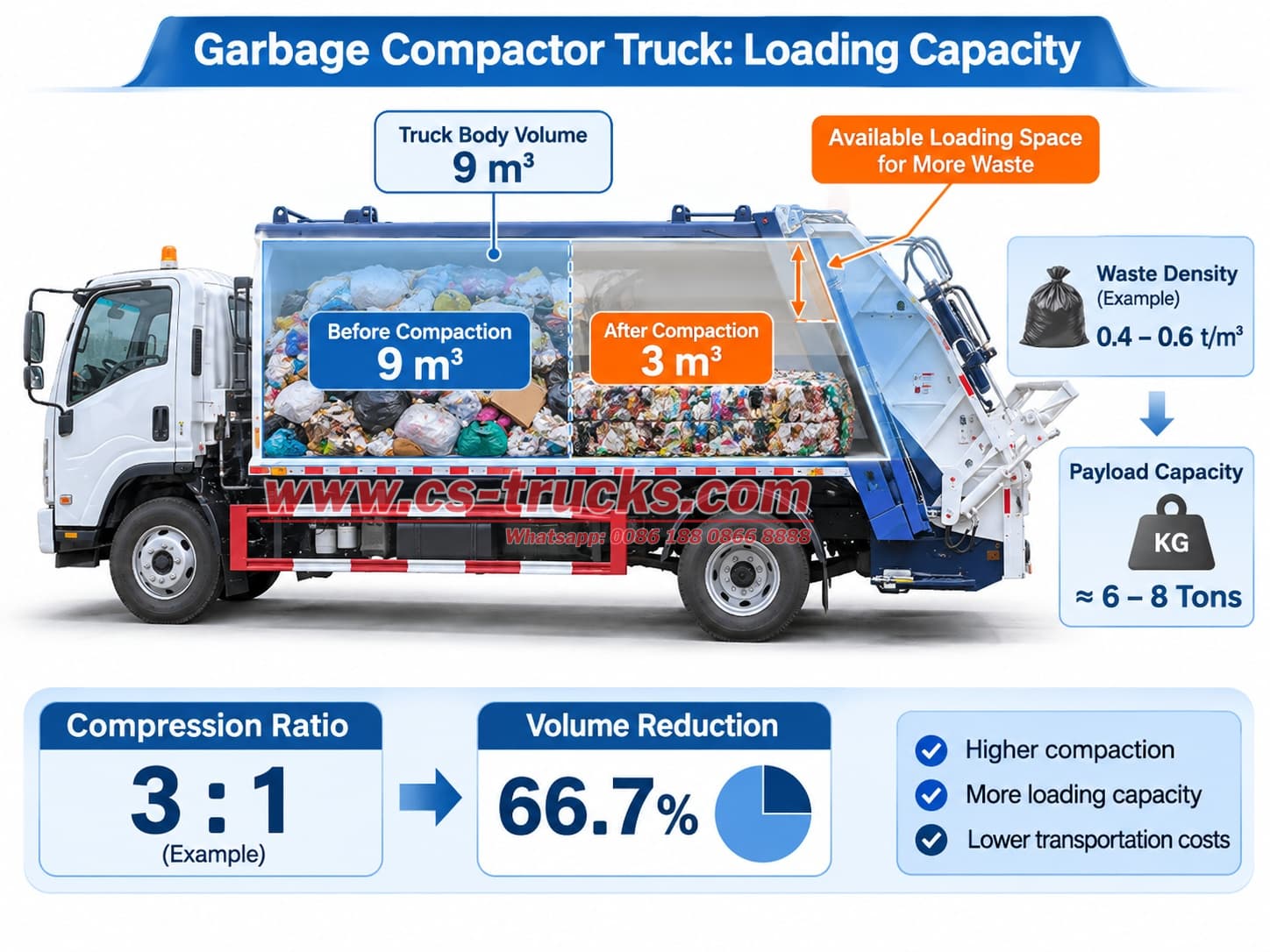
Compression ratio is an important indicator of a garbage compactor's ability to compress garbage; it typically refers to the percentage change in volume of the garbage before and after compression.
Simply put, it's how much a given volume of loose garbage is reduced in volume after compression.
For example:
- Waste volume before compression: 9 m³
- Waste volume after compression: 3 m³
- Compression ratio: 3:1
This means that after compression, the volume of waste is reduced to one-fifth of its original volume.
It is important to note that the compression ratio is not a fixed value; it is affected by factors such as the type of waste, moisture content, compression mechanism, and hydraulic system.
II.How Does a Garbage Compactor Truck Compress Waste?
Compactor garbage trucks typically use a hydraulic system to drive the compaction mechanism, pushing and compacting the garbage into the truck compartment.
Taking a common rear loader compactor garbage truck as an example, its main working process is as follows:
- Waste Loading: Waste enters the truck compartment through a loader.
- Waste Scraping: Scrapers gather the waste and push it towards the compression area.
- Waste Compression: The sliding plate and scraper work together to compress the waste.
- Repeated Compression: As more waste enters, the compression mechanism continues to operate, making the waste inside the truck compartment more compacted.
A hydraulic pump provides power, and hydraulic cylinders drive the compression mechanism to complete various actions. The design and working cycle of the compression mechanism may differ between different vehicle models.

III.What Factors Affect Compression Ratio?
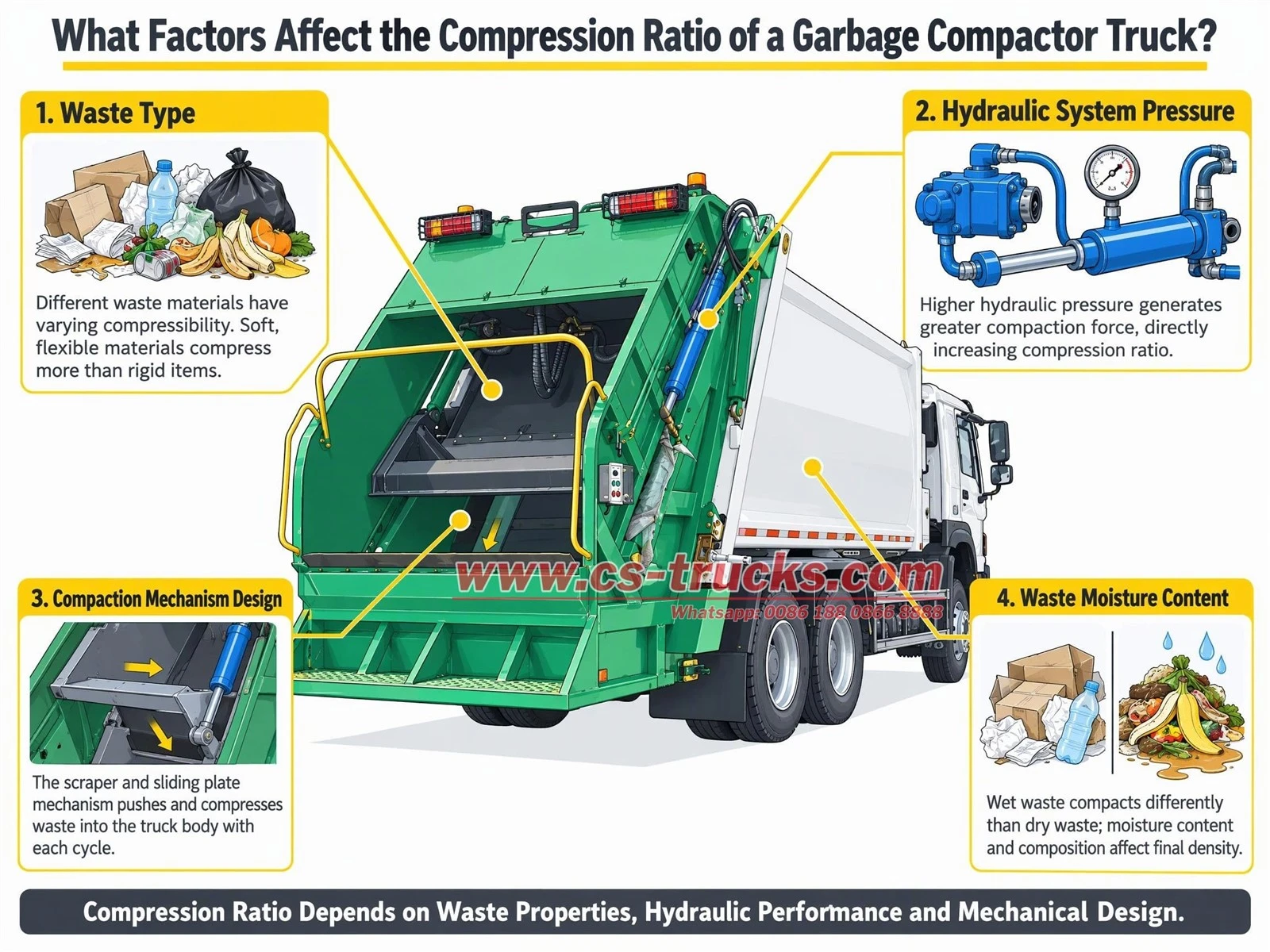
The actual compression effect of a garbage compactor truck depends not only on hydraulic pressure, but also on the properties of the garbage itself and the vehicle structure.
1) Types of Waste
Different types of waste have different physical properties.
- Domestic Waste: usually includes plastic, paper, kitchen waste, etc. The compression effect varies depending on the composition.
- Cartons and Plastics: have a certain elasticity and may rebound after compression.
- Kitchen Waste: The moisture content is high and sewage may be produced when compressed.
- Construction Waste: contains a lot of hard materials and is usually not suitable for ordinary compressed garbage trucks to handle.
2) Hydraulic System Pressure
The hydraulic system provides power to the compression mechanism. Hydraulic pressure, cylinder size, and mechanical design collectively determine the thrust that the compression mechanism can generate.
Insufficient hydraulic pressure, leaks, or malfunctioning control valves can all reduce compression efficiency.
3) Compression Mechanism Design
Compactor garbage trucks typically employ structures such as scrapers, sliding plates, and hydraulic compression cylinders.
A well designed mechanism can improve the scraping, pushing, and compaction of garbage, thereby increasing the utilization rate of the truck's cargo space.
4) Waste Moisture Content and Composition
The moisture and air content in the waste, as well as the elasticity and compressibility of different materials, all affect the final compression ratio.
Therefore, the actual compression ratio can vary significantly even when the same vehicle processes different types of waste.
IV.How Does Compression Ratio Affect Loading Capacity?
A higher compression ratio generally means that a unit volume of garbage occupies less space after compression, allowing the vehicle to carry more garbage to a certain extent. However, the compression ratio does not equal the actual loading capacity.
The loading capacity of a compactor garbage truck is also limited by the following factors:
- Effective volume of the cargo compartment
- Permissible gross vehicle weight of the chassis
- Vehicle weight
- Garbage density
- Axle load and local road regulations
For example, a compactor truck with a cargo compartment volume of 12 m³ cannot increase its load capacity indefinitely, even if it has a high compression capacity. Once the vehicle reaches its maximum allowable load, loading must stop.
Therefore, when purchasing a vehicle, it is necessary to consider the cargo volume, compression capacity, and chassis load-bearing capacity at the same time.
V.How to Calculate the Compression Ratio?
Compression ratio can usually be calculated from the volume of waste before and after compression.
Calculation Formula:
Compression ratio = Waste volume before compression ÷ Waste volume after compression
For Example:
| Item | Value |
| Volume of waste before compaction | 9 m³ |
| Volume of trash after compaction | 3 m³ |
| Compression Ratio | 3:1 |
| Volume reduction rate | 66.7% |
The formula for calculating the volume reduction rate is:
Volume reduction rate = (1 - Volume after compression ÷ Volume before compression) × 100%
Note that the waste samples before and after compression and the measurement conditions should be comparable during the measurement process.
VI.How to Improve Garbage Compaction Efficiency?
To maintain good compression results, you can start from the following aspects:
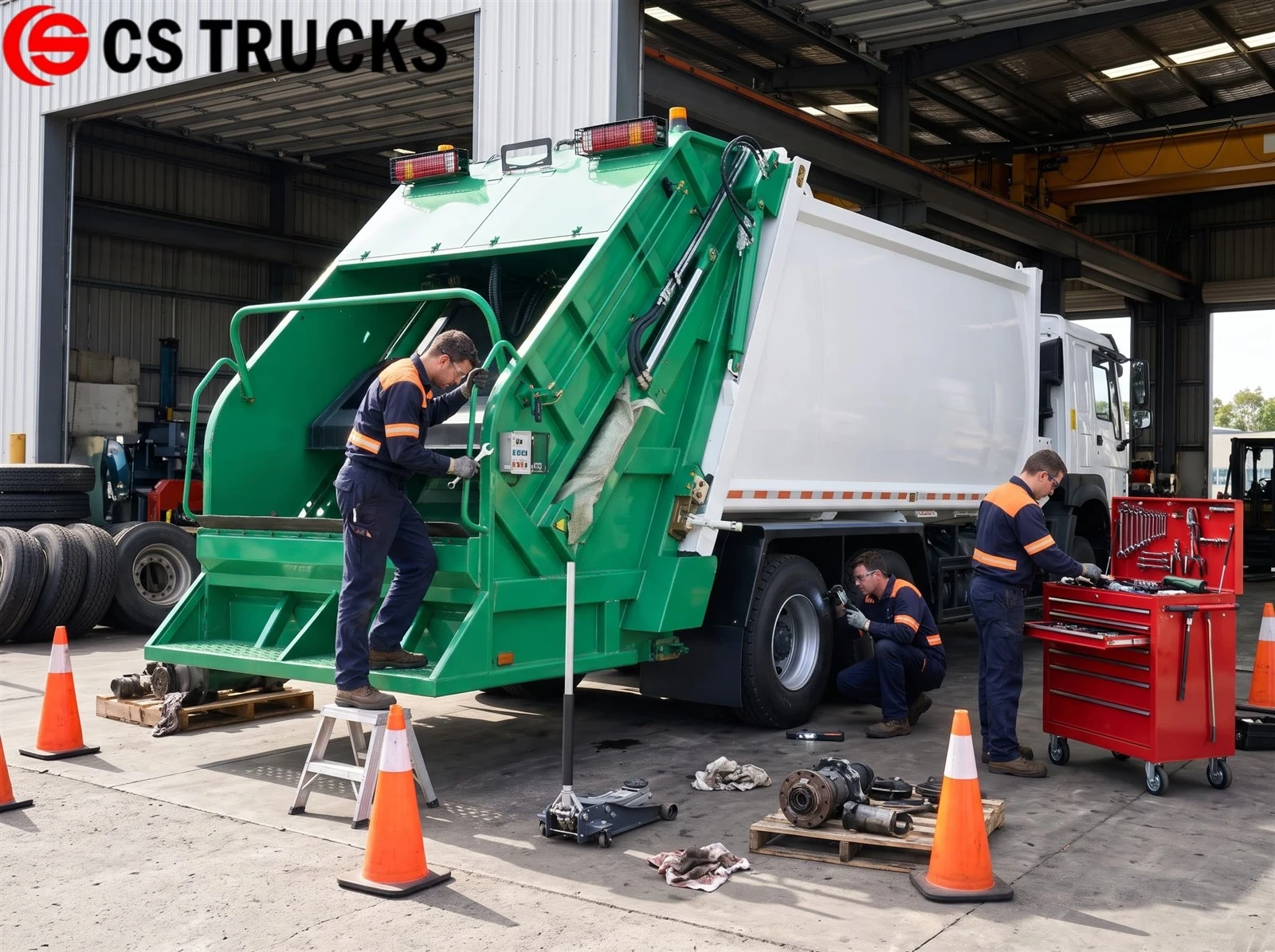
- Regularly inspect the hydraulic system: Check the hydraulic oil, cylinders, oil lines, and control valves to ensure the system is operating normally.
- Maintain the compression mechanism: Inspect the scraper, slide plate, and related connecting parts to reduce abnormal wear.
- Load waste appropriately: Avoid loading waste types and quantities exceeding design requirements.
- Operate equipment correctly: Complete loading and compression cycles according to vehicle operating requirements.
- Clean the compactor promptly: Prevent waste residue from affecting mechanism operation and sealing performance.
VII.Conclusion
Compression ratio is an important reference indicator for evaluating the compression performance of a garbage compactor truck, but it does not solely determine the vehicle's actual loading capacity.
Garbage type, hydraulic system, compression mechanism design, truck body volume, and chassis load bearing capacity all affect the vehicle's actual working performance.
When purchasing a garbage compactor truck, one should comprehensively evaluate the compression performance and vehicle configuration based on local garbage types, daily collection volume, and transportation distance to select the appropriate model.