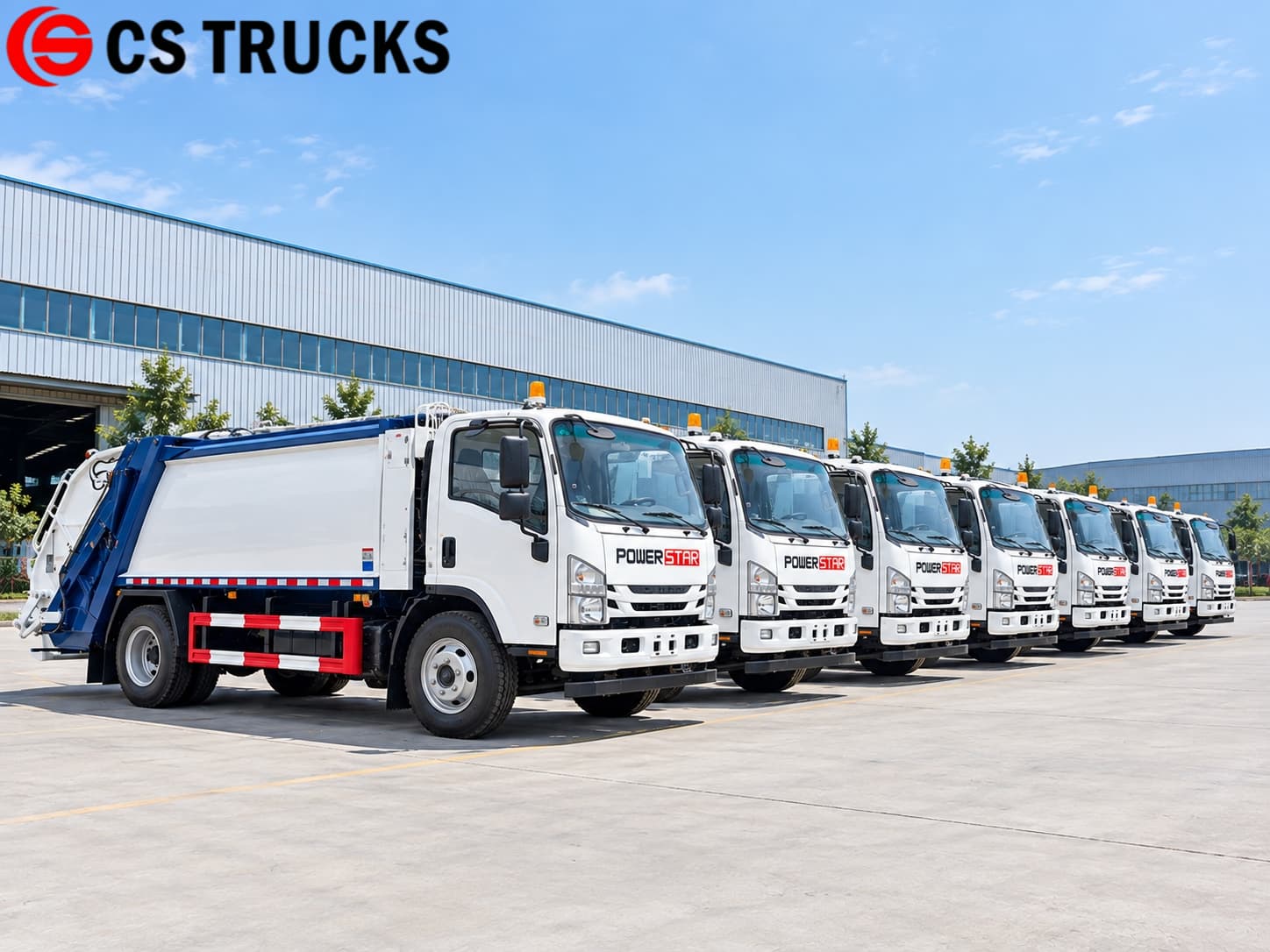
Garbage compactor trucks are widely used in municipal sanitation, commercial waste collection, and solid waste transfer. Blockage at the filling inlet can lead to interruptions in the compression cycle, reduced loading efficiency, and equipment downtime. For sanitation vehicle fleets and equipment purchasers, timely clearing of blockages is important, but finding the root cause of the problem and reducing repeated downtime is even more crucial.
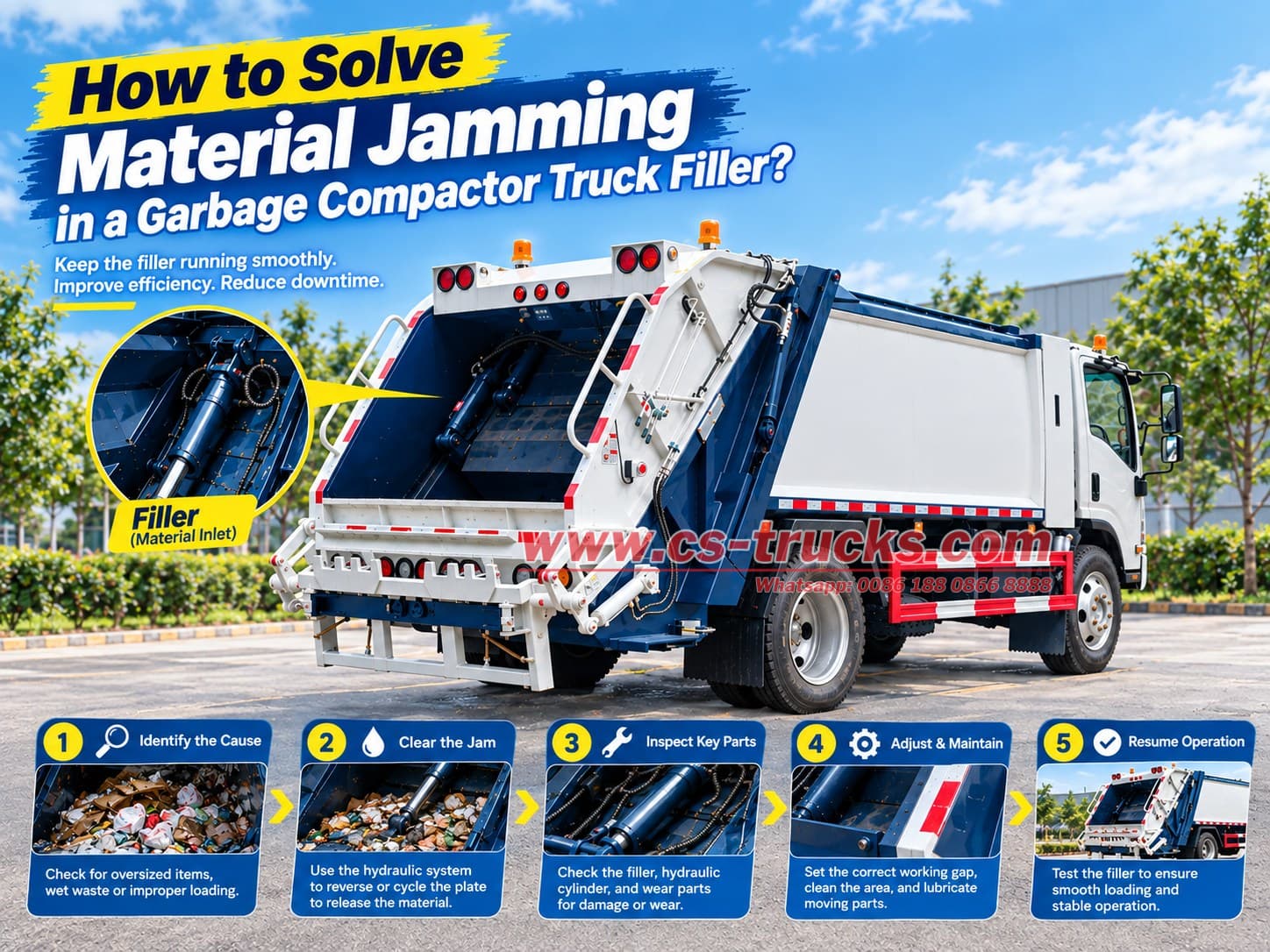
This article will introduce how to safely and effectively solve the problem of material blockage at the filling inlet of garbage compactor trucks from four aspects: causes of blockage, handling steps, fault comparison, and daily maintenance.
Key points of the Article
📝Common Causes of Material Blockage: Understand the causes of blockages, including excessive waste volume, material accumulation, mechanical failure, and hydraulic system malfunctions.
📝Safe Troubleshooting Procedures: Master the basic procedures for equipment shutdown, energy isolation, blockage inspection, and safe cleanup.
📝Troubleshooting Guide: Based on abnormal equipment behavior, quickly determine possible causes and solutions.
📝Preventive Maintenance: Reduce recurring blockages and equipment downtime through standardized loading, regular cleaning, and daily inspections.
📝Garbage Compactor Selection Recommendations: Evaluate the manufacturer's expertise in areas such as hopper design, compression mechanism, hydraulic system, safety features, and after sales service.
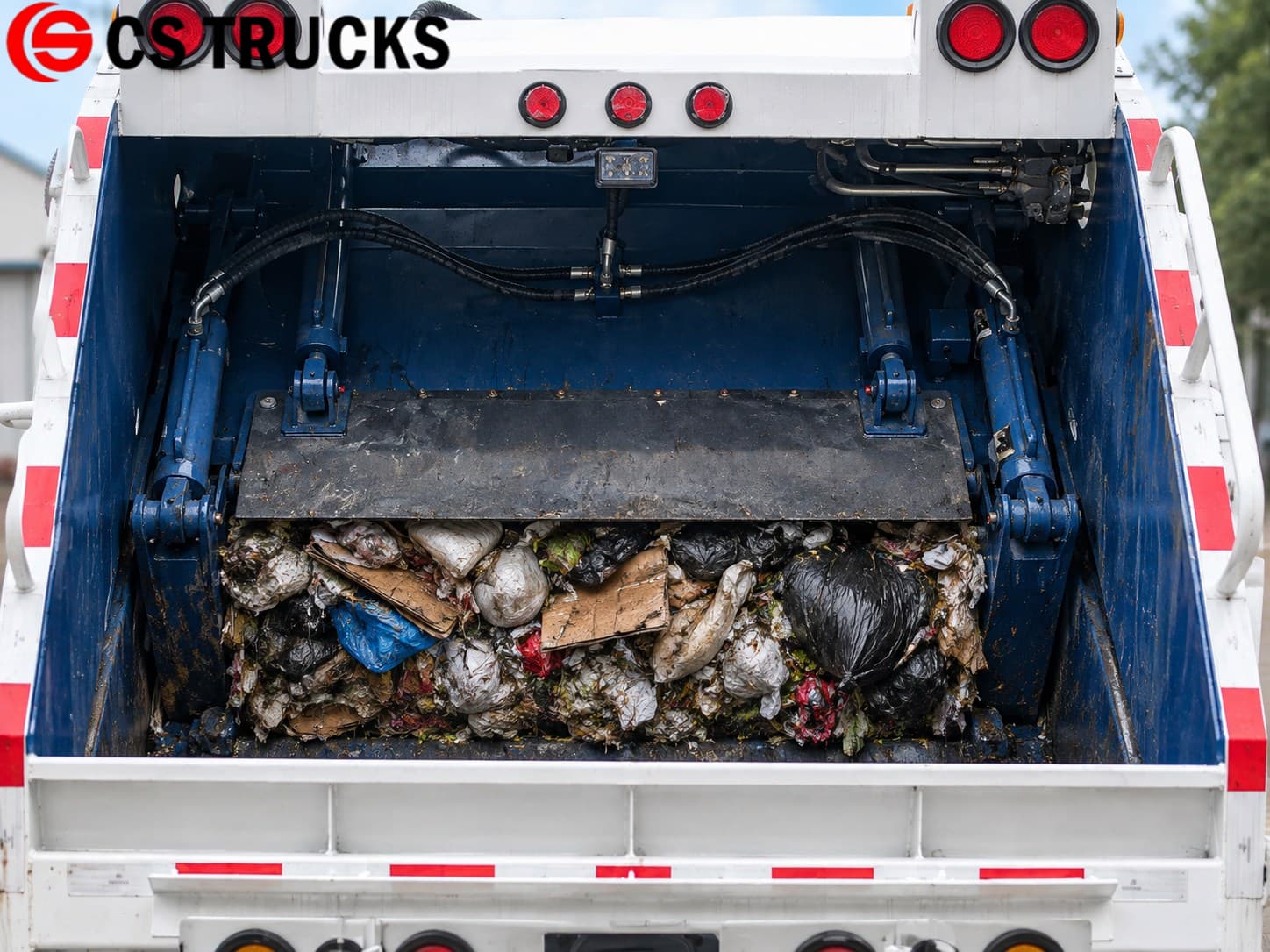
What Causes Material Jamming in a Garbage Compactor Truck Filler?
Clogging of the filling inlet of a garbage compactor is usually caused by a combination of factors, including the characteristics of the garbage, the operating method, the condition of the mechanical parts, and the performance of the hydraulic system.
1) Improper Waste Loading
When waste contains a large amount of long strips of material, textiles, plastic film, ropes or other items that are easily tangled, it may accumulate near the filling inlet or compression mechanism, hindering the normal entry of waste into the compression area.
2) Overloading The Filler
Adding too much waste in a short period of time, or unevenly loading the waste, can easily cause localized accumulation at the filling inlet. When the waste exceeds the equipment's reasonable processing capacity, the compression mechanism may be unable to complete its working cycle smoothly.
3) Hydraulic System Problems
Insufficient hydraulic oil, oil contamination, filter blockage, deterioration of hydraulic pump performance, or abnormal control valves can all lead to insufficient thrust, slow operation, or unstable operation of the compression mechanism, thereby increasing the risk of material blockage.
4) Worn or Damaged Mechanical Components
If the push plate, scraper, guide rail, hinged parts and other moving parts are worn, deformed, loose or stuck, it may affect the normal movement of the compression mechanism and prevent the garbage from being discharged smoothly from the filling area.
5) Poor Maintenance Practices
A lack of regular cleaning, lubrication, and component inspection can easily lead to the accumulation of waste and dirt, as well as wear and tear on moving parts. If problems are not addressed promptly, even minor material buildup can gradually develop into severe blockages.
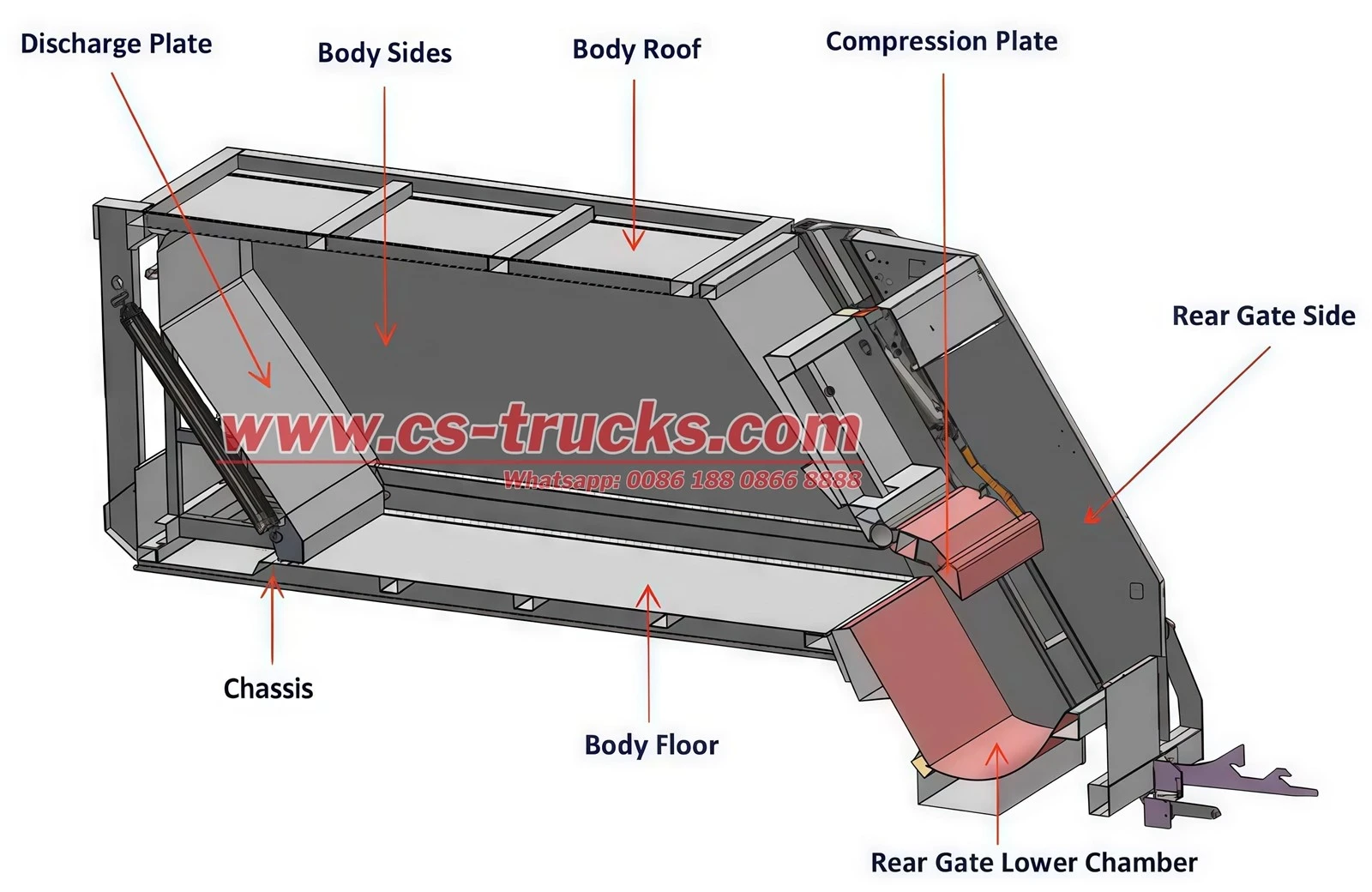
How to Solve Material Jamming in a Garbage Compactor Truck Filler?
When material blockage occurs, personnel safety should be prioritized, and then appropriate measures should be taken based on the specific cause of the malfunction.
Step 1: Stop the Machine and Ensure Safety
Stop loading and compression operations, and park the vehicle in a safe, stable location. Turn off all power sources according to the equipment manufacturer's operating manual and execute the applicable lockout tagging (LOTO) procedure to prevent accidental equipment start up.
Simultaneously, confirm that hydraulic accumulators, gravity induced energy release, and other residual energy have been properly managed, ensuring that moving parts are reliably supported.
Step 2: Check the Location of the Blockage
After ensuring safety, check for any accumulated garbage, tangled materials, hard foreign objects, or jammed mechanical parts. Observe the push plate, scraper, and guide rail for obvious deformation, damage, or abnormal wear.
Step 3: Safely Remove the Blockage
Use tools authorized by the equipment manufacturer to clear blockages. Avoid pulling on tangled materials by hand or forcibly clearing the blockage by repeatedly starting the compression mechanism.
If the foreign object is compacted, stuck, or cannot be safely removed, it should be handled by a professional repair technician.
Step 4: Inspect the Hydraulic and Mechanical Systems
If the equipment remains slow or unable to complete the compression cycle after clearing the blockage, further check the hydraulic oil level, oil condition, filter element, pipeline leaks, and control valve operation. Also check for jamming in the scraper, guide rails, and connecting components.
Do not attempt to resolve the blockage by increasing the hydraulic system pressure. Pressure testing, valve adjustments, and disassembly of hydraulic components must be performed by qualified technicians following the manufacturer's specifications.
Step 5: Trial Run and Confirm Troubleshooting
After cleaning and maintenance are completed, restore the equipment according to the operation manual, check the protective devices, safety interlocks and control functions, and conduct a trial run under safe conditions. Operation can only resume after confirming that the compression mechanism is functioning normally, without abnormal noise or obvious leakage.
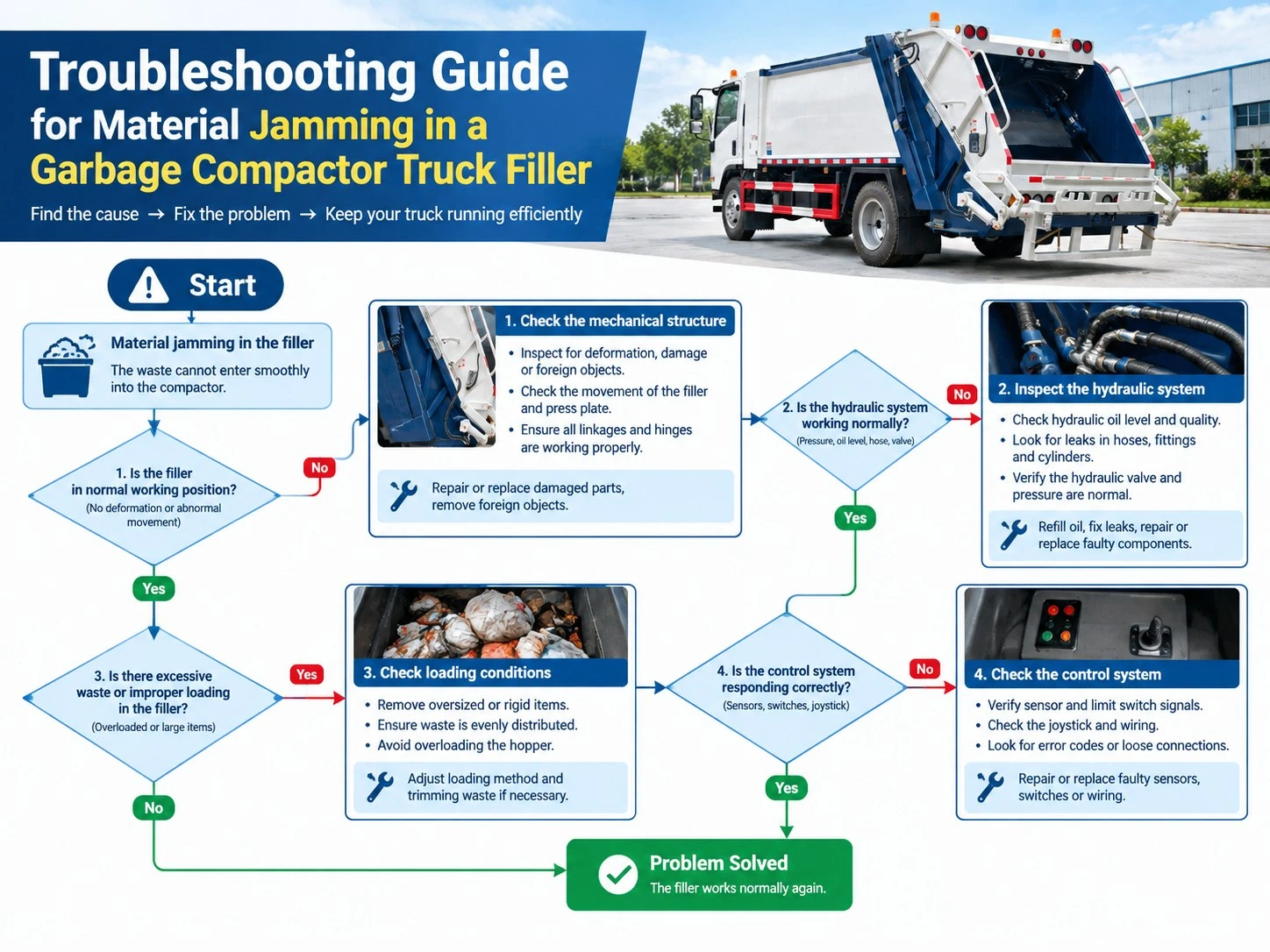
Troubleshooting Directions For Different Blockage Symptoms
| Fault Symptoms | Priority Investigation Direction | How to Solve |
| Garbage accumulates inside the filling hopper | Loading capacity, waste distribution, foreign objects | Clear accumulated debris and adjust loading method |
| Scraper movement obstructed | Wrapped material, guide rail, mechanical deformation | Inspect moving parts after safety isolation |
| Slow or weak compression movements | Hydraulic oil, pump, control valve | Check the hydraulic system and fault information |
| It still cannot operate normally after clearing the blockage | Mechanical interference, hydraulic anomaly, control failure | Conduct systematic diagnosis |
| Frequent blockages at the same location | Waste characteristics, structural design, and operating habits | Record the location of the fault and assess the suitability of the equipment |
How to Prevent Material Jamming in Garbage Compactor Trucks
Compared to repairs after a malfunction occurs, establishing standardized operation and maintenance procedures is more effective in reducing downtime.
1. Standardize Garbage Loading
Control the loading amount according to the vehicle's design capacity and operational requirements to avoid overloading the waste at once. For materials that are prone to tangling, they should be sorted or pretreated according to the equipment's applicable scope and local waste disposal requirements.
2. Establish a Regular Cleaning System
After each day's work is completed, clean the filling port and areas where garbage easily accumulates in accordance with safety procedures to reduce the impact of residues on the movement of the compression mechanism.
3. Regularly Maintain The Hydraulic System
Check the hydraulic oil level, cleanliness, filter element, and pipeline condition, and address any leaks promptly. Select the hydraulic oil specified by the manufacturer and follow the recommended maintenance schedule.
4. Inspect Key Mechanical Components
Regularly inspect the push plate, scraper, guide rail, pins, and hinges. Repair or replace them promptly if wear, deformation, or loosening is found.
5. Strengthen Operator Training
Ensure that drivers and operators are familiar with equipment operating restrictions, safety interlocks, emergency shutdown procedures, and abnormality reporting requirements. Timely recording and troubleshooting of issues such as frequent material blockages and slowed compression will help reduce the rate of recurring failures.

What Factors Should Be Considered When Purchasing A Garbage Compactor Truck?
For B2B buyers, when choosing a garbage compactor, they should not only focus on the loading volume and compression capacity, but also comprehensively evaluate the long term operating costs of the equipment.
- Packing Inlet Structure: Does it facilitate waste entry, daily cleaning, and fault diagnosis?
- Hydraulic System Configuration: Reliability of hydraulic components, ease of maintenance, and availability of spare parts.
- Maintenance Of Vulnerable Parts: Are components such as scrapers, guide rails, and seals easy to inspect and replace?
- Safety Protection Design: Are suitable safety interlocks, emergency stop devices, and protective measures provided?
- After Sales Technical Support: Is it possible to provide operation manuals, maintenance guidance, spare parts support, and fault diagnosis services
For fleets with complex waste composition, high operating frequency, or harsh operating environment, it is recommended to explain the actual waste type, daily workload, usage environment, and maintenance conditions to the manufacturer during the procurement stage in order to select a more suitable vehicle configuration.
Frequently Asked Questions
Q1: Why does the filling inlet of a garbage compactor truck always get clogged?
A: Common causes include overloading, tangled plastic film or ropes, uneven garbage distribution, and malfunctions in the scraper, guide rails, or hydraulic system. If clogging occurs repeatedly, the cause should be documented and a systematic inspection performed, rather than simply clearing the blockage.
Q2: Can the compression mechanism be repeatedly started after the packing port is blocked?
A: It is not recommended. Repeated starting may worsen mechanical jamming and increase the load on the hydraulic system and structural components. The machine should be stopped first, hazardous energy sources isolated, and then the problem should be checked and cleared according to the operation manual.
Q3: Can a hydraulic system malfunction cause material blockage at the packing port?
A: Yes. Insufficient hydraulic oil, degraded pump performance, or abnormal control valves can lead to insufficient thrust or incomplete operation of the compression mechanism, preventing proper waste processing. However, a mechanical inspection is still necessary to confirm the specific cause.
Q4: How often does a garbage compactor truck need maintenance?
A: A maintenance plan should be developed based on the manufacturer's specified time, operating hours, and working conditions. Special attention should be paid to the condition of fluids, pipelines, seals, and moving parts during high frequency operation, in hot environments, or when dealing with highly corrosive garbage.
Q5: How to choose a garbage compactor truck that is more suitable for high intensity operations?
A: It is recommended to comprehensively evaluate the type of garbage, average daily collection volume, filling port structure, compaction mechanism, hydraulic system, safety features, spare parts supply, and after sales support, rather than simply comparing vehicle volume or purchase price.
Conclusion
Clogging of the filling inlet of a garbage compactor truck is usually related to material characteristics, loading method, hydraulic system, and the condition of mechanical components. By standardizing loading, safely clearing blockages, timely inspections, and regular maintenance, fleets can reduce the risk of recurring failures and improve equipment availability and garbage collection efficiency.
For sanitation operators and engineering vehicle purchasers, selecting garbage compactors with a reasonable structure, convenient maintenance, and comprehensive technical support is also an important measure to reduce long term operating costs.