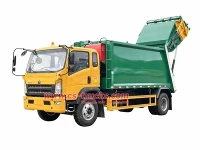
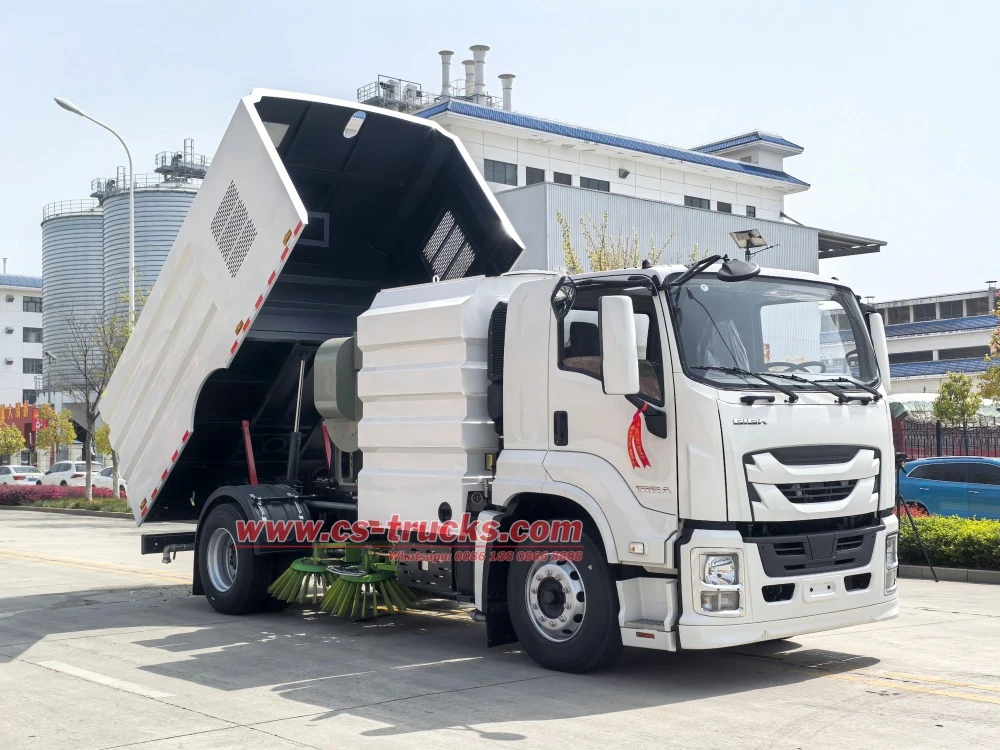
A road sweeper truck consists of multiple functional systems that work together to collect road debris, remove dust, and store waste. Based on the road sweeper truck's structure and sweeping method, the main components can be divided into the power and blower system, the debris collection system, the vacuuming and sweeping system, the hydraulic system, and the water spray dust suppression system.
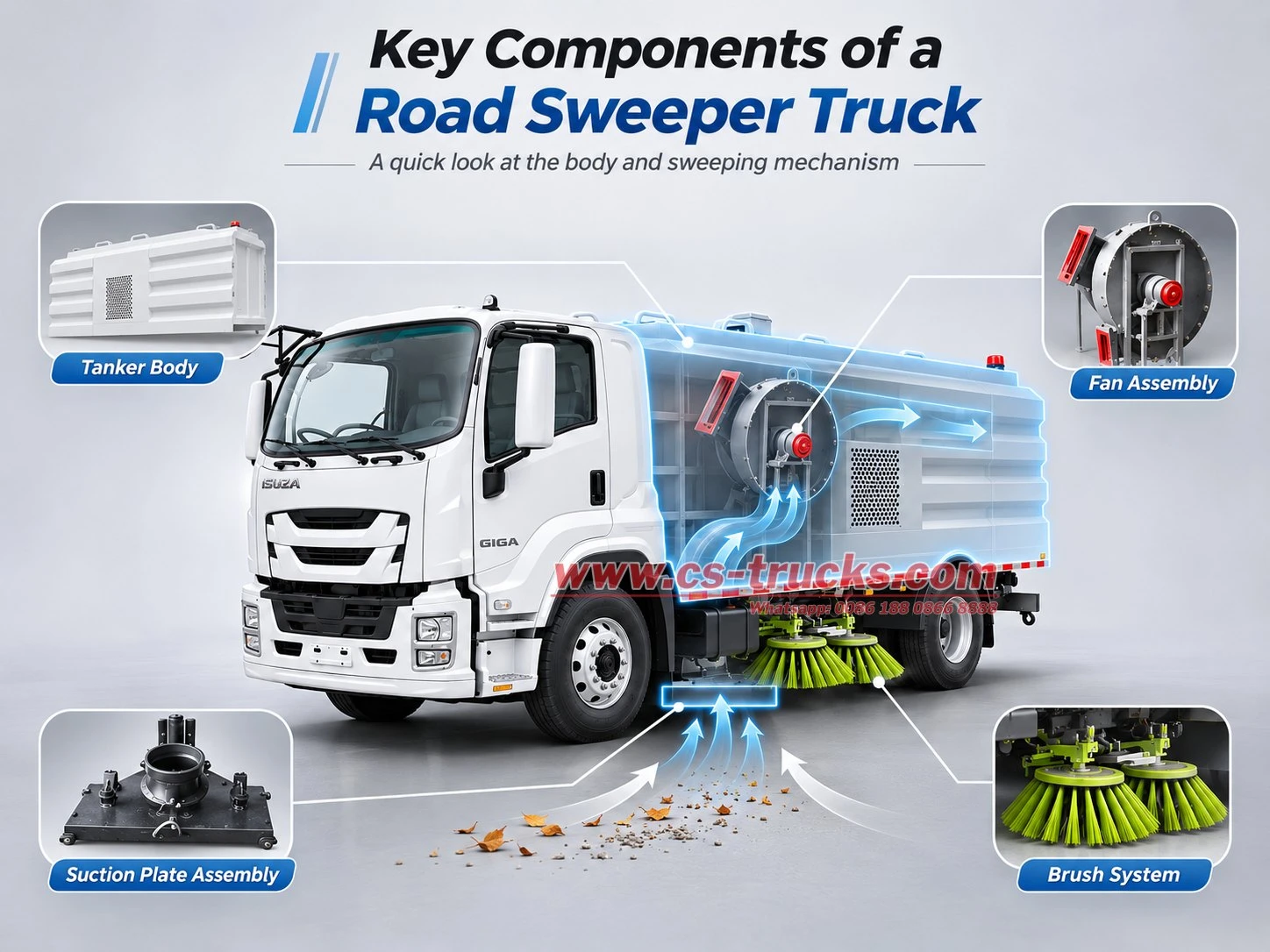
Understanding the key components of a road sweeper truck helps equipment procurement personnel evaluate vehicle configurations, fleet operators improve operational efficiency, and maintenance technicians identify potential problems. Below, we will introduce the structure, function, and working principle of each key component of the road sweeper truck.
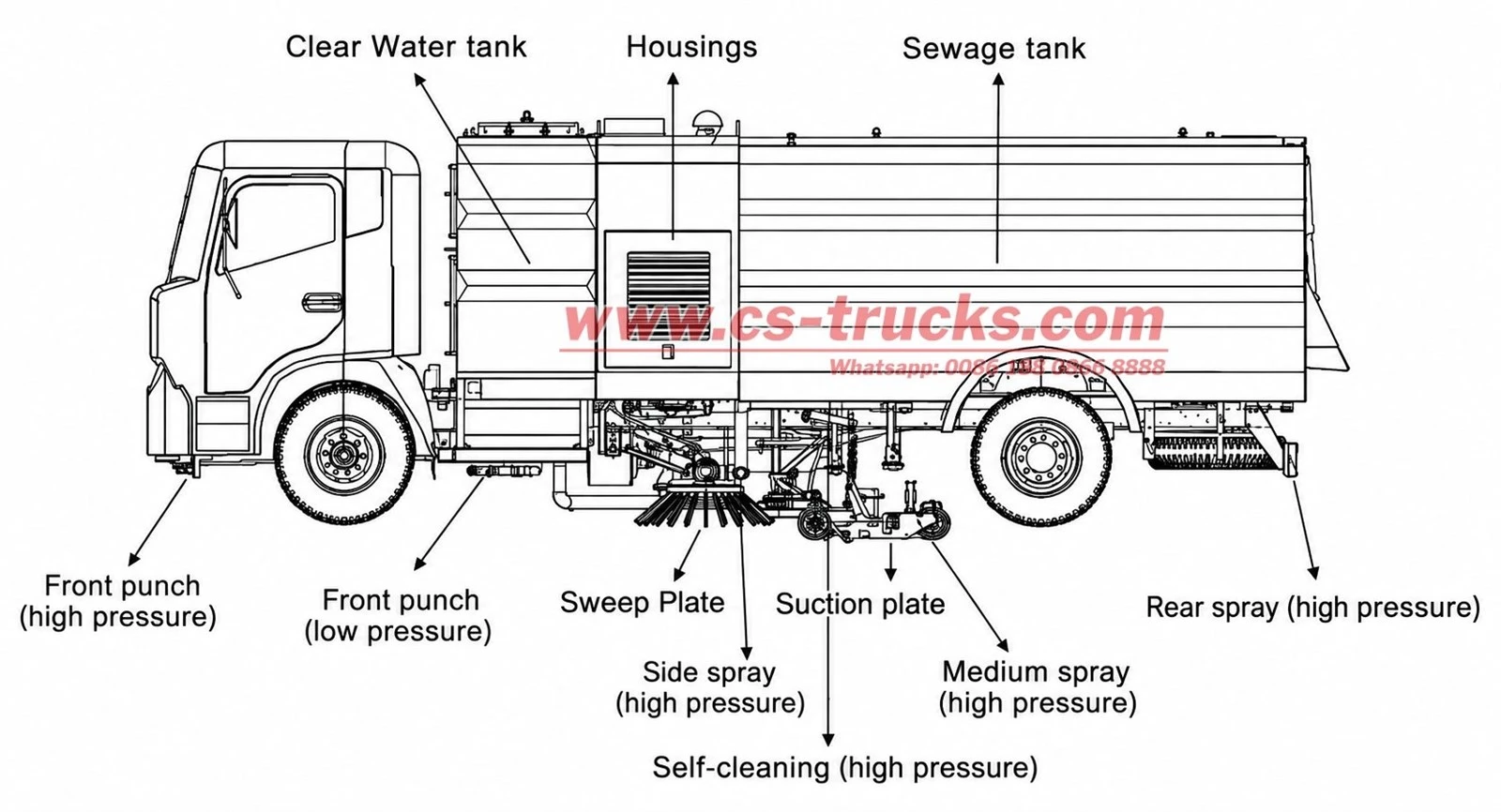
I. Power and Blower System
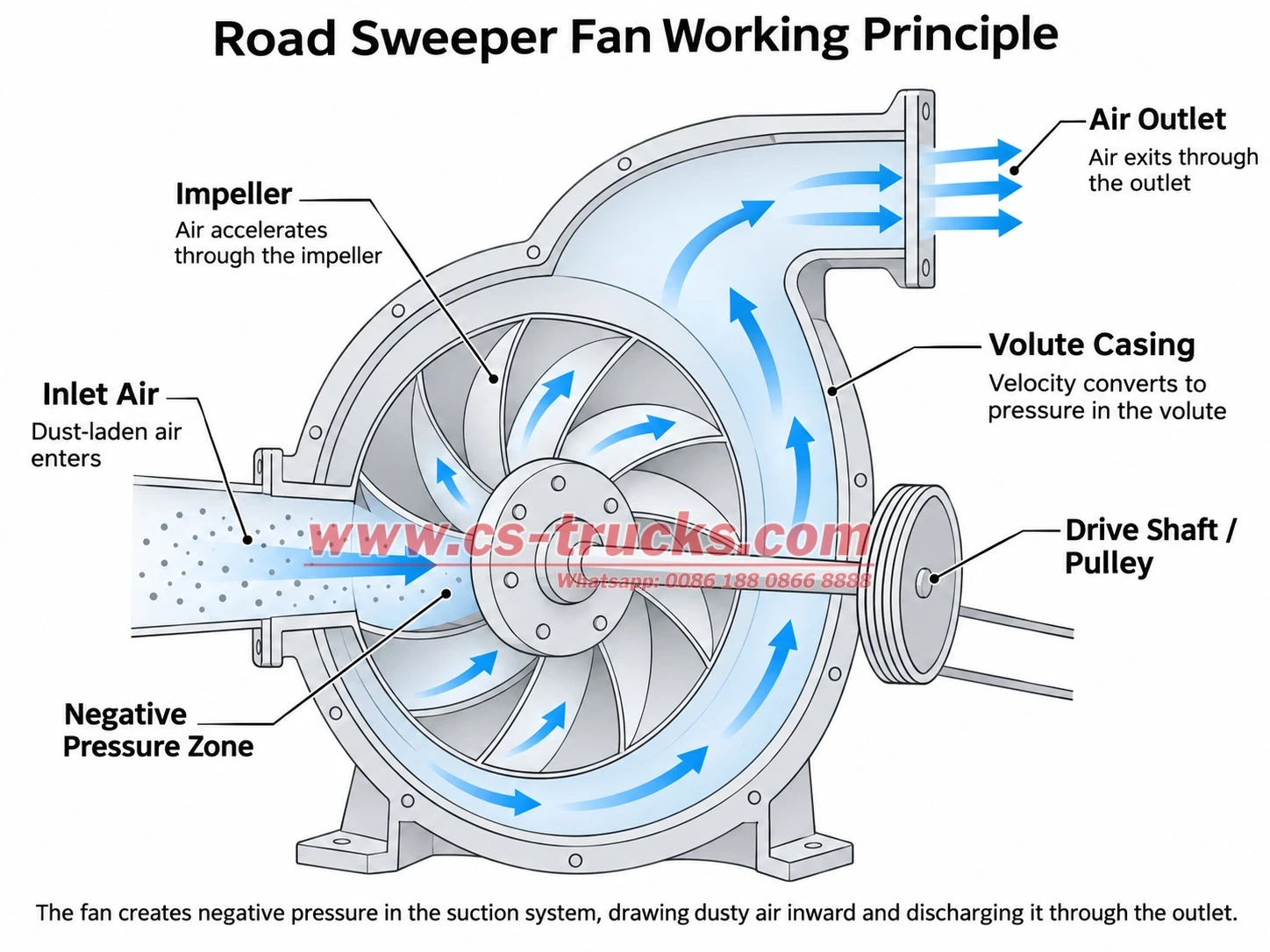
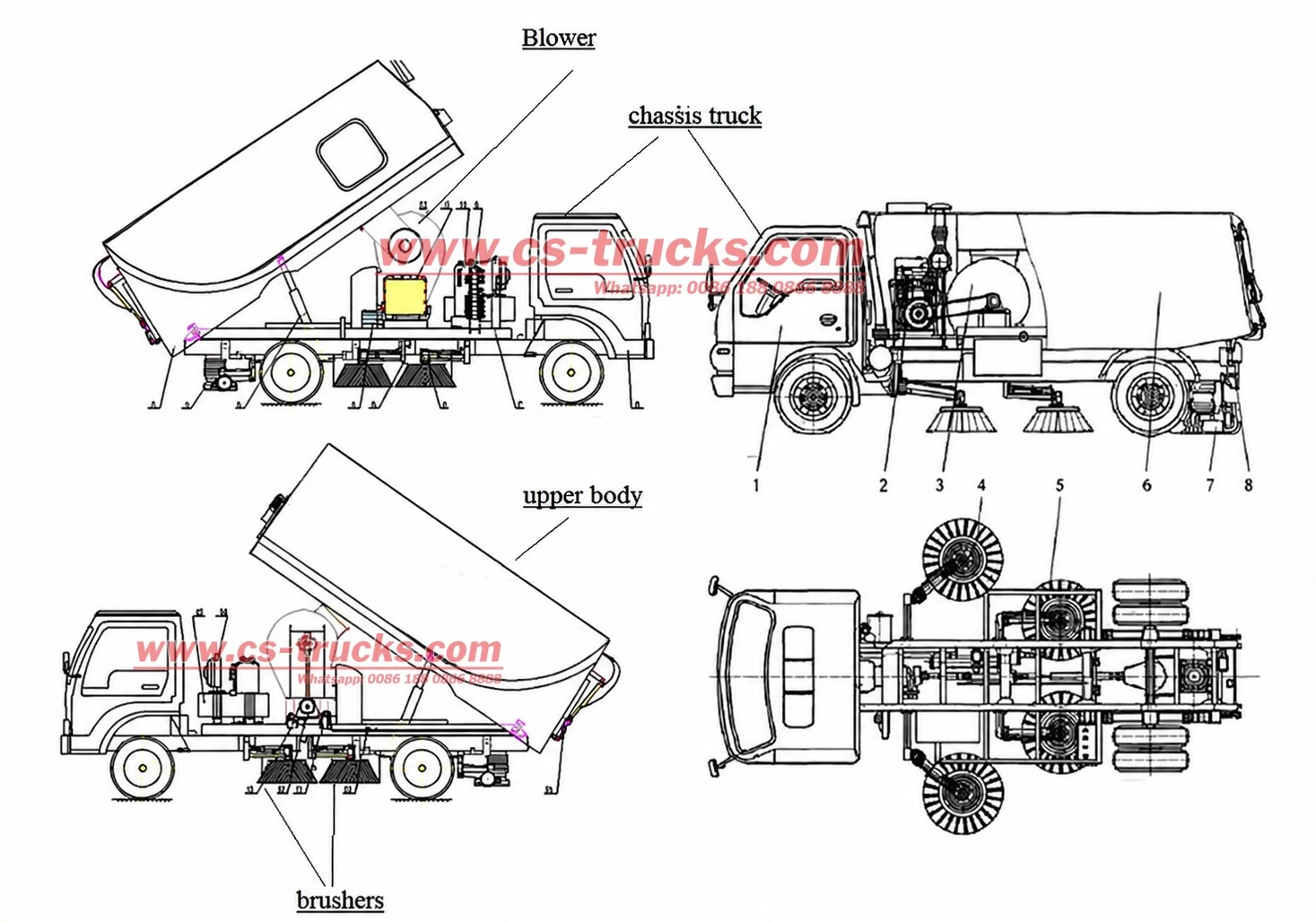
The power and blower system provides the power required for vacuum suction. The auxiliary engine drives the blower to rotate at high speed, generating negative pressure and a strong airflow, allowing road debris to be sucked in and transported to the debris collection bin.
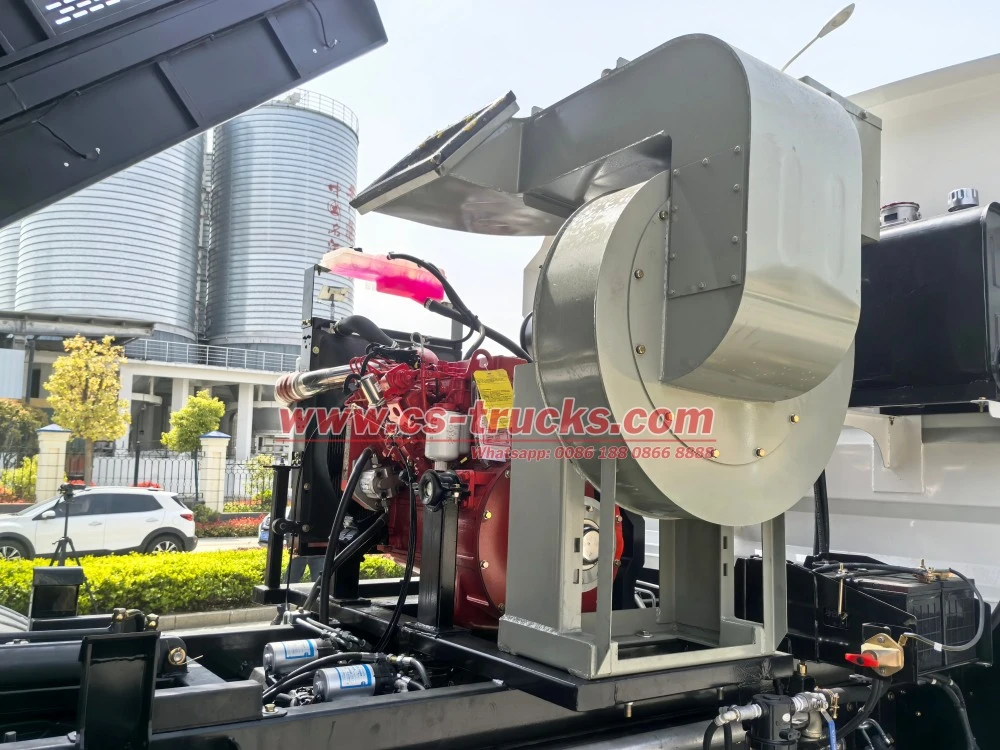
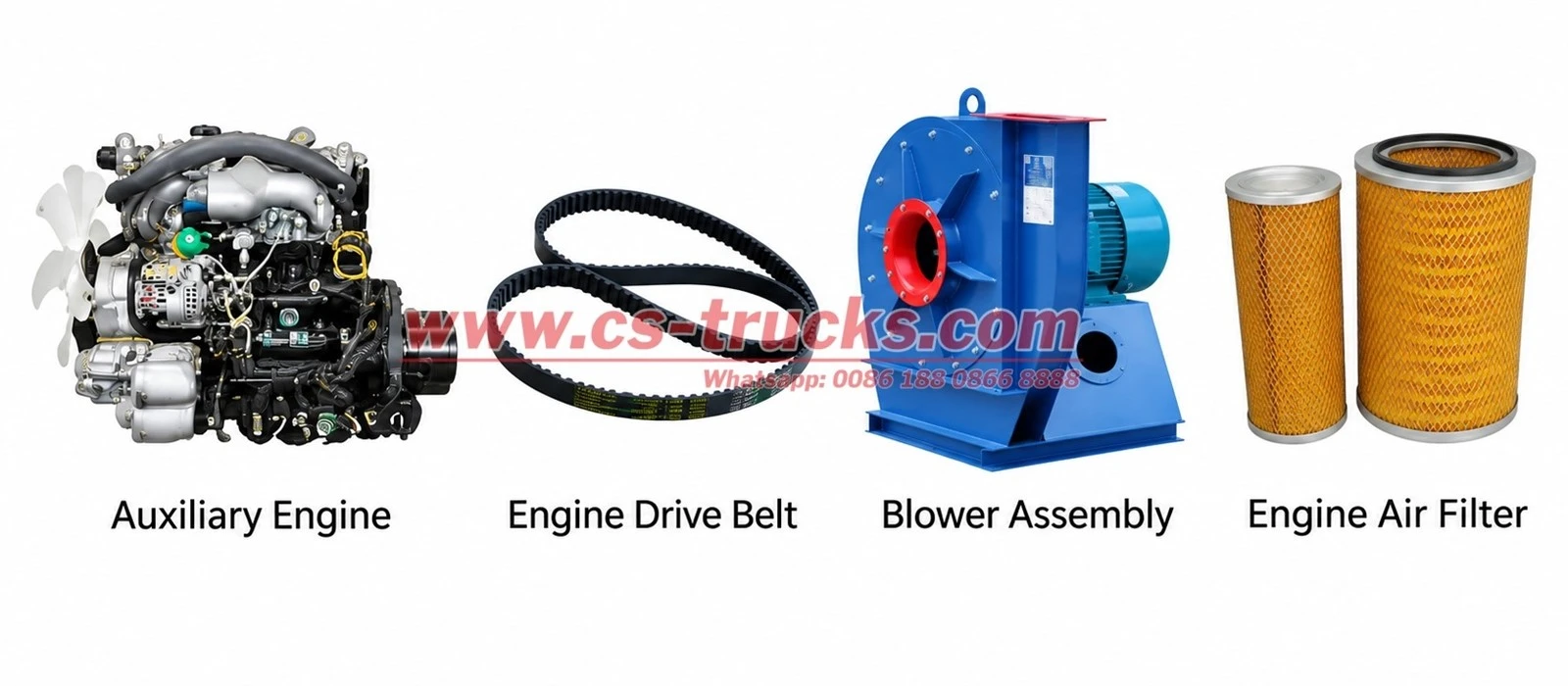
Main components include the auxiliary engine, engine drive belt, blower assembly, and engine air filter.
Working principle of the power and blower system:
After the auxiliary engine starts, it drives the blower to rotate at high speed via the drive belt. The blower generates negative pressure, creating a strong suction force from the nozzle to draw in dust, leaves, sand, and other debris from the road surface, which is then transported to the waste collection bin via a hose.
Auxiliary Engine
The auxiliary engine provides independent power to the sweeper's blower system. When running, the engine drives the blower to rotate at high speed via a transmission mechanism, generating the negative pressure and airflow required for sweeping operations, enabling the vehicle to continuously suck up and collect waste.
Engine Drive Belt
The engine drive belt connects the output end of the auxiliary engine to the blower drive pulley, transmitting the power generated by the engine to the blower and maintaining its stable rotation. Belt drives are characterized by their simple structure, smooth operation, and convenient maintenance.
Blower Assembly
The blower assembly is the core component of the sweeper's vacuum suction system. It generates airflow and negative pressure through high-speed rotation, providing continuous suction force to the nozzle, allowing dust, leaves, sand, and other debris from the road surface to pass through the nozzle and hose into the waste collection bin.
Engine Air Filter
The engine air filter filters the air entering the engine, intercepting dust, sand, and other impurities to prevent them from entering the engine cylinders and reducing wear on internal parts such as pistons and cylinder walls. Keeping the air filter clean helps maintain normal engine intake and stable operation.
II. Waste Collection System
The waste collection system is responsible for picking up, transporting, and storing waste collected from the road.
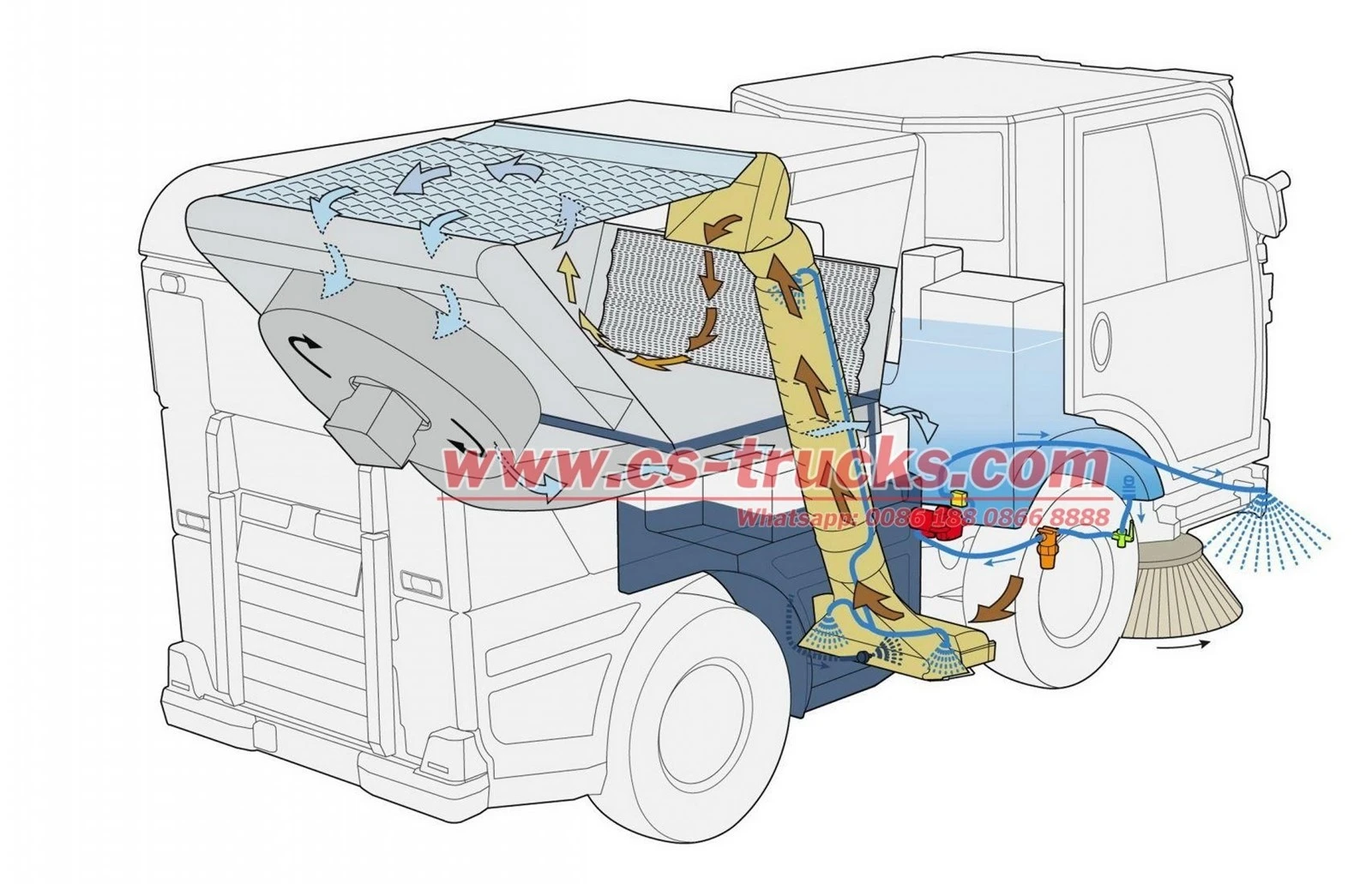
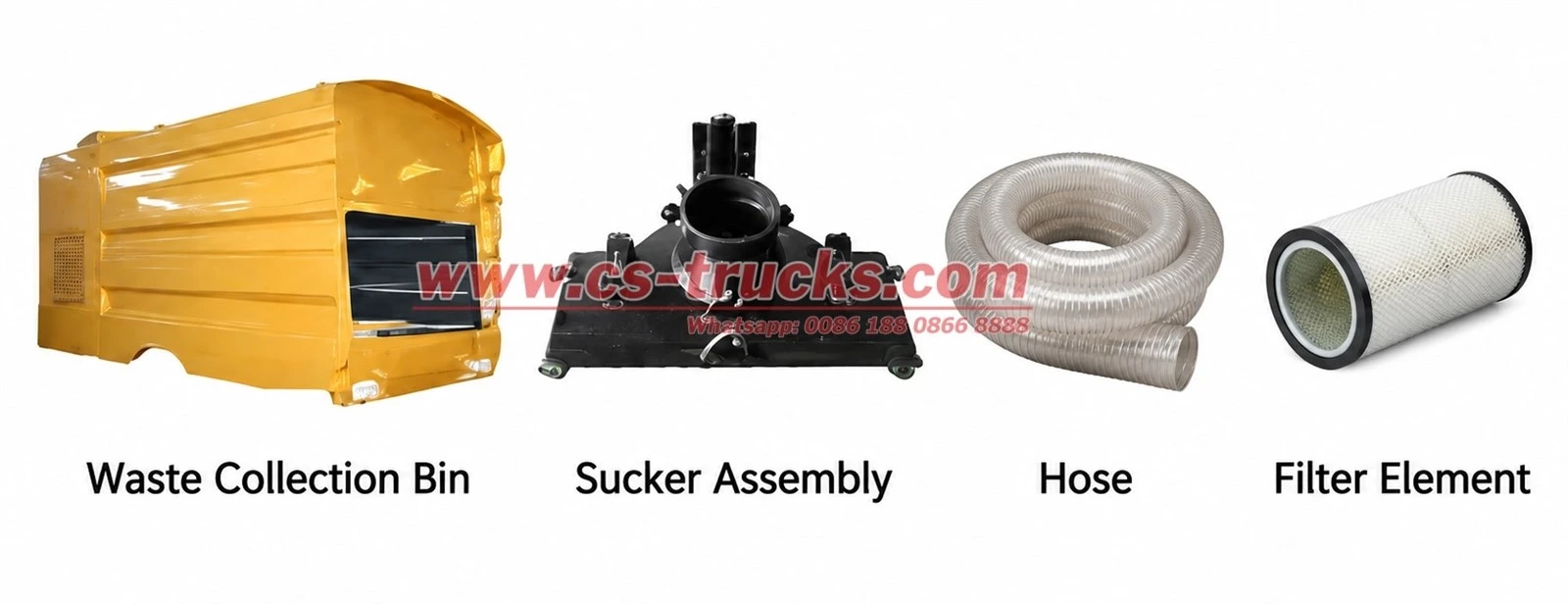
Its main components include the waste collection bin, suction nozzle assembly, hose, and suitable filter elements.
How the Waste Collection System Works:
The suction nozzle sucks in road debris along with air. The dust-laden airflow is transported to the waste collection bin through the suction hose. Once inside the bin, larger debris particles settle due to inertia and gravity, while fine dust is intercepted by the filter elements. The filtered air is discharged through the exhaust channel, thus achieving separation of waste and air.
Waste Collection Bin:
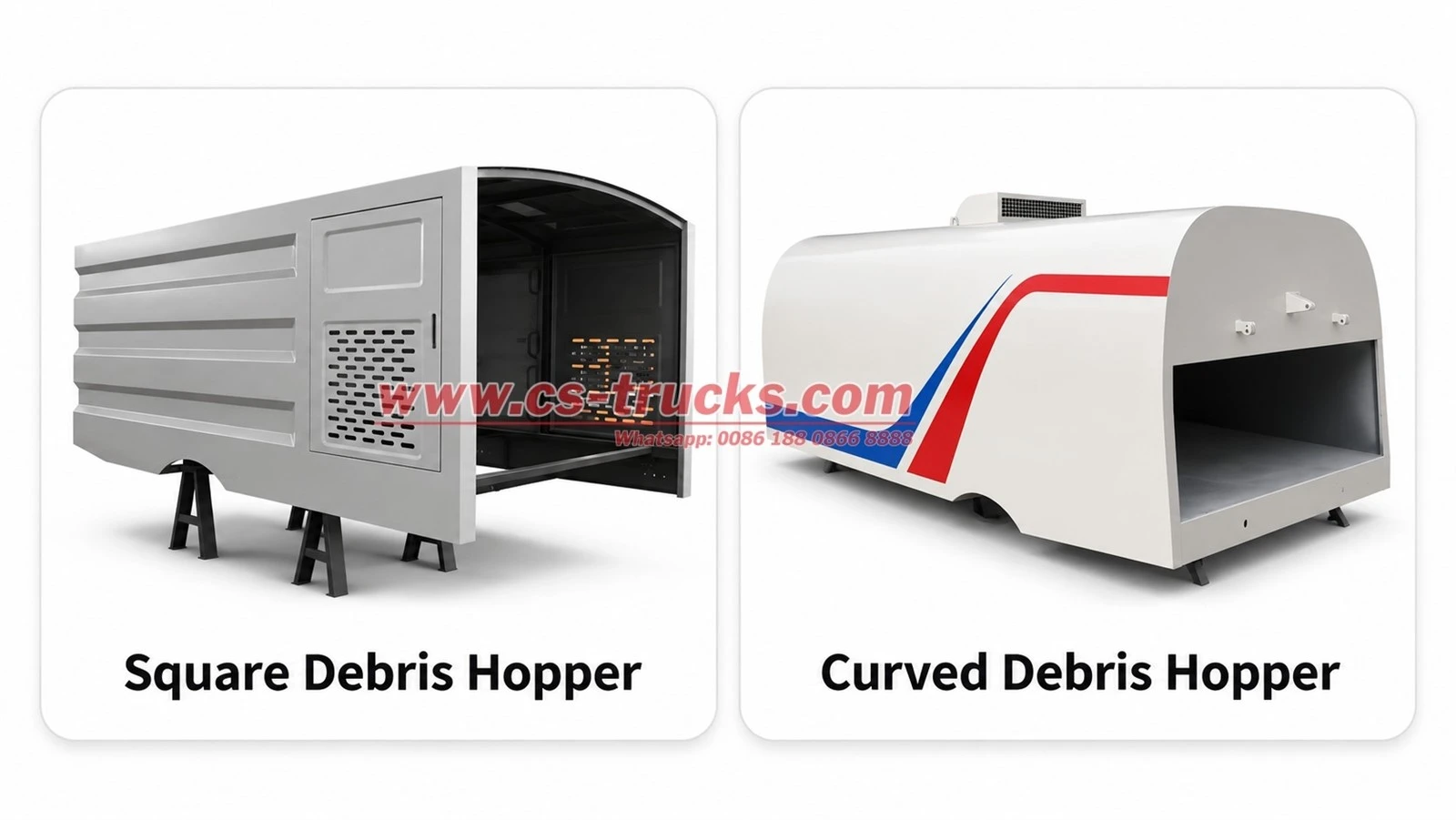
The waste collection bin is the main component of a road sweeper truck used to store swept waste and is usually installed on top of the vehicle chassis. Based on the external structural design, common appearance styles are mainly square and curved.
- Square Debris Hopper: The hog has a rectangular structure, a neat appearance, and high internal space utilization, facilitating capacity design and internal layout.
- Curved Debris Hopper: The hog features a curved or rounded design, resulting in smoother lines and reducing litter buildup in certain areas, making the interior easier to clean.
Sucker Assembly: The sucker is installed under the vehicle. It directs airflow to the road surface and collects loose debris using a vacuum system.
Hose: The hose connects the sucker assembly to the hog, using a strong airflow to transport dust, leaves, sand, and other debris collected by the sucker into the hog. The hose is typically made of durable, flexible materials to withstand bending and vibration during vehicle operation, ensuring smooth waste transport.
Filter Element: The filter element is installed in the air filtration area of the waste collection system. It primarily intercepts fine dust particles in the dusty airflow, preventing dust from spreading into the surrounding environment with the exhaust air. Regular cleaning or replacement of filter elements helps maintain filtration efficiency and ensure normal system operation.
III. Sweeping and Washing System
The sweeping and washing system is the core component of the road sweeper truck that directly performs road cleaning operations. It is primarily responsible for sweeping road debris, collecting waste, spraying water to suppress dust, and cooperating with the suction system to collect garbage.
The sweeping and washing system mainly consists of sweeping discs, brushes, suction nozzle assembly, suction hose, and water spraying system.
Working Principle:
During operation, the sweeping discs drive the brushes to rotate, collecting dust, leaves, sand, and other debris from both sides of the road and around the vehicle to the suction nozzle area. The water spraying system sprays water onto the brushes and near the suction nozzle to reduce dust generated during sweeping. Subsequently, under the negative pressure generated by the fan, the suction nozzle sucks in the garbage along with air and delivers it to the garbage collection bin through the hose, completing the road sweeping operation.
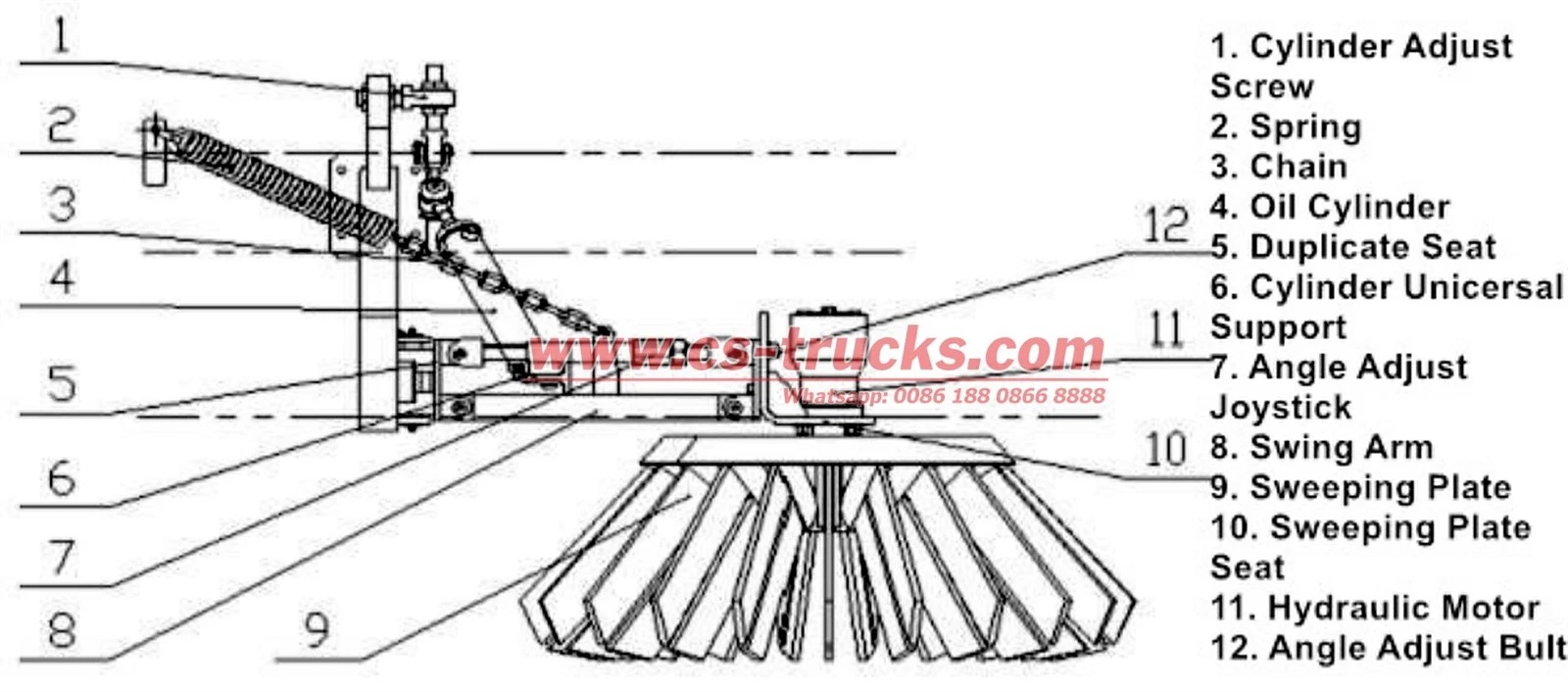
Sweeping Discs: The sweeping discs are installed on both sides of the vehicle's underside and are the main sweeping mechanism of the road sweeper truck. During operation, the sweeping disc rotates under the drive of a hydraulic motor or other drive mechanism. Through the brush strips, it contacts the road surface, collecting dust, leaves, sand, and other debris from the road edges and sides of the vehicle towards the suction nozzle, creating conditions for subsequent vacuuming. Some models are equipped with dual sweeping discs on both sides to expand the sweeping width.
Brush Strips: The brush strips are installed at the bottom of the sweeping disc, directly contacting the road surface to collect dust, leaves, sand, and other debris. Common materials include plastic filaments, steel wire, and composite materials. They are wear parts requiring regular inspection and replacement.
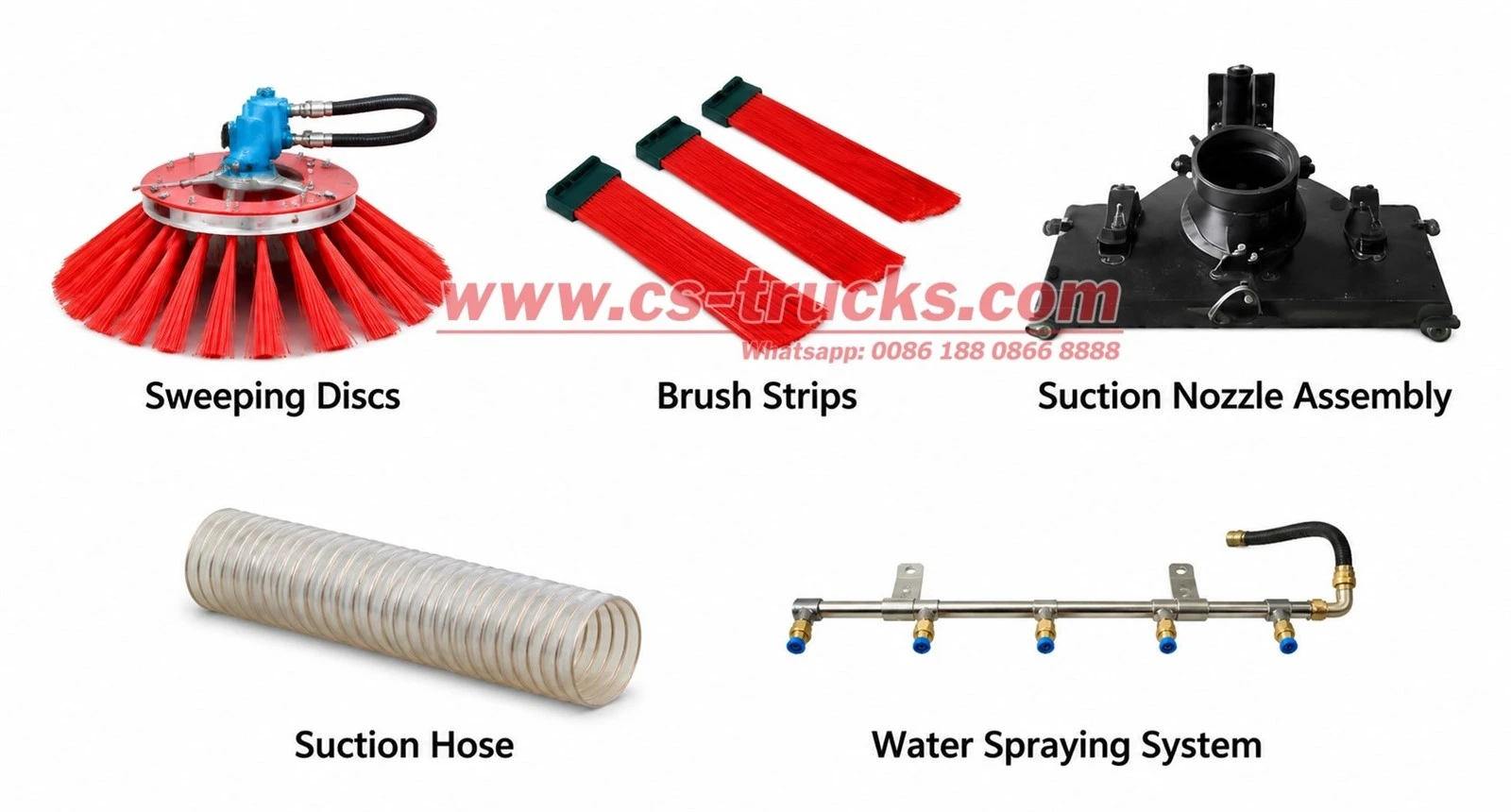
Suction Nozzle Assembly: The suction nozzle is installed at the bottom of the vehicle. Using negative pressure generated by a blower, it sucks the dust, leaves, sand, and other debris collected by the sweeping disc into the waste collection system. It is usually equipped with a wear-resistant structure and a height adjustment mechanism to adapt to different road conditions.
Suction Hose: The suction hose connects the suction nozzle assembly to the waste collection bin, using negative pressure airflow to transport the sucked-in waste to the collection bin. The hose is usually made of flexible, wear-resistant materials to ensure smooth waste transport.
Water Spraying System: The water spraying system uses a water pump, spray frame, and nozzles to spray water around the sweeping discs and suction nozzles, reducing dust during the sweeping process. Some models are also equipped with a high-pressure water spray device for washing away road debris.
IV. Hydraulic System
The hydraulic system provides power to all moving mechanisms of the sweeper, controlling operations such as raising and lowering the sweeping discs, lifting the garbage bin, and opening the rear door, ensuring the normal operation of the sweeping and unloading process.
Main Components: Hydraulic pump, hydraulic oil tank, hydraulic cylinders, multi-way control valve, hydraulic pipelines.
Working Principle: The engine or power take-off drives the hydraulic pump, converting mechanical energy into hydraulic energy. High-pressure hydraulic oil is delivered to different hydraulic cylinders through control valves, driving the sweeping discs to rise and fall, the garbage bin to lift, or the rear door to open, realizing the action control of each mechanism.
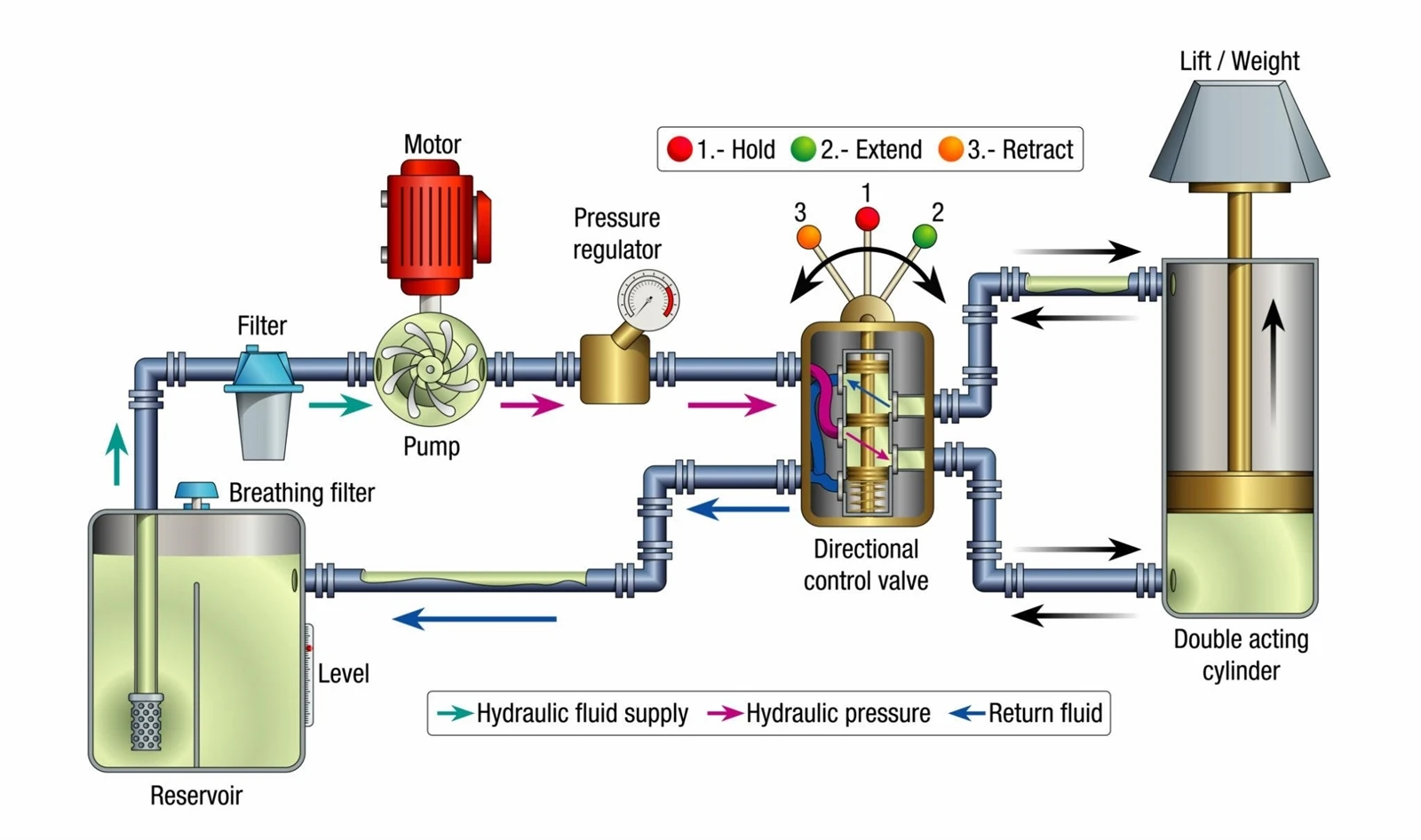
Hydraulic Pump: Converts the mechanical power provided by the engine or power take-off into hydraulic energy, draws hydraulic oil from the oil tank, and delivers pressurized oil to the hydraulic system.
Hydraulic oil tank: Stores hydraulic oil and supplies it to the hydraulic pump, while also helping to cool the oil and separate air from it.
Hydraulic cylinder: Converts hydraulic energy into linear mechanical motion, primarily used to control sweeper lifting, garbage bin raising, and rear door opening.
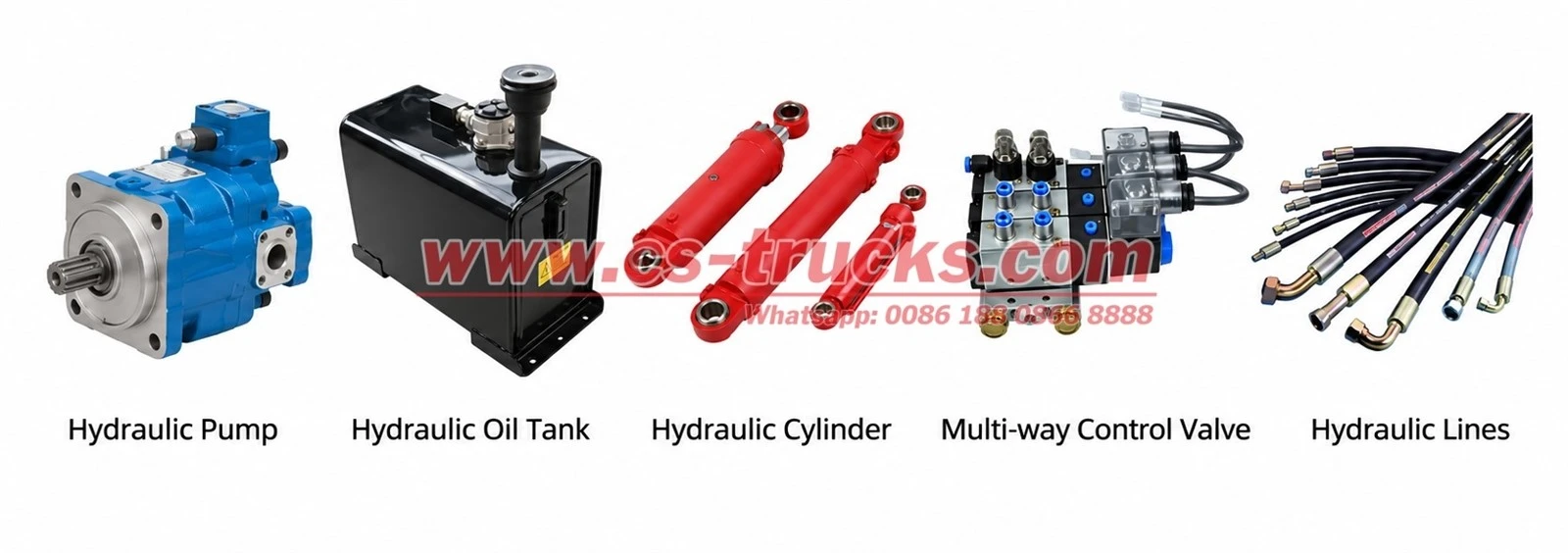
Multi-way control valve: Distributes and controls the flow direction and flow rate of hydraulic oil, thereby controlling the actions of different hydraulic actuators.
Hydraulic lines: Connect the various components in the hydraulic system, responsible for delivering high-pressure hydraulic oil and ensuring stable hydraulic power transmission.
V. Electrical and Supporting Components
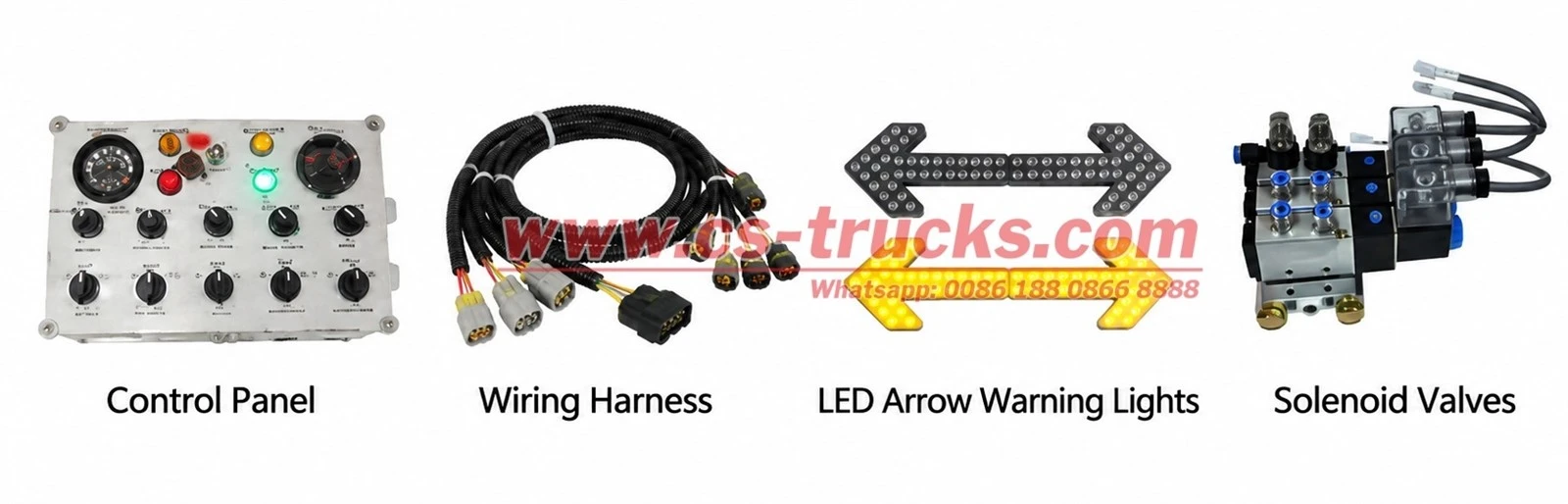
The electrical system and auxiliary components provide power supply, operation control, and auxiliary functions for the road sweeper truck. They are mainly used to control the sweeping device, lighting equipment, alarm devices, and various electrical equipment, ensuring coordinated operation of all vehicle systems and improving operational convenience and safety.
Control Panel: Used to operate and control various functions of the sweeper truck, including sweeper disc lifting, sweeping system start/stop, water spraying for dust suppression, and garbage bin operations. It allows the driver to adjust the equipment status according to operational needs.
Wiring Harness: Connects various electrical devices and control components of the vehicle, responsible for transmitting power and control signals, ensuring normal communication and operation of all electrical systems.
LED Arrow Warning Lights: LED arrow lights provide directional warnings to other road users. They are especially useful when the vehicle is performing cleaning operations on public roads.
Solenoid Valves: Control the on/off state or direction switching of hydraulic circuits via electrical signals, realizing the electrical control of hydraulic actuators such as sweeper discs and cylinders.
VI.How to Maintain Key Components of Road Sweepers
Regular maintenance helps improve cleaning performance, reduce unexpected downtime, and extend the service life of road sweeper components.
The following checklist provides a general maintenance reference:
| System | Maintenance Recommendations |
| Power and Fan System | Check engine oil, belts, air filters, fan impellers, and bearings |
| Debris Collection System | Check hoppers, suction nozzles, hoses, and filter elements |
| Hydraulic System | Check hydraulic oil, hoses, valves, hydraulic cylinders, seals, and leaks |
| Sweeping System | Check brush strips, brush wear, mounting brackets, and drive mechanisms |
| Water Spray System | Check water pumps, filters, hoses, valves, and nozzles |
| Electrical System | Check switches, wiring, indicator lights, and warning lights |
| Auxiliary Components | Check tires for wear, cracks, and mounting conditions |
VII. Frequently Asked Questions
Q1: What are the main systems of a road sweeper?
Main systems typically include the power and blower system, debris collection system, hydraulic system, sweeping and water spray system, and electrical control system. Specific configurations vary depending on the model.
Q2: What is the most important component of a road sweeper?
No single component is responsible for the entire cleaning process. The blower, auxiliary engine, sweeping brushes, suction nozzle, hydraulic system, and collection body all play important roles.
Q3: What is the function of the hydraulic system on a road sweeper?
The hydraulic system powers the hydraulic motors and cylinders. It is typically used to operate the rotating brushes, lifting mechanisms, and other movable workpieces.
Q4: How do the blower and suction nozzle work together?
The blower generates airflow and negative pressure, while the suction nozzle guides incoming air and debris into the collection system. Both components must function properly to maintain effective vacuum collection.
Q5: How often should road sweeper components be maintained?
The frequency of inspection depends on the vehicle model, operating hours, and working environment. Operators should perform daily inspections and follow the manufacturer's recommended service schedule.
Conclusion:
A road sweeper consists of multiple interconnected systems, each with its important components and functions.
The power and blower system provides the energy and airflow required for cleaning, the debris collection system is responsible for picking up and storing waste, and the hydraulic system operates the movable equipment. Simultaneously, the sweeping and water spraying systems work together to remove debris and reduce dust.
Understanding these systems and properly maintaining their components helps operators improve cleaning efficiency, reduce equipment downtime, and extend vehicle lifespan.