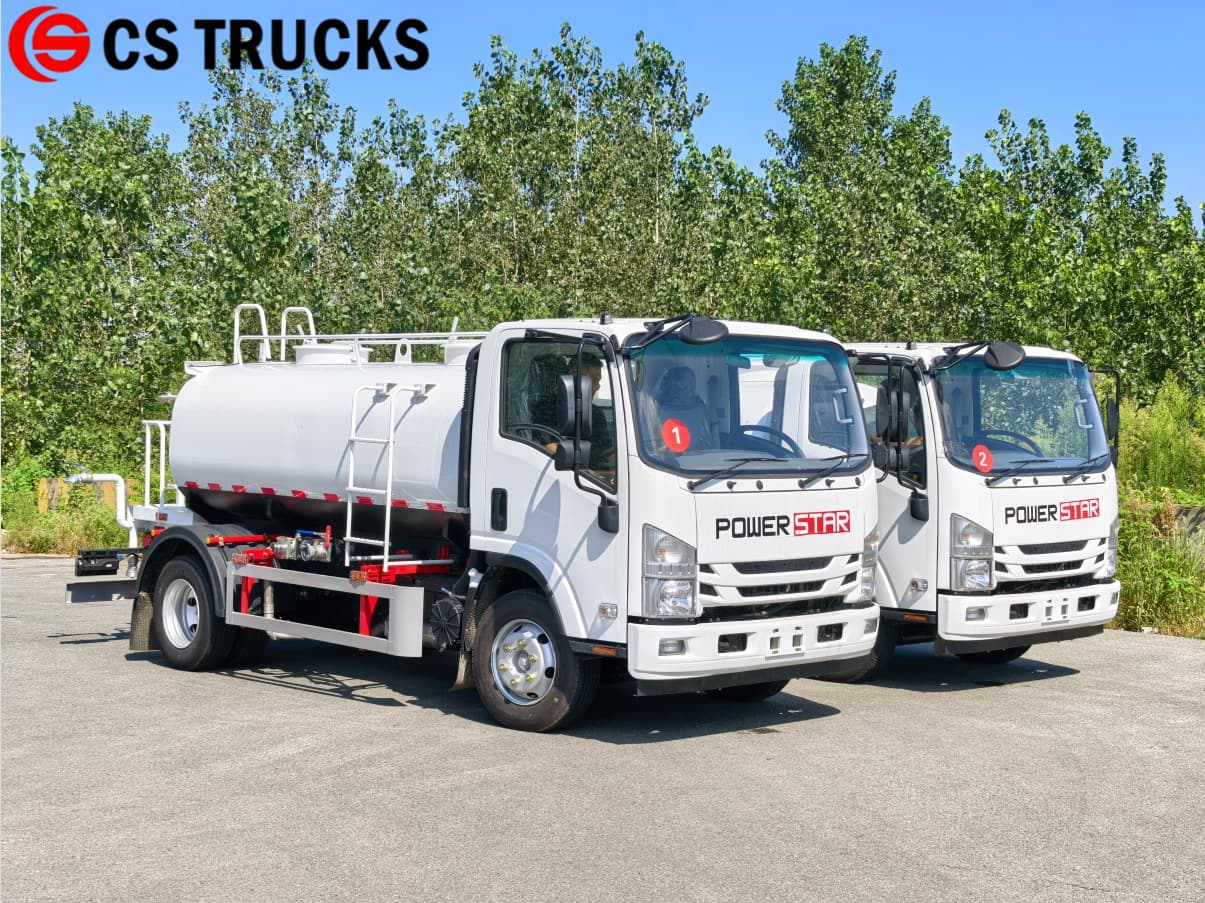
Water trucks and water tankers look similar, both equipped with large water tanks for storing and transporting water, but their uses, configurations, and application scenarios differ significantly.
Water trucks are primarily used for road sprinkling, dust suppression, cleaning, and green space maintenance; water tankers are mainly used to transport large quantities of water from one location to another, and to unload or supply water at the destination.
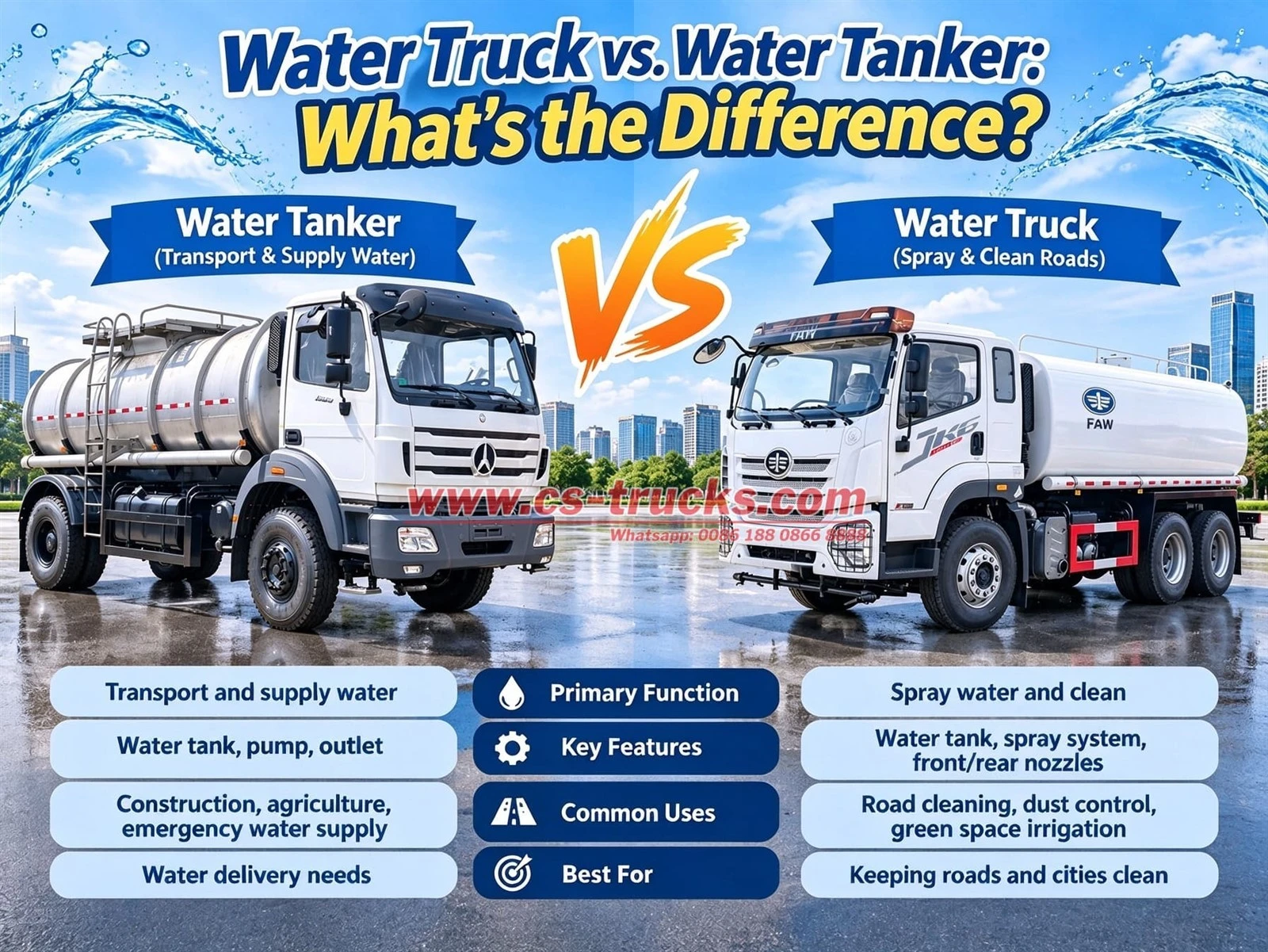
So what exactly are the differences between the two? Which one is more suitable for your project? This article will compare them from aspects such as vehicle definition, main structure, working principle, application scenarios, core differences, and selection factors to help you choose the right vehicle.
I.What Is A Water Truck?
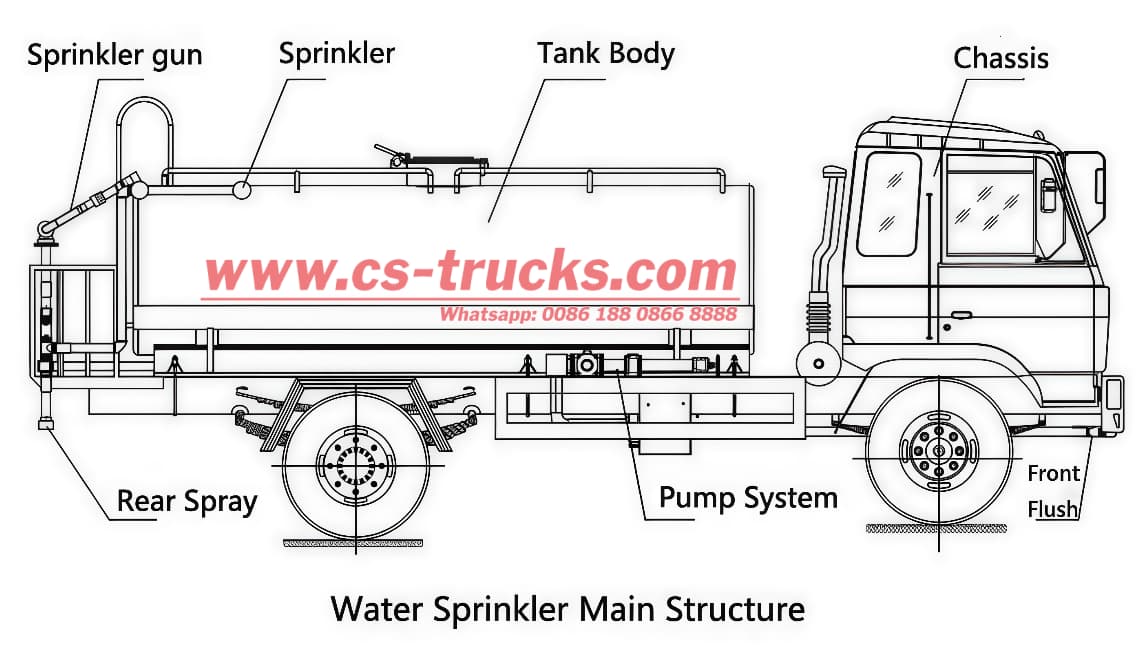
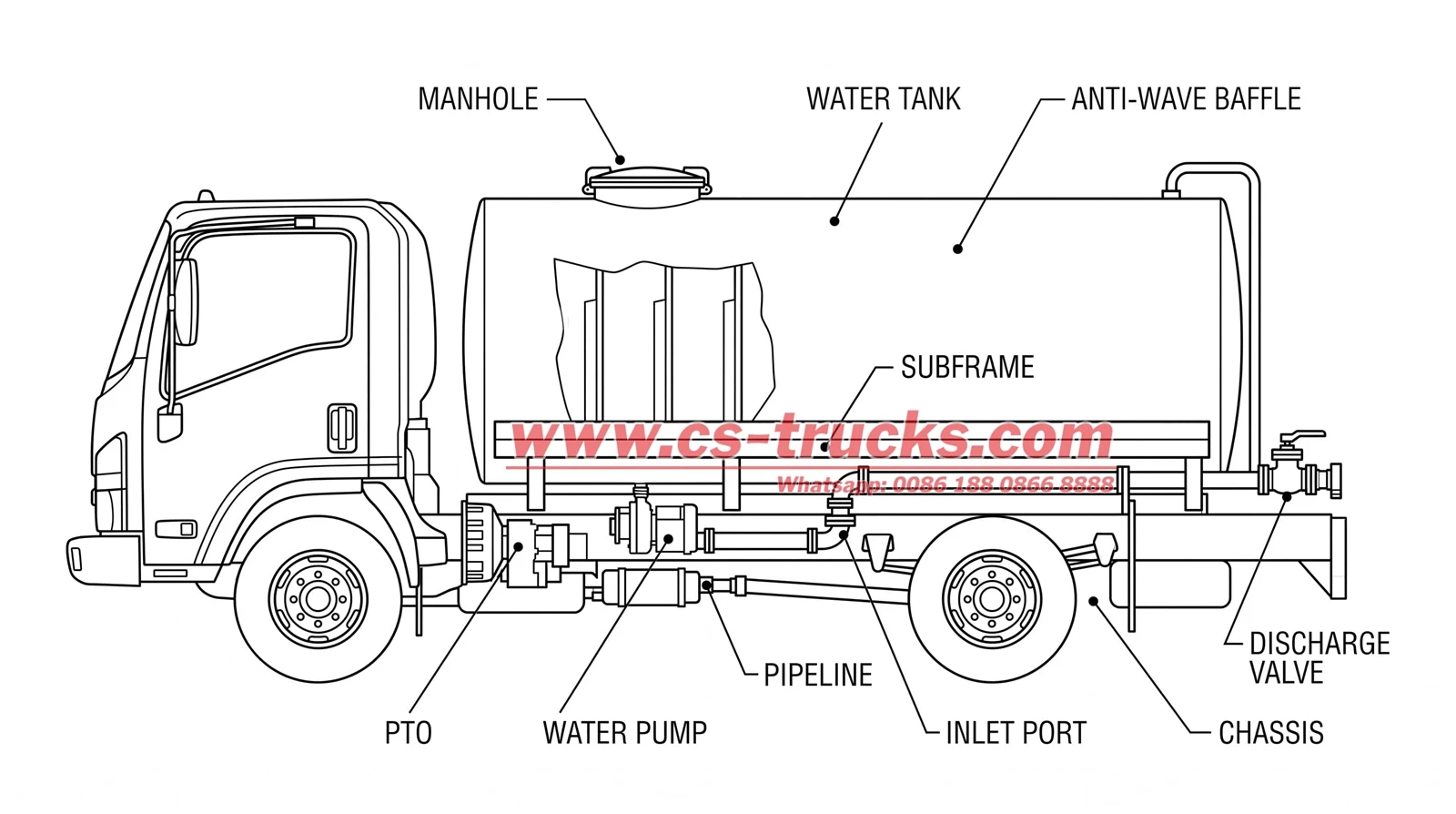
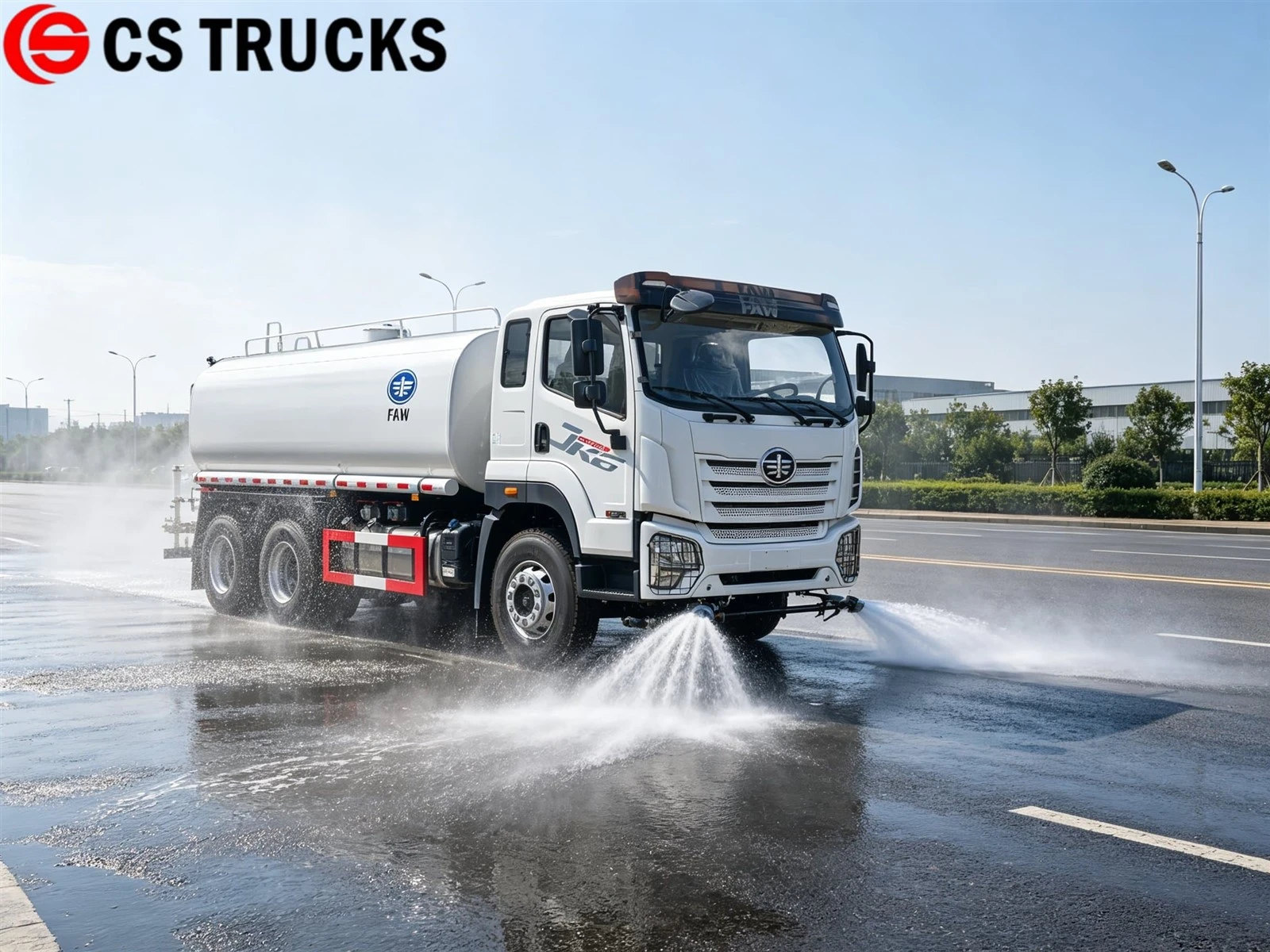
A water truck is a specialized vehicle used for water storage and spraying operations. It is typically equipped with a water tank, water pump, nozzles, water pipelines, and high pressure water cannons.
Through different spraying devices, it can meet needs such as road dust suppression, road cleaning, and green space maintenance.
Main Components:
- Water Tank: Stores water for operations.
- Water Pump: Provides the pressure required for water spraying.
- Front Spray System: Washes the road surface in front of the vehicle.
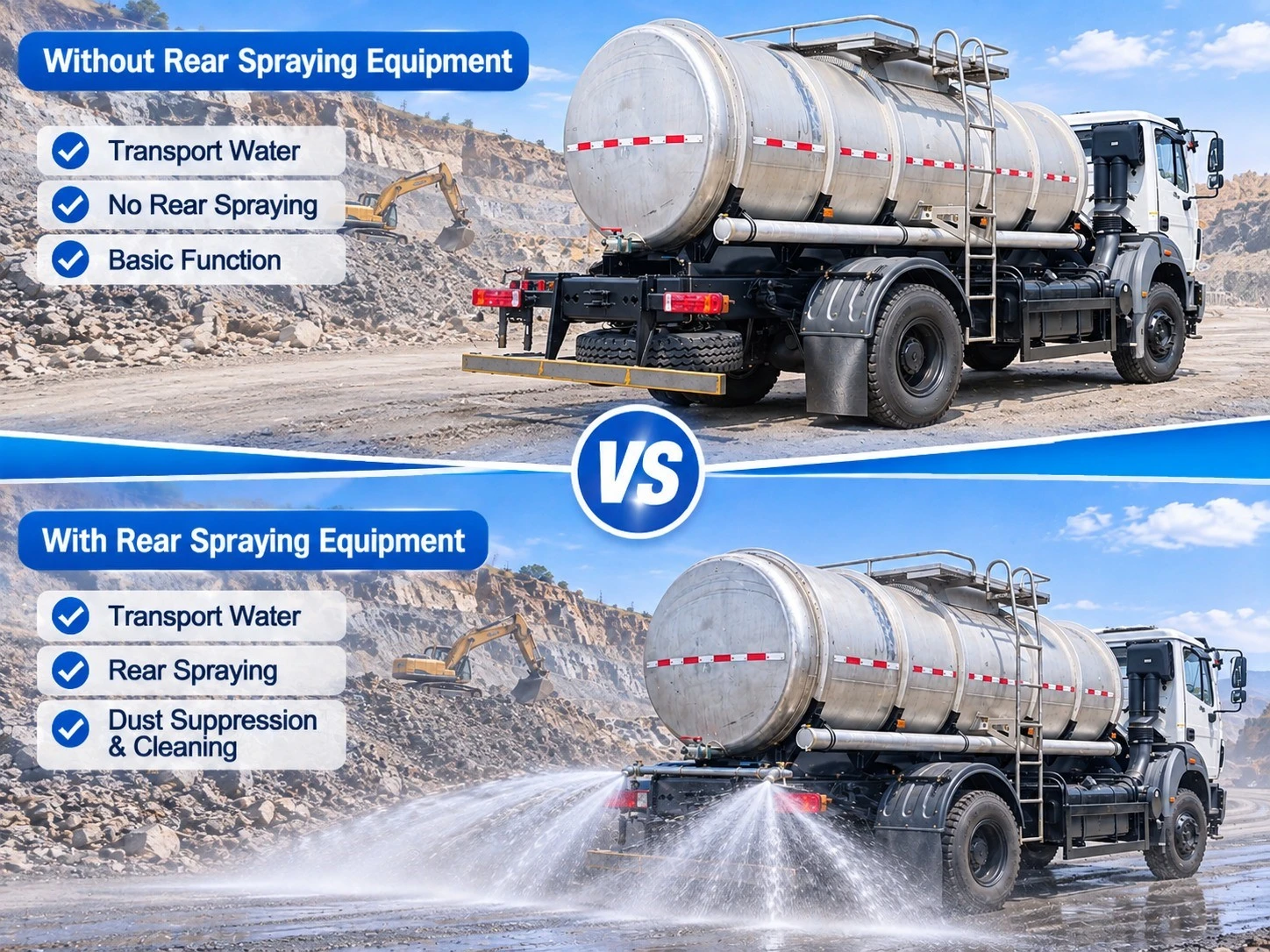
- Rear Spray System: Sprinkles water on the road to suppress dust.
- Side Spray System: Used for cleaning the sides of the road and irrigating greenery.
- High Pressure Water Cannon: Enables long range water spraying operations.
Main Application Scenarios:
- Dust control at construction sites.
- Dust suppression on mining transportation roads.
- City road cleaning and maintenance.
- Landscaping and road irrigation.
II.What Is A Water Tanker?
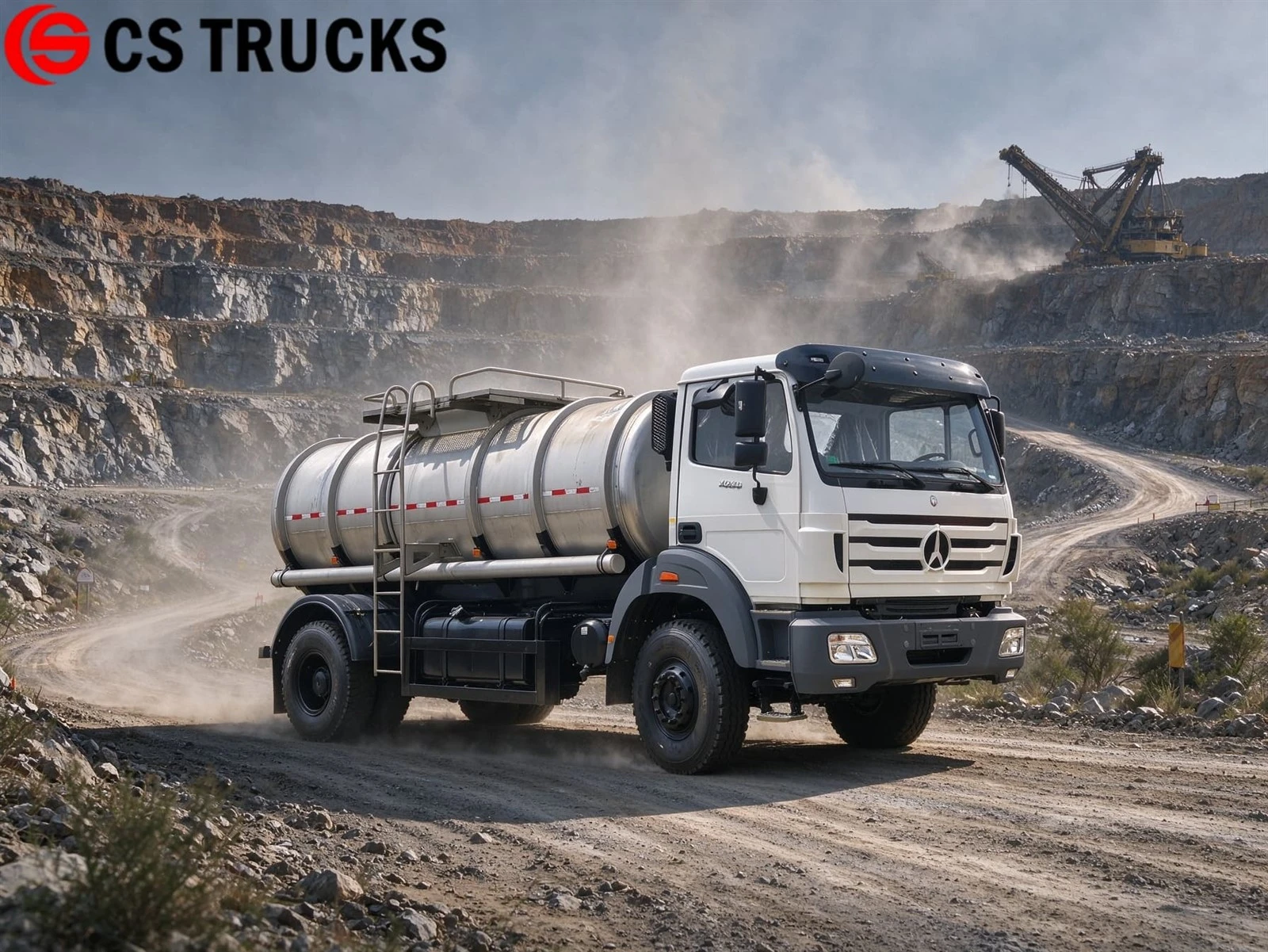
A water tanker is a specialized vehicle primarily used for storing and transporting large quantities of water. It typically consists of a truck chassis, a water tank, inlet and outlet ports, water pipelines, and control valves.
Unlike water trucks, water tankers prioritize water transport efficiency and ease of loading and unloading, rather than road spraying functionality.
Main Components:
- Storage Tank: Stores and transports water resources.
- Inlet: Connects to an external water source for filling.
- Outlet: Used for unloading and supplying water.
- Water Pipelines and Valves: Control the direction and flow rate of water.
- Water pump (optional): Assists in pumping and transporting water.
Main Application Scenarios:
- Water supply in remote areas.
- Industrial water transportation.
- Water supply to construction sites.
- Emergency water supply and temporary water source delivery.
III.Water Truck vs. Water Tanker: Key Differences
Although the two vehicles look similar, they differ in their design purpose and equipment configuration.
| Comparison Projects | Water Truck | Water Tanker |
| Main Uses | Sprinkling water, dust suppression, and cleaning | Water storage, water transportation, and water supply |
| Core Functions | Water spraying and distribution | Water transportation and distribution |
| Main Equipment | Water pump, nozzle, water cannon, spray piping | Water tank, inlet and outlet, valves |
| Water Distribution Method | Nozzles and spraying systems | water outlet or water pump |
| Typical Applications | Construction sites, mines, and road maintenance | Industrial water supply, remote areas, engineering water supply |
| Road Dust Reduction | Suitable | Additional spraying equipment is needed |
| Equipment Configuration | It has a wide range of spraying functions | Mainly based on loading and unloading water systems |
Key Differences:The main task of a water sprinkler truck is to spray water onto a designated area, while the main task of a water transport truck is to transport water from one location to another.
IV.Water Truck vs. Water Tanker: Which One Should You Choose?
The choice of which vehicle to use depends primarily on the actual work requirements of the project.
Choose a Water Truck If:
- Sprinkle water to suppress dust at construction sites.
- Regularly spray water on mining roads.
- Clean city roads and outdoor surfaces.
- Water trees and green areas along roadsides.
- Use high pressure water cannons for water spraying operations.
Choose a Water Tanker If:
- Transporting large quantities of water resources.
- Providing water sources to remote areas.
- Distributing production water to industrial enterprises.
- Providing construction water to construction sites.
- Completing long distance water resource transportation.
| Project Requirements | Recommended Trucks |
| Dust control at construction sites | Water Truck |
| Dust reduction on mine roads | Water Truck |
| City road cleaning | Water Truck |
| Garden and greening irrigation | Water Truck |
| Industrial water transportation | Water Tanker |
| Water supply in remote areas | Water Tanker |
| Large scale water resource distribution | Water Tanker |
V.Can a Water Tanker Be Used as a Water Truck?
Yes. Provided the vehicle's structure and load-bearing requirements are met, some water trucks can be equipped with spraying devices to perform watering operations.
Common modification equipment includes:
- Water pump system
- Front and rear spray system
- Side nozzles
- Water supply pipeline
- High pressure water cannon
Before modification, it is essential to thoroughly inspect the water tank structure, chassis load bearing capacity, water pump performance, and equipment installation space to ensure the vehicle can operate safely.
It is important to note that not all water trucks are suitable for modification; the specific plan should be determined based on vehicle parameters and actual intended use.
VI.Important Factors to Consider When Buying a Water Truck or Water Tanker
Regardless of the type of trucks you choose, we recommend focusing on the following aspects:
1. Water Tank Capacity
Select an appropriate water tank capacity based on the project's water consumption, transportation distance, and operating frequency. Larger capacity requires a higher load bearing capacity from the chassis.
2. Chassis
The key considerations are engine power, vehicle load capacity, drive type, and actual road conditions to ensure that the vehicle meets operational requirements.
3. Water Pump Performance
For water sprinkler trucks, the flow rate and pressure of the water pump need to be monitored; for water transport trucks, the water pump configuration needs to be determined based on the water loading and unloading methods.
4. Equipment Configuration
Select front spray, rear spray, side spray, high pressure water cannon, or loading/unloading water system based on the operational scenario to avoid purchasing unnecessary equipment.
5. Maintenance Costs
Consider fuel consumption, water pump maintenance, parts supply, and routine maintenance costs to reduce long term operating costs.
VII.Frequently Asked Questions
Q1: Are water trucks and water tankers the same type of vehicle?
A: No. Water trucks are mainly used for water spraying and road dust suppression, while water tankers are mainly used for water resource transportation and distribution.
Q2: Can water tanker trucks spray water on roads?
A: Yes, but they need to be equipped with water pumps, nozzles, and a corresponding spraying system.
Q3: Which type of vehicle should be chosen for construction sites?
A: If the main purpose is dust suppression at the construction site, a water sprinkler truck is recommended; if the main purpose is to transport construction water, a water tanker truck is recommended.
Q4: Can water sprinkler trucks be customized to meet specific needs?
A: Yes. Typically, water tank capacity, water pumps, spraying systems, high-pressure water cannons, and other optional equipment can be customized according to customer requirements.
VIII.Conclusion
While both water sprinkler trucks and water tankers have water storage and transportation functions, their primary uses differ.
- Water Sprinkler Trucks: Suitable for road watering, dust control, road cleaning, and green space maintenance.
- Water Tankers: Suitable for large volume water transport, industrial water supply, and water delivery to remote areas.
When purchasing, the appropriate vehicle model should be selected based on project requirements, tank capacity, chassis parameters, and equipment configuration.
Looking for a water sprinkler truck suitable for your project needs?
Contact us to learn about our water sprinkler truck products in different tonnages and configurations, obtain detailed parameters, and customize solutions.