

Vacuum trucks and septic tank trucks are the most widely used negative pressure suction vehicles in sanitation and municipal engineering projects. Due to their similar appearance and working principles, industry procurement, engineering construction, and foreign trade personnel often confuse them, leading to problems such as incorrect selection, mismatched working conditions, and low operational efficiency.
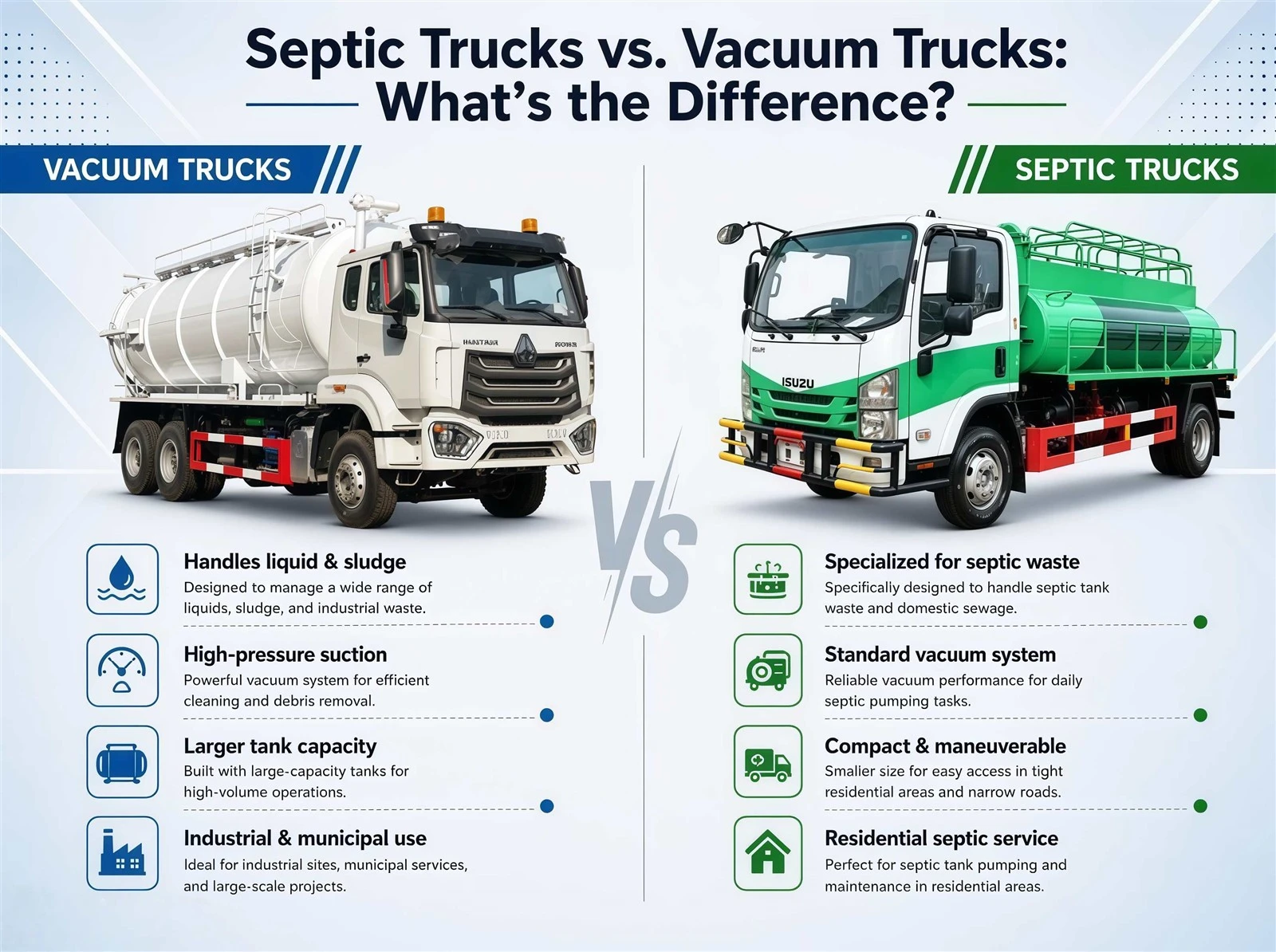
This article clearly explains the differences between the two vehicles in terms of definition, performance characteristics, working principle, applicable scenarios, and selection criteria.
I.What Is A Vacuum Truck?
The vacuum trucks rely on high negative pressure vacuum suction and hydraulic self-unloading technology to suck up and transfer solid liquid mixed sewage and sludge. They are engineering grade sanitation vehicles suitable for municipal pipe networks, environmental protection projects and overseas sanitation projects.

Key Features of a Vacuum Truck:
- Equipped with a high power vacuum pump, this tank boasts strong suction, capable of extracting mixed solid liquid waste such as sludge, mud, and small stones.
- The tank can be lifted and tilted, and with a fully opening rear cover, sediment can be directly dumped, ensuring thorough and residue free waste removal.
- The circular tank structure is pressure resistant and deformation resistant, suitable for continuous high negative pressure operations, and highly durable.
- Suitable for various applications including municipal pipeline dredging, river management, construction site mud transport, and overseas sanitation projects.
Working Principle:
The vacuum truck uses a vacuum pump to draw air from the tank, creating a high negative pressure, and then uses atmospheric pressure to force the waste into the tank. For discharge, it switches to pressurized discharge, or hydraulically lifts the tank and opens the rear cover for gravity dumping.
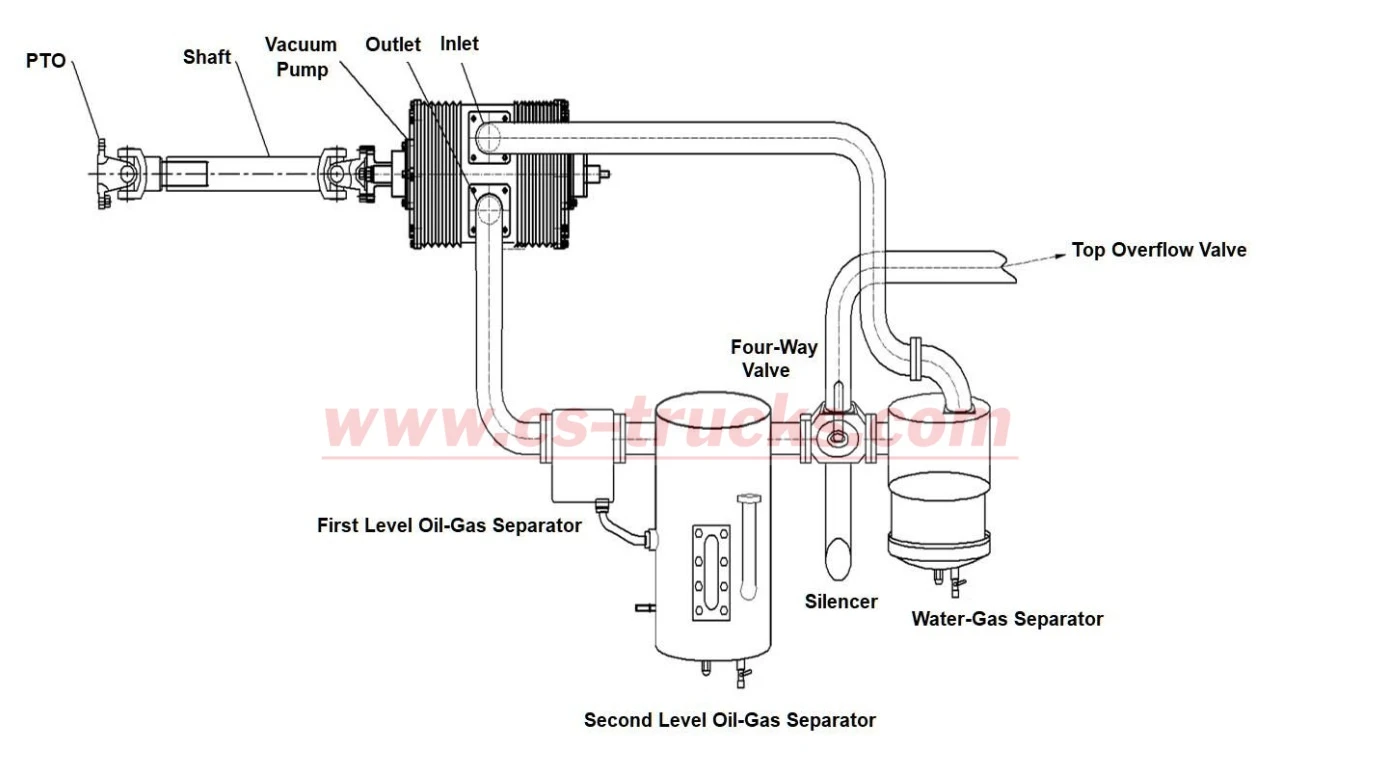
The specific work steps are as follows:
| Steps | Detailed Explanation |
| Vacuum Establishment | The engine drives the vacuum pump to extract air from the tank, creating a high negative pressure state |
| Material Suction | Under the pressure difference between the inside and outside of the tank, solid liquid mixtures are forced into the tank through the suction pipe |
| Gas Liquid Separation | The sucked in air and material are separated inside the tank. The gas is filtered by a water air separator before being discharged, preventing contamination of the vacuum pump |
| Transfer and Transportation | The tank stores the material in a sealed container. Vehicles transport the material to a designated processing site |
| Self-Unloading Discharge | The hydraulic system lifts the tank while simultaneously opening the rear cover, using gravity to completely dump and discharge the material |
II.What Is A Septic Truck?
The septic trucks are specifically designed for pumping, transporting, and discharging liquid fecal matter and domestic sewage. They feature a simple structure, no hydraulic self-unloading, and rely on vacuum suction and air pressure discharge. They are lightweight, low cost, and easy to maintain, and are widely used in urban and rural sanitation and aquaculture industries.

Key Features of a Septic Truck:
- With a relatively simple structure and a significantly lower procurement cost compared to vacuum trucks with the same chassis configuration, it offers excellent value for money.
- Specifically designed for liquid waste, it boasts a fast suction speed, making it suitable for frequent daily cleaning of septic tanks, sewage wells, and other similar facilities.
- It requires no hydraulic lifting system, using a vacuum pump for pressurized discharge, resulting in low maintenance requirements and easy operation even for beginners.
- The elliptical tank design reduces the vehicle's weight and fuel consumption, allowing for easy maneuverability in narrow residential areas and rural roads.
Working Principle:
The septic truck operates entirely using negative pressure suction and positive pressure exhaust, without the need for hydraulic self-unloading, resulting in a simple and stable process.

The specific work steps are as follows:
| Steps | Detailed Explanation |
| Power Input | Chassis PTO drives pump body operation |
| Negative Pressure Suction | Air is drawn from the tank to create a vacuum |
| Full Load Protection | Automatic air shut off to prevent backflow |
| Pneumatic Sewage Discharge | Pressurized discharge of sewage from the tank |
| Manual Cleaning | Open the lid to remove residue |
III.Key Differences Between Septic Trucks and Vacuum Trucks
| Feature | Vacuum Truck | Septic Truck |
| Product Positioning | Heavy duty dredging and operations in complex conditions | Light duty residential cleaning; routine waste collection under light duty conditions |
| Applicable Media | Sludge, mud, sand and gravel, waste residue, and solid liquid mixtures | Pure manure water, domestic wastewater, liquids free of solid impurities |
| Tank Structure | Cylindrical high pressure tank with reinforced pressure bearing walls to resist deformation under negative pressure | Oval tank, thin walled, fixed, sealed tank |
| Hydraulic Configuration | Tank lifting + fully hydraulic rear hatch opening | No lifting mechanism, no rear cover opening |
| Core Pump Housing | High flow, high vacuum suction pump with strong suction power and high throughput | Standard vacuum pump, low vacuum pressure, small flow capacity |
| Discharge Method | Hydraulic gravity self-dumping for thorough emptying with no residue | Waste is expelled by vacuum pressure, leaving significant residue |
| Work Efficiency | High overall efficiency-2 to 3 times that of a standard septic tank truck | Average performance; suitable for infrequent cleaning |
| Equipment Costs | Superior overall performance | Low cost, high value for money |
IV.Application Scenarios
Applications for Vacuum Truck:
✅Municipal Pipeline Maintenance: Regular sludge removal and unclogging of sewers, storm drains, and inspection wells.
✅Septic Tank Cleaning: Sewage suction and transportation from septic tanks in residential areas, schools, and public toilets (fully covering the functions of a vacuum truck).
✅River Management: Silt removal and dredging of urban rivers and drainage ditches.
✅Construction Sites: Suction and transportation of sludge from building pile foundations and construction sedimentation tanks.
✅Industrial Environmental Protection: Cleaning of factory sedimentation tanks, wastewater treatment plants, and industrial waste.
✅Emergency Response: Pumping out floodwaters during heavy rains, emergency unclogging of blocked pipes, and handling of sudden sewage leaks.

Applications for Septic Truck:
✅Urban and Rural Sanitation: Regular pumping and cleaning of septic tanks in residential areas, schools, hospitals, and public toilets.
✅Rural Sanitation Improvement: Cleaning of waste from household toilets and livestock farm septic tanks in rural areas.
✅Catering Service Industry: Pumping and transporting grease trap wastewater from restaurants and canteens.
✅Property Cleaning: Routine maintenance and cleaning of underground sewage wells in office buildings, shopping malls, and residential communities.
✅Agricultural Planting: Collection of livestock manure and its transport to farmland as liquid organic fertilizer.
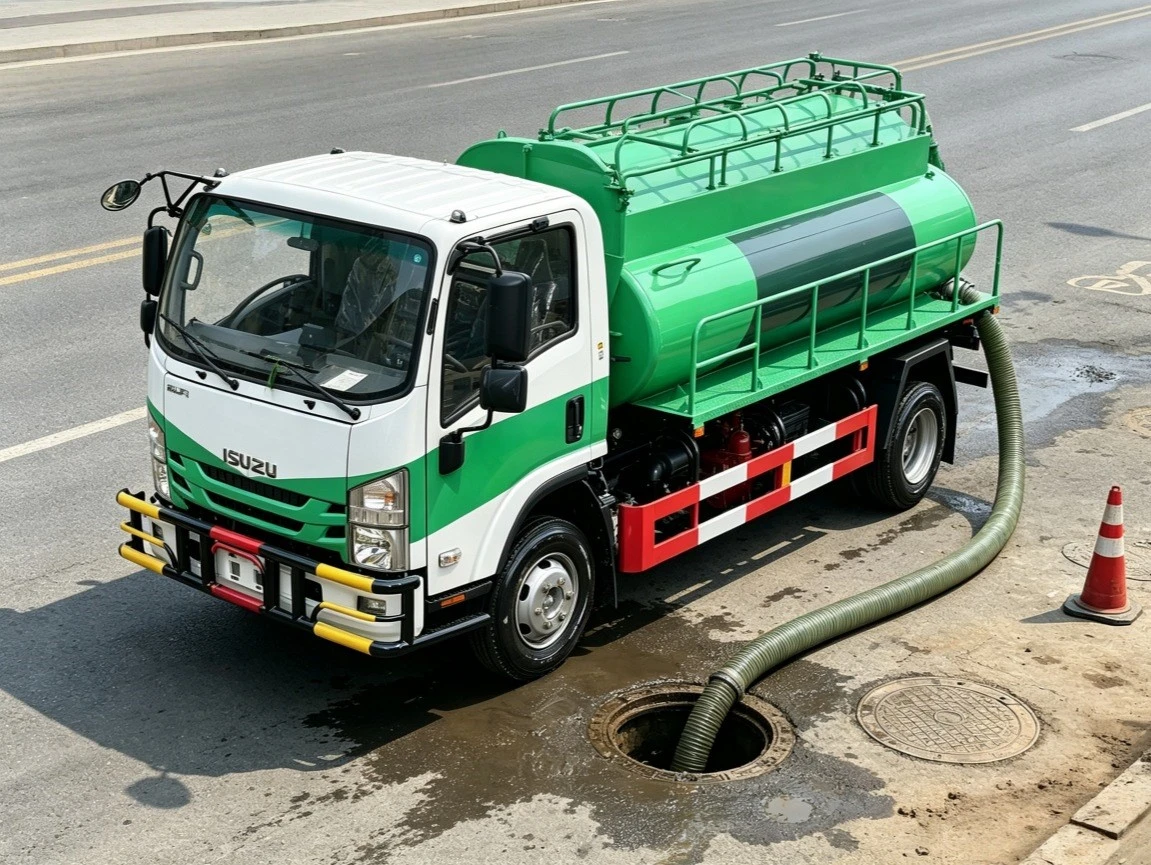
V.Which Vehicle Is Right for Your Business?
| Operating Conditions | Recommended Models | Reason |
| Clean medium; pure manure water; free of silt and debris |
Septic Truck |
Simple operating conditions-a septic truck is fully sufficient and offers the best value for money. |
| Contains sludge, mud, sand, gravel, and settled debris |
Vacuum Truck |
Sewage suction trucks are prone to pump blockages and may fail to suck up waste; a sludge suction truck must be used instead. |
| Routine cleaning; infrequent removal; limited budget | Septic Truck | Simple design, low failure rate, and the lowest operating and maintenance costs. |
| Construction projects; tight deadlines; high volume of work | Vacuum Truck | High efficiency, capable of continuous operation, and reduced labor costs. |
| Dredging of municipal pipelines, waterways, and sedimentation tanks | Vacuum Truck | Classified as standard heavy duty conditions; only sludge suction trucks are suitable. |
| Routine manure and wastewater removal from livestock farms, residential communities, and rural areas | Septic Truck | Standard light duty conditions; no need for high-spec equipment |
VI.Conclusion
In general, septic trucks are light duty cleaning equipment, primarily designed for simple, clean, and routine waste removal; vacuum trucks are engineering grade sludge removal equipment, primarily designed for handling complex, viscous, and impurity containing waste. Neither type is inherently superior; the difference lies only in their suitability for different working conditions. Accurate selection based on the working medium, construction scenario, and project budget can effectively avoid equipment waste and insufficient construction capacity, ensuring efficient and low cost project implementation.


