

The safety and efficiency of airport operations rely on meticulous ground support. Among these tasks, keeping runways, taxiways, and aprons clean is critical, as any foreign object can pose a serious threat to aircraft. The airport sweeper truck is the specialized equipment designed precisely for this purpose. This article will detail the core functionalities, design characteristics, and technological advantages of modern airport sweepers.

Core Functions: Integrated Support Beyond Cleaning
Modern airport sweepers have evolved from simple cleaning tools into comprehensive, multi-functional support platforms. Their main functions include:
- High-Efficiency Pavement Cleaning & FOD Removal: The primary mission is the thorough removal of sand, gravel, metal debris, plastic, and other Foreign Object Debris (FOD) from runways, eliminating potential hazards at their source.

- Dual-Mode Blowing and Suction Operations:
- Blowing Mode: Utilizes high-speed airflow, ideal for clearing open areas like runways and taxiways where contaminants are dispersed.
- "Brushing + Suction" Mode: Combines side/rotary brushes with a powerful vacuum suction inlet, perfect for deeper cleaning in narrower areas like aprons and taxi lanes where debris is concentrated or surfaces are wet.
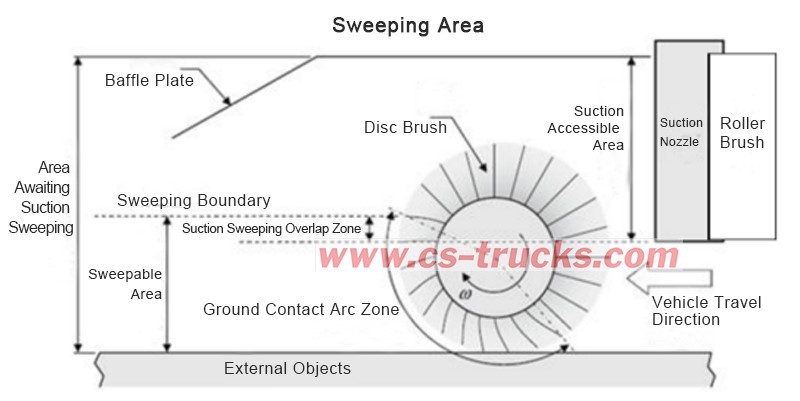
- All-Weather & Multi-Task Capability: Some models can be integrated with snow plows and de-icing spreaders for winter operations. They are commonly equipped with high-pressure water misting systems to effectively suppress dust during cleaning.
- Intelligent Management & Safety Warning: Built-in GPS systems record operation paths and covered areas in real-time, facilitating management and audits. They are also equipped with aviation-standard (e.g., ICAO/FAA compliant) high-intensity LED warning lights and aviation-band radios, ensuring clear communication with the control tower and operational safety.
Technical Evolution: From Early Limitations to Modern Solutions
Early airport sweepers often faced efficiency bottlenecks: significant energy loss in blowing systems, high structural resistance, a lack of front-sweeping mechanisms, and high acquisition and maintenance costs.
Modern models have overcome these shortcomings through technological innovation:
- Efficient Power Transmission System: The prevalent adoption of an "auxiliary engine-driven hydraulic pump + hydraulic motor-driven fan" system. Real-time adjustment via sensors and controllers enables stepless fan speed control. This ensures smooth power transmission, reduces impact, significantly enhances overall reliability and lifespan, and allows intelligent power adjustment based on cleaning needs for energy savings.
- Modular & Explosion-Proof Design: Key components feature a modular design for easier maintenance. Explosion-proof treatments are applied to areas with potential spark generation or contact with flammable materials, ensuring a higher level of safety.

Core Technical Features of Modern Airport Sweepers
- High-Efficiency Cleaning System:
- Employs a powerful vacuum suction system with multi-stage filtration (e.g., cyclone separation + high-efficiency filter cartridges), ensuring even ultrafine particles are effectively collected.
- The combined operation unit (rotating brush assembly + vacuum suction inlet) enables wide-area cleaning of 4-6 meters at operational speeds of 8-15 km/h, delivering high efficiency.
- High-end models offer optional intelligent FOD detection systems that automatically identify and prioritize the removal of potential hazards.
- Dedicated Safety Design:
- Strictly adheres to aviation ground equipment safety regulations, incorporating runway incursion prevention awareness.
- Low-noise design (typically below 72 dB) meets nighttime airport operation requirements without interfering with aeronautical communications or the surrounding environment.
- Powertrain & Environmental Performance:
- New Energy Trend: All-electric (lithium battery) or hydrogen fuel cell models offer zero emissions and quiet operation, representing the future direction.
- Optimized Traditional Powertrains: Utilize efficient, low-noise diesel engines meeting stringent emission standards like China VI / Euro VI, balancing power needs with environmental responsibility.
- Intelligent Control System:
- Integrates advanced driver-assistance systems (ADAS), with some advanced models capable of autonomous operation along pre-defined routes.
- The cabin is equipped with a multi-functional display for real-time monitoring of the cleaning system status, operational data, and vehicle information.
- Exceptional Durability:
The vehicle body and critical structures are constructed using high-strength steel and specialized anti-corrosion coatings to withstand harsh airport environments, including freezing temperatures and de-icing agent corrosion.

Conclusion
The modern airport sweeper is a technology-intensive specialty vehicle that integrates efficient cleaning, intelligent control, aviation-grade safety, and eco-friendly powertrain technologies. Investing in an advanced airport sweeper is not merely purchasing a piece of cleaning equipment; it is deploying a critical asset for enhancing airport safety, operational efficiency, and sustainable development. Choosing the right model can significantly improve FOD prevention, mitigate operational risks, and optimize total lifecycle operating costs.


