

Rear loader garbage compactor trucks are among the most common waste collection vehicles on the road. Their ability to handle substantial waste volumes while navigating narrow routes makes them the preferred choice for both municipal fleets and private waste operators. Understanding why compactor failures occur, how to spot issues early, and what steps to take next is crucial for maintaining efficient and cost-effective operations.
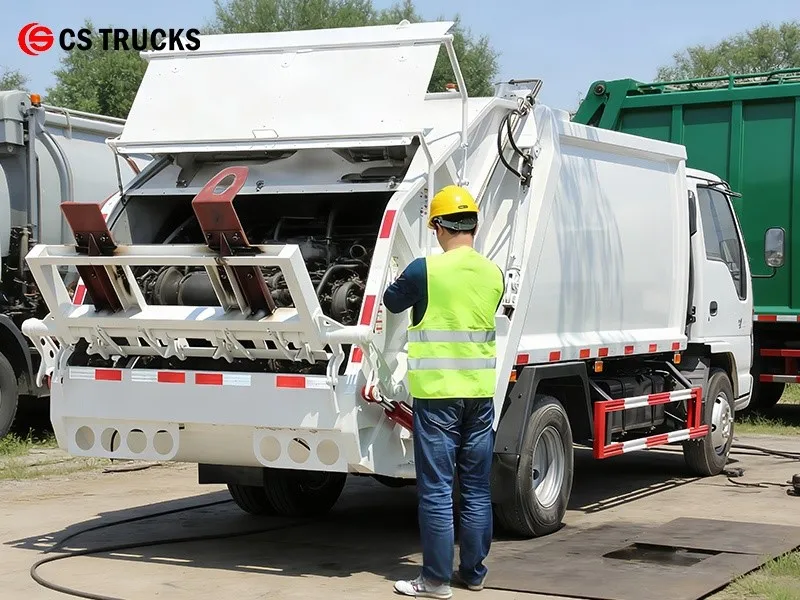
Common Malfunctions and Solutions
1. Drive Train System Malfunctions
◆ Symptoms: Engine failure to start, clutch malfunction, transmission slippage.
◆ Solutions:
○ Engine won't start: Sequentially check battery charge, connection tightness, fuel supply system, ignition coils & spark plugs, engine oil status, and engine control system.
○Transmission slippage: Replace transmission fluid immediately, inspect gear wear and replace if necessary. Also check clutch operation.
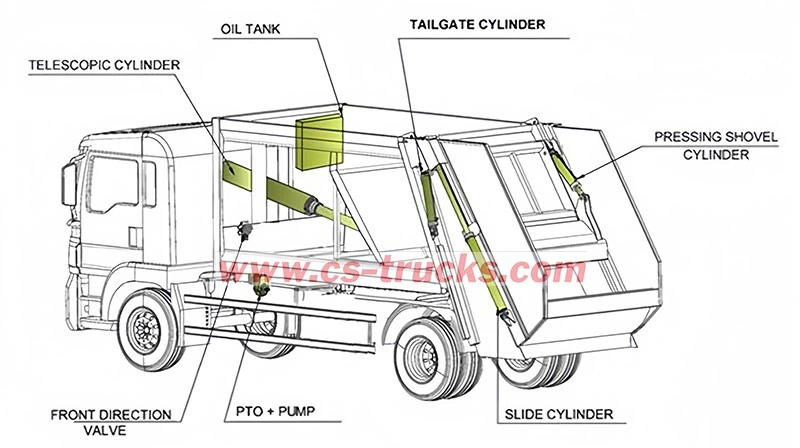
2. Compaction Unit Malfunctions
◆ Symptoms: Compressor failure to start, poor compaction efficiency, unusual noise during operation.
◆ Solutions:
○ Poor compaction efficiency: Check and replace aged sealing rings, clean or repair discharge valves, remove internal blockages. If problems persist, a comprehensive overhaul is required.
○ Unusual noises: Stop operation immediately, inspect lubrication and wear of moving parts.

3. Hydraulic System Malfunctions
◆ Symptoms: Hydraulic leaks, overheating oil, cylinder sticking, abnormal pressure.

◆ Solutions:
○ Hydraulic leaks: Stop operation immediately. In a safe environment, inspect and replace damaged seals, lines, or fittings. Replenish hydraulic oil. Regular oil changes and system flushing are effective preventive measures.
○ Pressure too high/low: Inspect and repair/replace damaged pumps or multi-directional valves (valve spools, relief valves). Bleed the system. Clean or replace clogged oil filters. Replace degraded hydraulic oil.
○ No pump output/low flow: Check and add hydraulic oil. Inspect pump spline for damage. Clear blockages in suction lines or filters. Replace worn internal pump components or damaged seals.

4. Electrical System Malfunctions
◆ Symptoms: Circuit shorts, motor failure, controller malfunction.
◆ Solutions:
○Circuit shorts: First, cut power for safety. Inspect wiring and locate/repair short circuits. Complex issues require a professional electrician.
5. Power Take-Off (PTO) Failure to Engage
◆ Symptoms: Inability to engage properly.
◆ Solutions: Check and increase vehicle air pressure. Repair leaking control pneumatic devices. Replace damaged power shift gears, fork arms (or fork shafts), or spline housing assemblies.

Core Preventive and Maintenance Measures
1.Scheduled Inspection and Maintenance: Conduct regular checks on the engine, drive train, compaction unit, hydraulic system, and electrical system to ensure all components are in good condition.
2.Timely Replacement of Wear Parts: Replace consumables such as clutch plates, brake pads, various filters, and lubricants according to specified intervals.
3.Professional Repair and Service: When malfunctions occur, ensure timely repair and comprehensive maintenance by qualified personnel.
4.Standardized Operation: Operators must be trained and strictly adhere to startup sequences, operating procedures, and environmental considerations.
5.Replacement of Aged Components: Promptly replace parts that have reached the end of their service life or show degraded performance.
Conclusion
By implementing the systematic fault-handling and preventive maintenance measures outlined above, the failure rate of refuse compactor trucks can be effectively reduced, ensuring their stable and efficient operation. This ultimately enhances the overall productivity and reliability of municipal sanitation services.


