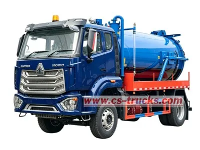
Roads naturally accumulate a wide range of materials during daily operations-from fine dust and sand to leaves, gravel, paper, plastic fragments, dirt, stones, and construction residue. When these materials remain on the road surface, they affect road appearance, drainage, traffic safety, and the overall cleanliness of the urban environment.
A street sweeper truck handles this mixed material by integrating mechanical brushes, suction, airflow, water spray, hydraulic controls, and a dedicated debris collection hopper into a single specialized road maintenance vehicle. Rather than simply pushing dirt to the side of the road, the truck loosens material from the surface, gathers it into the suction zone, transfers it into the collection hopper, and then transports the collected waste to an appropriate disposal site.

This article explains in detail what types of debris a street sweeper can typically clean, which materials may require specialized equipment or pre-cleaning, and how to select the right sweeping system for actual cleaning tasks.
Quick Answer
A street sweeper truck can clean fine dust and sand, leaves and organic debris, gravel and small stones, litter such as paper and plastic, and light construction residue. The specific types and sizes of debris a sweeper can handle depend on the vehicle configuration, brush arrangement, suction system, nozzle design, operating speed, and road conditions.

♦ I. What Types of Debris Can a Street Sweeper Collect?
1. Dust, Sand, and Fine Road Particles
Fine dust and sand are among the most common materials collected by sweepers. As vehicle tires bring particles onto paved surfaces, construction sites generate dust, wind blows loose soil, and normal road wear produces fine particles, these materials gradually accumulate along curbs, intersections, parking areas, and roadsides.
Mechanical brushes loosen these particles from the road surface and guide them to the suction zone, while the blower's airflow transports the material into the collection hopper. Water spray also helps control airborne dust during sweeping, especially when the road surface is extremely dry.

2. Leaves, Grass, and Organic Debris
Leaves and other lightweight organic materials are also a common debris category. During autumn and high-wind periods, large quantities of leaves accumulate along curbs, drainage channels, parking areas, and roadside corners. Small branches, grass clippings, and other plant materials may also mix with sand and dust.
Brushes and suction structures are particularly useful for these materials, as rotating brushes can move lightweight debris toward a central collection point while the suction system draws it into the hopper.
3. Gravel, Stones, and Construction Residue
Roads near construction projects, quarries, industrial facilities, and logistics centers can collect larger and heavier materials, including gravel, small stones, aggregate fragments, and hardened soil pieces. These materials are more challenging than ordinary dust because the sweeper needs sufficient mechanical action and suction performance to move them into the collection system.
Modern configurations can be designed with powerful suction systems that handle both fine particulate matter and larger road debris. For example, a 4 CBM street sweeper uses four 850 mm hydraulic sweeping discs, a 200 mm suction device, and a suction system rated to handle particles up to approximately 120 mm in specified configurations.

4. Litter and Light Roadside Waste
A well-configured sweeper can collect more than just fine dust and leaves. When the vehicle's suction and brush systems are properly configured, it can typically collect small pieces of paper, packaging fragments, leaves, small branches, gravel, stones, and other loose roadside materials. The actual result depends on the size, weight, shape, and condition of the debris, as well as whether it is lying freely on the road surface or trapped by dirt, vegetation, or other materials.
♦ II. Three Types of Street Sweepers (and What Each Does Best)
Mechanical Broom Sweeper - Best for coarse debris: sand, gravel, dirt, and construction track-out. Suitable for rough or cracked pavement. Weaker on fine dust (brushes may throw particles into the air).
Regenerative Air Sweeper - Best for fine dust and silt on smooth asphalt surfaces, using suction to draw debris through the suction nozzle into the hopper. Performance declines on broken pavement or large debris.
Vacuum Sweeper - Best for fine sand and silt in dry conditions. Directional airflow loosens road debris, and the suction system collects it. Under suitable conditions, this system can effectively collect fine sediment. It struggles with wet, matted leaves and branches.

♦ III. How Brushes and Suction Work Together
A street sweeper typically does not rely on brushes or suction alone. The two systems complement each other: the brushes handle mechanical agitation, and the suction system handles the transport of loosened materials. This division of labor is one of the main reasons modern sweepers can collect such a wide range of road waste.

Mechanical Sweeping
As the truck moves forward, rotating brushes contact the road surface and move debris toward a central collection area. Some materials are easy to collect because they are already loose, while others become embedded in dust, sand, or compacted soil. Rotating brushes help disturb these materials and move them off the road surface.
For example, current four-brush systems cover approximately 2.6 to 3.2 meters, and hydraulic controls allow the brushes to be raised, lowered, extended, and adjusted during operation.

Vacuum Suction Transfer
After the brushes gather the material, the suction system takes over. A high-pressure centrifugal blower generates airflow that draws debris through the suction nozzle into the collection hopper. The suction nozzle must remain close enough to the road surface to collect material effectively, which is why floating or hydraulically adjustable nozzle designs are valuable on roads with minor surface height variations.

For example, a 12 CBM configuration uses a high-performance centrifugal blower with an airflow capacity of approximately 12,000 to 15,000 cubic meters per hour and a maximum air pressure of approximately 8,500 Pa.
♦ IV. How Water Helps Sweepers Collect Dust and Debris
Water may seem like an add-on to sweeping rather than an essential part, but it plays a significant role when the vehicle handles fine dust. If dry dust is brushed forcefully across the road surface, some of the smallest particles may become airborne, reducing cleaning efficiency and creating secondary dust pollution in the work area.
Many sweeper configurations therefore combine the sweeping and suction system with an integrated water tank and spray system. Water can be sprayed near the brushes or along other parts of the cleaning path to suppress airborne particles and help control fine materials.

For example, a 4 CBM road cleaning sweeper combines a 3.5–4 CBM debris hopper with a 1.0–1.5 CBM water tank. The vehicle design combines dry debris collection with water-assisted dust suppression.
♦ V. What Debris Should a Street Sweeper NOT Collect?
Understanding a sweeper's limitations is just as important as understanding its capabilities. A road sweeper is designed for the mechanical collection and pneumatic transport of loose materials, but it should not be viewed as a universal waste collection vehicle.
Large rocks, heavy metal items, oversized branches, large household waste, hazardous materials, explosives, large quantities of liquid, and items that could damage the brushes, suction hoses, blower, or collection hopper should not be placed in the sweeping path expecting safe collection.
Similarly, when the primary task is collecting household waste or large quantities of bagged municipal waste, a street sweeper is not the correct substitute for a garbage truck. When the material is primarily sewage, sludge, wastewater, or other liquid and semi-liquid waste, a vacuum truck is usually more appropriate.
♦ VI. Frequently Asked Questions(FAQ)
Q1: Can a street sweeper pick up rocks?
A: Small stones and gravel, yes, within the machine's rated particle size range (typically 76–120 mm depending on the model). Large rocks should be removed manually-they can damage the fan or clog the suction tube.
Q2: Can a street sweeper clean wet leaves?
A: Poorly. Wet, matted leaves are a documented weakness of regenerative air sweepers, and heavy accumulations can also overwhelm mechanical sweepers. Dry leaves can be collected effectively.
Q3: Can a street sweeper pick up sand?
A: Yes. Sand and fine silt are core targets for regenerative air and vacuum sweepers. Mechanical brushes can move sand, but without water suppression, fine dust may become airborne again.
Q4: Can a street sweeper collect construction debris?
A: Light construction residue-dirt track-out, small aggregate, hardened dust-yes. Large chunks of concrete, rebar, wood, and large demolition debris require manual removal or a different vehicle.
Q5: Can a street sweeper pick up plastic bottles and paper?
A: Yes, in dry conditions. Litter compacted by traffic or pressed into mud may require a second pass.
Q6: What is the maximum debris size a street sweeper can pick up?
A: It varies by design. Vacuum sweepers typically cite around 3 inches (approximately 76 mm); large municipal sweepers are rated for limits of 100–120 mm. Always treat the manufacturer's rating as a hard limit.

♦ VII. Summary
A street sweeper truck can clean a wide variety of common road debris, including dust, sand, leaves, gravel, small stones, paper, light roadside waste, mud, and construction-related residue-provided these materials fall within the vehicle's specified operating and particle-size limits.
Its effectiveness comes from the coordination of mechanical brushes and pneumatic suction, not from either system working alone. With proper water spray, adjustable brushes, floating suction nozzles, adequate collection capacity, and correct operating practices, a street sweeper provides a practical solution for keeping municipal streets, highways, industrial parks, airports, commercial areas, and other paved environments cleaner and safer.