

The vacuum truck cyclone separator plays an important role in industrial vacuum systems, primarily used to separate solid particles, dust, debris, and other contaminants from the airflow entering the system. It effectively protects the vacuum pump, reduces the workload on downstream filtration systems, and improves the overall operating efficiency of the vacuum truck. Whether applied in industrial cleaning, construction excavation, waste collection, or material recovery, a properly designed cyclone separator can significantly enhance the operational reliability of the vacuum truck system.
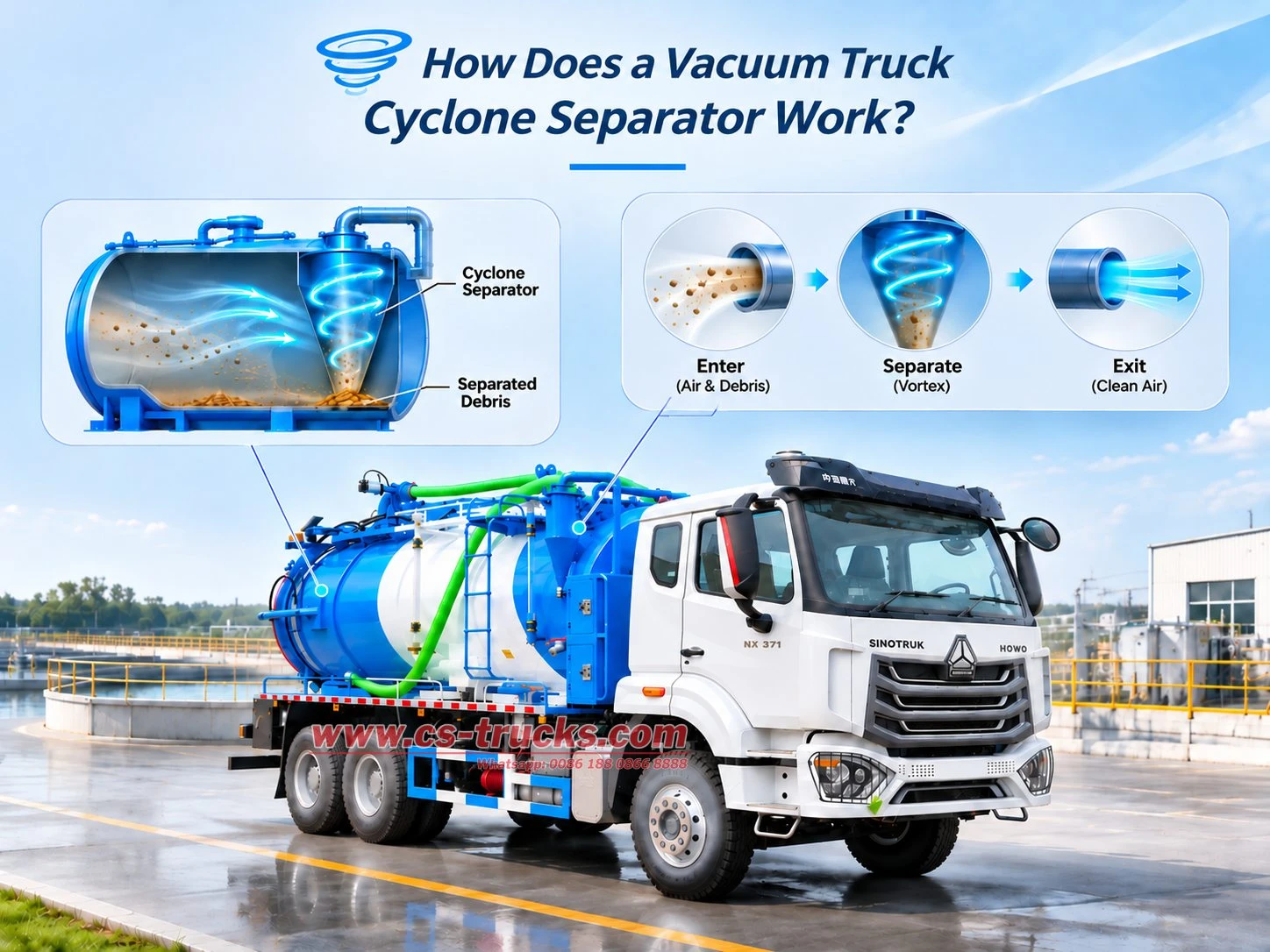
How exactly does a vacuum truck cyclone separator work? What are its main components? And why is it so important for industrial vacuum extraction operations? This article provides a detailed introduction to the working principle, main structure, core advantages, and routine maintenance considerations of the cyclone separator.
▰ 01 ──What Is a Vacuum Truck Cyclone Separator?
A vacuum truck cyclone separator is a mechanical separation device that uses centrifugal force to remove heavier particles from airflow. It is typically installed between the vacuum suction inlet and the vacuum pump or filtration system. When the contaminant-laden airflow enters the separator, the internal airflow forms a high-speed rotating motion. The centrifugal force generated by this rotating motion pushes heavier particles toward the inner wall of the separator, causing them to gradually fall and enter the collection bin at the bottom.
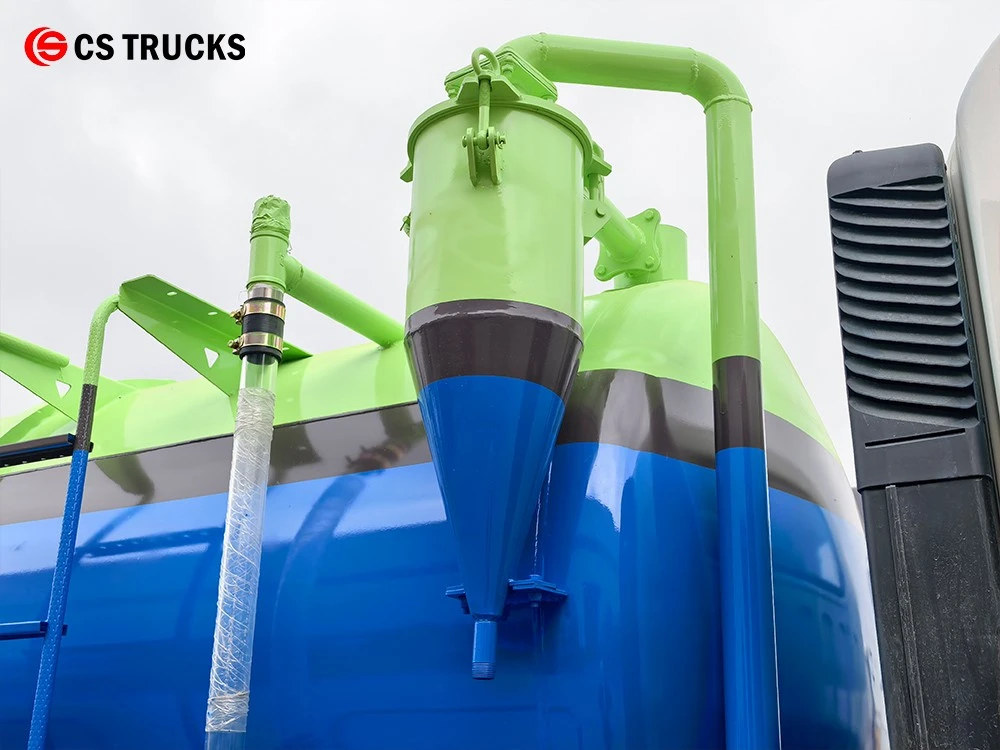
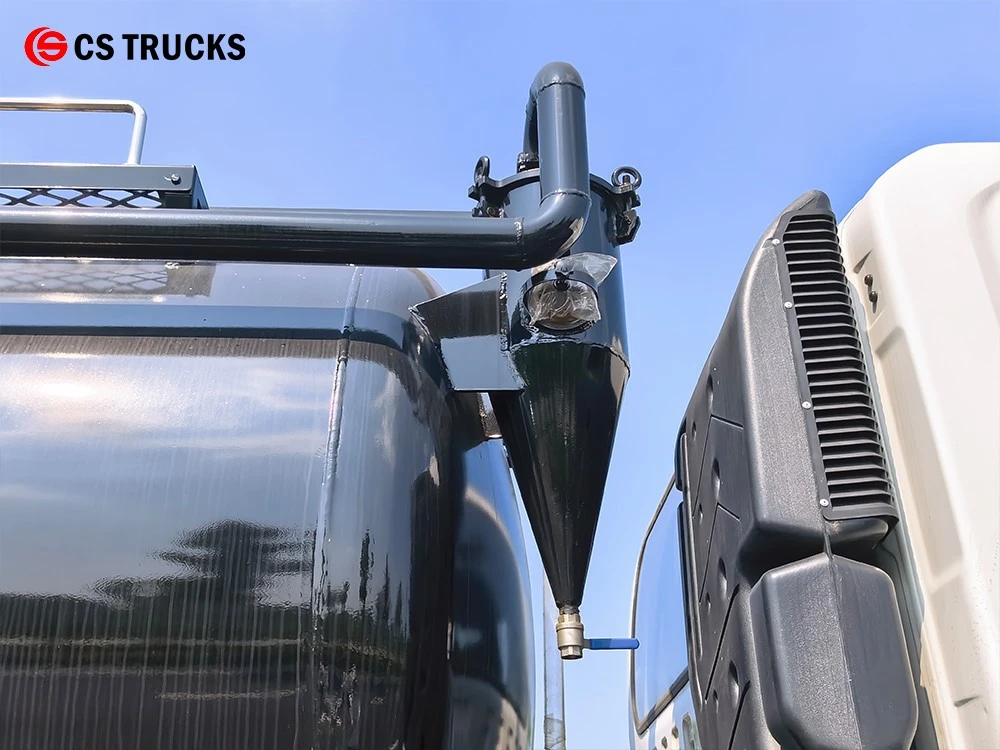
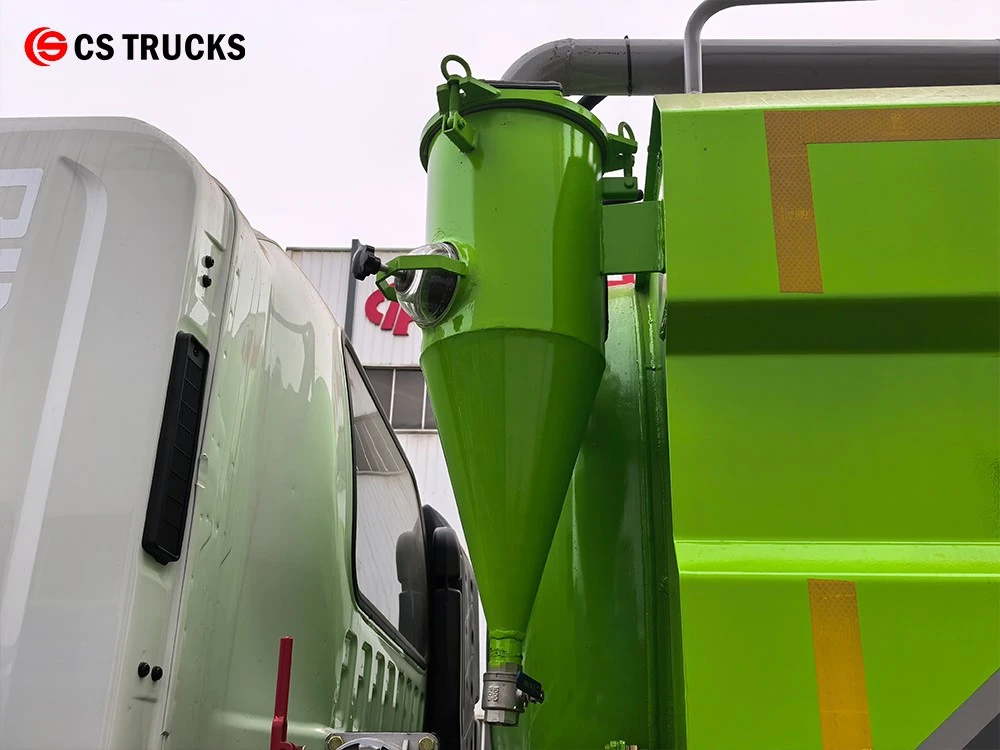
Structure Diagram of Vacuum Truck Cyclone Separator
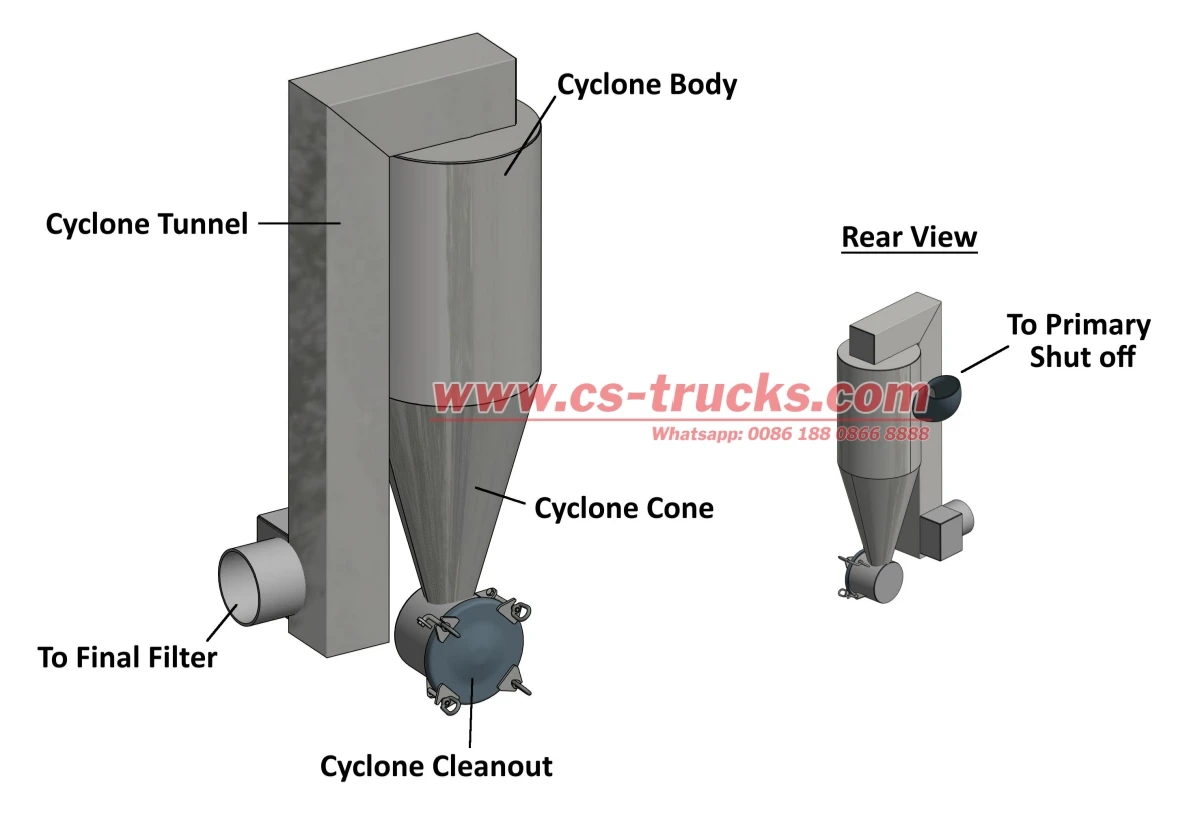
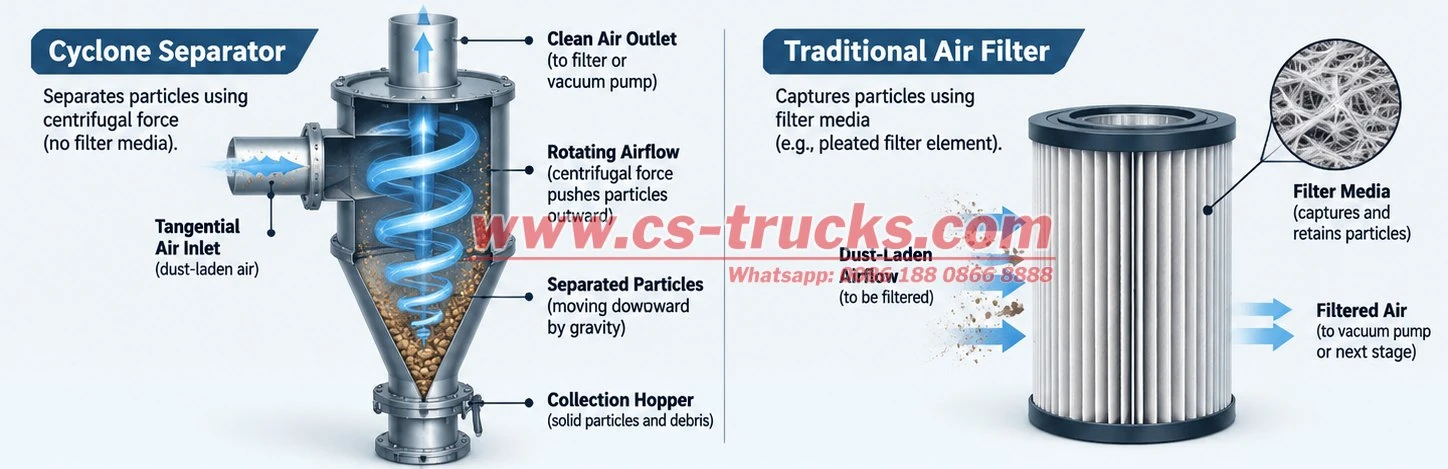
Unlike traditional filtration systems that rely on filter media to capture particles, the cyclone separator primarily uses aerodynamic principles and centrifugal force to achieve solid-gas separation.
In vacuum truck applications, cyclone separators are typically used to handle the following materials:
- Dust and fine debris
- Sand, gravel, and soil particles
- Industrial waste
- Dry powders and granular materials
- Heavier solid contaminants entering the system with the airflow
Depending on the system design, cyclone separators can also assist in removing larger liquid droplets. However, for applications involving large amounts of liquid or wet waste, dedicated liquid separation equipment is usually required.
Cyclone separators are typically used as pre-separation equipment rather than as a complete final filtration solution.
▰ 02 ──How Does a Vacuum Truck Cyclone Separator Work?
The working principle of a vacuum truck cyclone separator is primarily based on centrifugal force, gravity, and controlled airflow.
The separation process typically includes the following five main steps.
➢Step 1: Dust-Laden Airflow Enters the Cyclone Separator
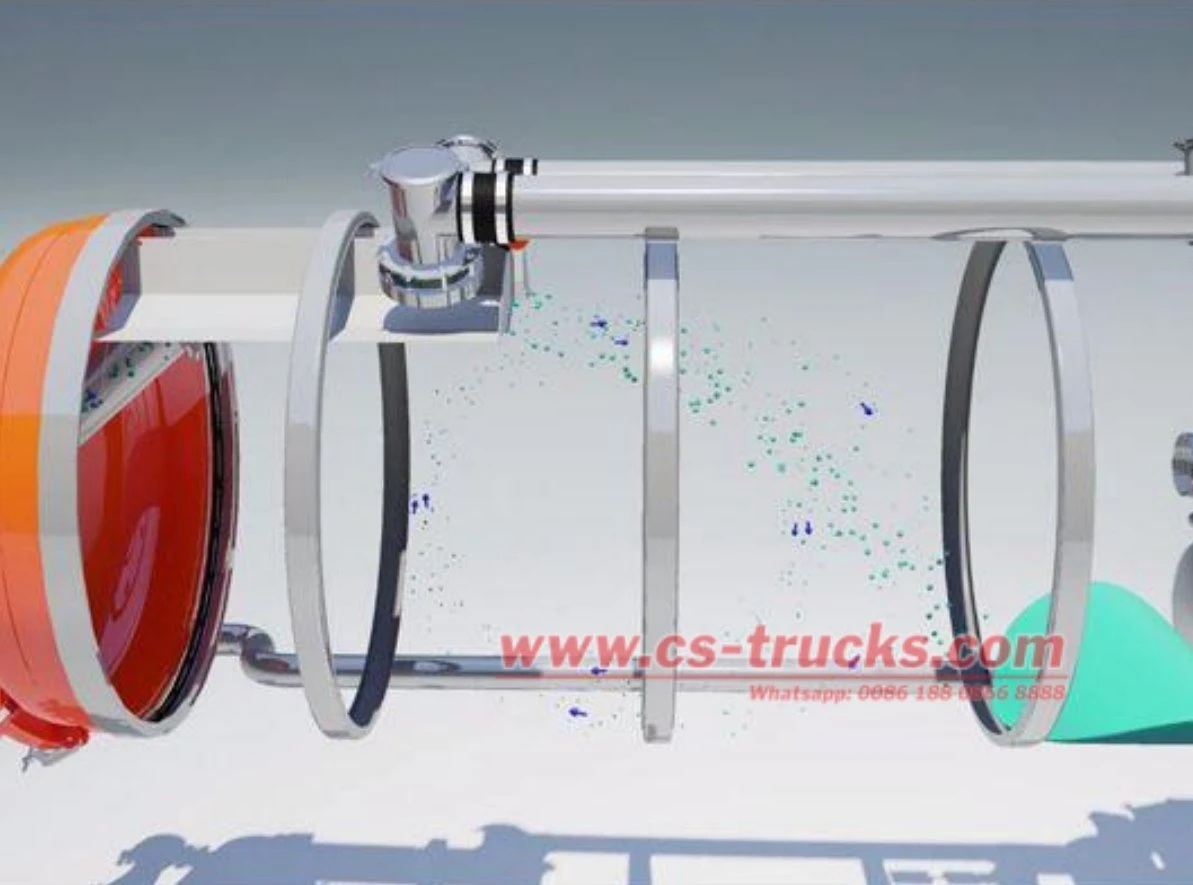
When the vacuum truck is started, the vacuum pump creates a negative pressure within the system, drawing in air, dust, debris, and other materials through the suction hose.
The contaminant-laden airflow then enters the cyclone separator through a tangential air inlet. This inlet is specially positioned to enable the airflow to form a rotating motion inside the separator.
➢Step 2: Airflow Forms a High-Speed Vortex
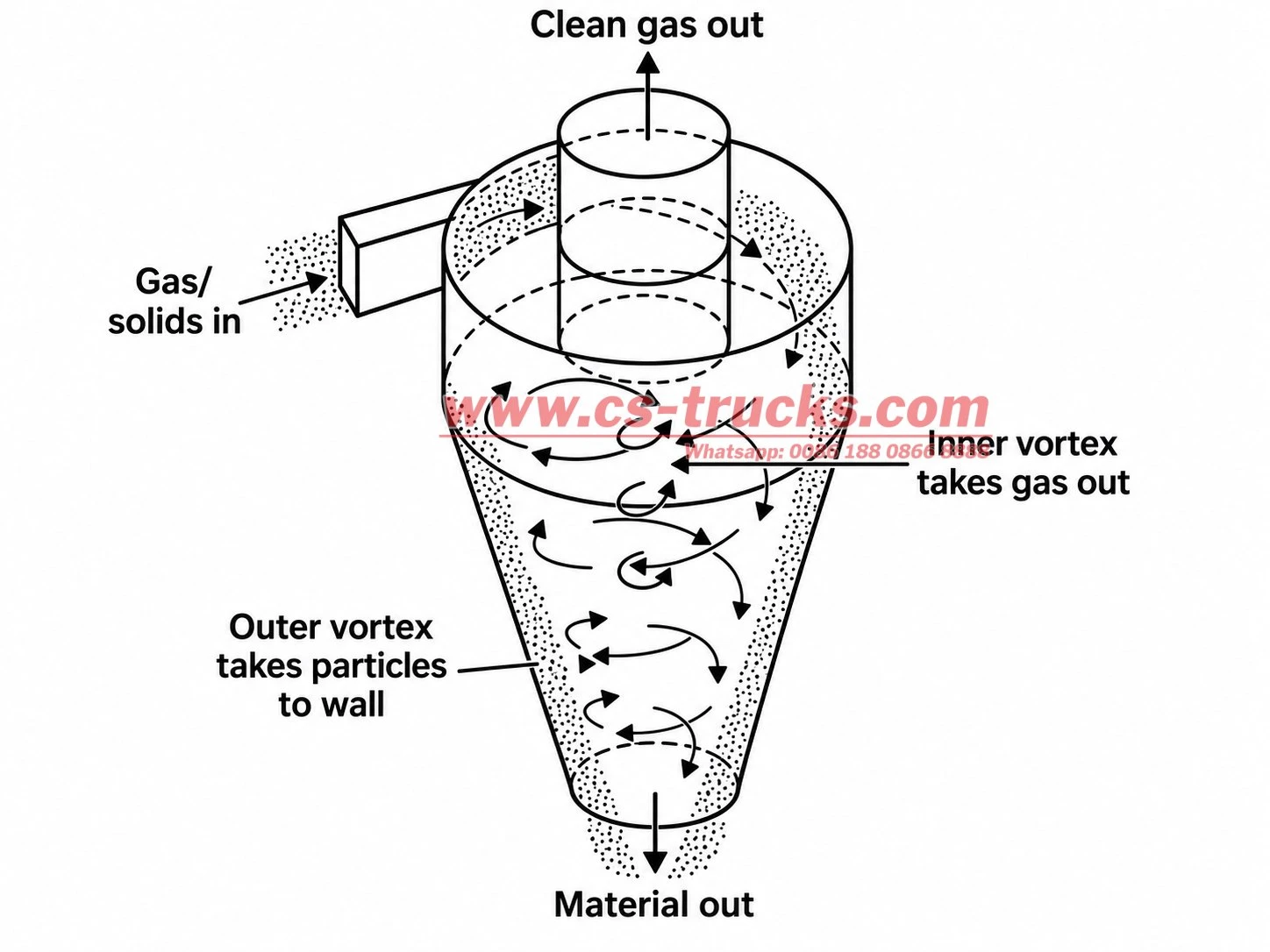
As the airflow enters the cylindrical separation chamber, it rotates at high speed along the inner wall of the separator.
This rotating motion generates centrifugal force, pushing heavier particles outward.
Because larger, denser particles are more difficult to redirect with the airflow, they gradually move toward the outer wall of the cyclone separator.
➢Step 3: Heavier Particles Settle Downward
When particles reach the inner wall of the separator, their velocity gradually decreases, and they move downward under the combined action of gravity and internal airflow.
Ultimately, these particles enter the collection hopper or debris collection tank located at the bottom of the separator.
This process removes a considerable portion of heavier contaminants before the airflow enters the next stage of filtration equipment.
➢Step 4: Cleaner Air Exits Upward
As heavier materials settle downward, an upward-moving inner vortex forms inside the separator.
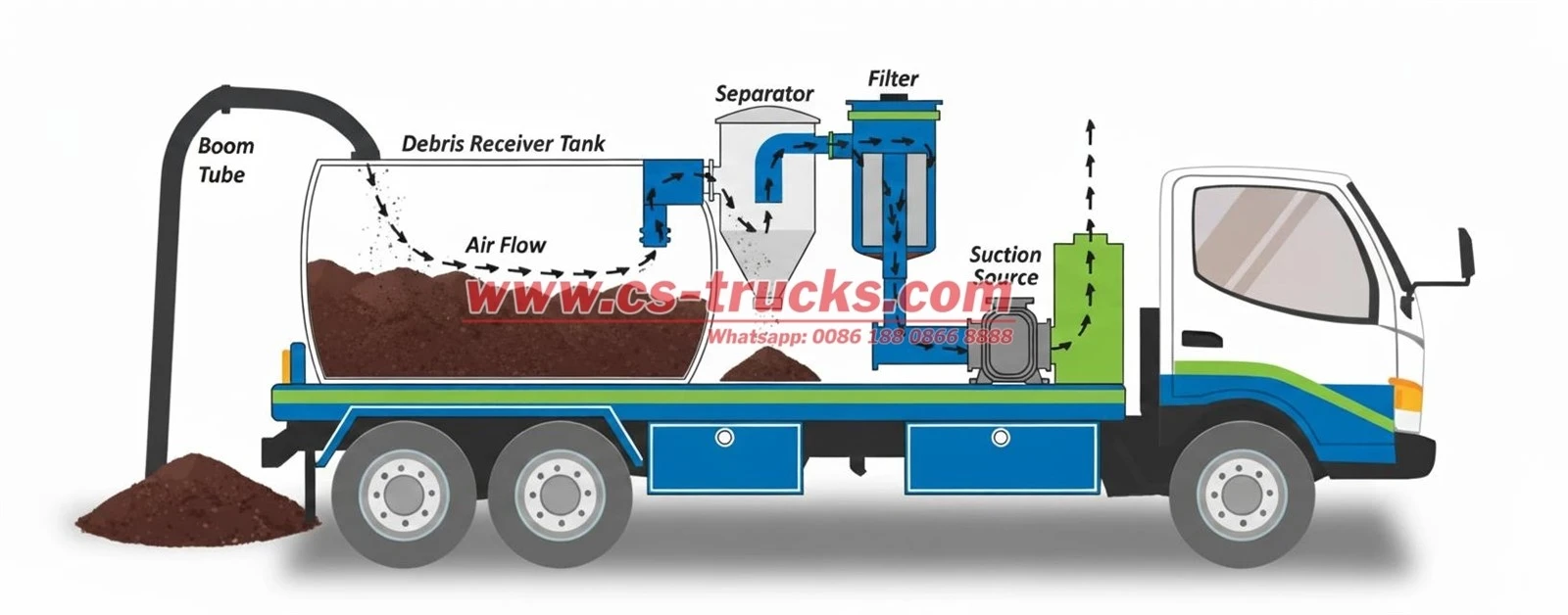
The air that has undergone preliminary separation exits upward through the central exhaust pipe and enters the secondary filtration system or vacuum pump, depending on the vacuum truck's system configuration.
It should be noted that fine dust still suspended in the airflow may require further processing through subsequent filtration equipment.
Step 5: Separated Materials Are Collected
The separated solid materials are temporarily stored in the bottom collection hopper or debris collection bin until unified discharge.
Depending on the equipment design, collected materials can be removed through a manual discharge port, discharge valve, or integrated collection tank.
This continuous separation process enables the vacuum truck to handle large quantities of material while reducing contaminants entering downstream equipment.
▰ 03 ──Main Components of a Vacuum Truck Cyclone Separator
A cyclone separator consists of multiple components that work together to achieve efficient particle separation.
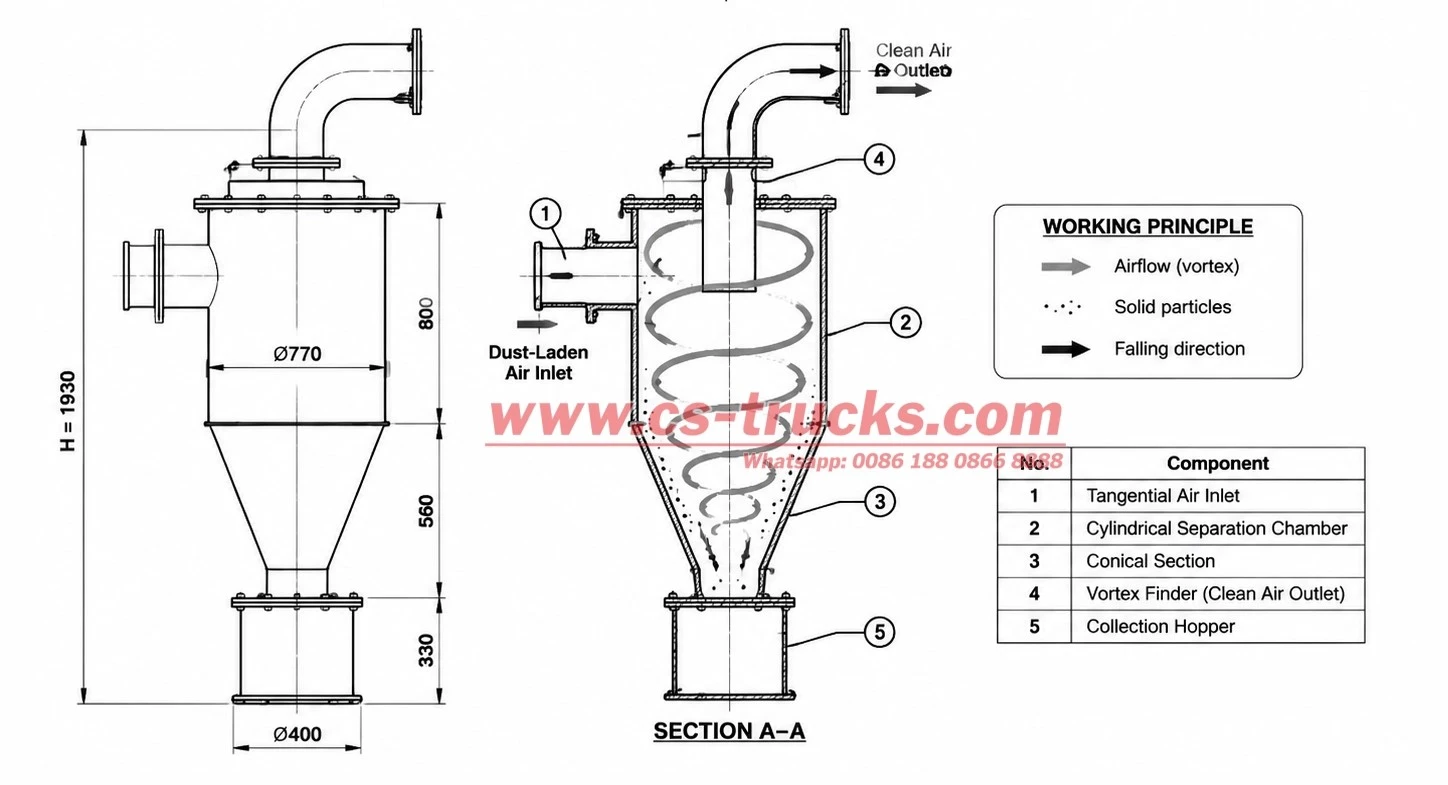
1. Tangential Air Inlet
The air inlet is responsible for introducing contaminant-laden air into the cyclone separation chamber at a specific angle.
Its position and size are critical because they directly affect airflow velocity, vortex formation, and particle separation efficiency.
2. Cylindrical Separation Chamber
The cylindrical structure is used to form the initial rotating airflow.
As the incoming air rotates along the inner wall of the chamber, centrifugal force pushes heavier particles toward the outer wall.
3. Conical Section
The lower portion of the cyclone separator typically features a gradually narrowing conical structure.
This design helps maintain downward particle movement and guides particles to the bottom collection hopper.
4. Vortex Finder
The vortex finder is the central exhaust tube installed at the top of the cyclone separator.
It is responsible for discharging the internally separated airflow while helping to reduce the carryover of heavier particles into downstream systems.
5. Collection Hopper or Debris Tank
The collection hopper is used to collect materials separated from the airflow and is typically located at the bottom of the cyclone separator.
Its capacity and discharge structure should be designed according to the expected material collection volume and the actual operating conditions of the vacuum truck.
▰ 04 ──What Is the Difference Between a Cyclone Separator and a Traditional Filtration System?
Both cyclone separators and traditional air filters can be used to remove contaminants from vacuum truck airflow, but they work in different ways.
|
Comparison Item |
Cyclone Separator |
Traditional Air Filter |
|
Separation Method |
Centrifugal force |
Filter media |
|
Primary Application |
Large particles and heavier materials |
Fine dust and particles |
|
Requires Filter Media |
No |
Yes |
|
Sensitivity to Filter Clogging |
Does not rely on filter media for separation |
Large amounts of dust can cause clogging |
|
Maintenance Method |
Inspect equipment and clean collected materials |
Clean or replace filter elements |
|
System Installation Position |
Pre-separation stage |
Secondary or final filtration stage |
In many industrial vacuum truck systems, these two technologies are typically used together rather than as substitutes for each other.
The cyclone separator first removes heavier materials, and the subsequent filter further captures fine particles still remaining in the airflow.
▰ 05 ──Maintenance Recommendations for Vacuum Truck Cyclone Separators
Regular maintenance helps maintain cyclone separator separation performance and reduces unexpected equipment failures.
Here are several practical maintenance recommendations:
➢ 1. Regularly inspect internal walls. Check for wear, corrosion, and material buildup inside the equipment, especially when handling abrasive materials such as sand and gravel.
➢ 2. Check inlet and outlet connections. Ensure all connection points are properly sealed to avoid unnecessary air leakage.
➢ 3. Clean the collection hopper. Promptly remove accumulated debris to prevent material blockage or excessive occupation of collection space.
➢ 4. Inspect the discharge valve. Ensure collected materials can be discharged smoothly while avoiding leakage or blockage.
➢ 5. Monitor system airflow. If abnormal changes in airflow or vacuum performance occur, it may indicate blockage, leakage, or internal wear issues in the system.
➢ 6. Check downstream filters. Although the cyclone separator can reduce the filter's workload, secondary filtration equipment still requires regular inspection and maintenance.
Specific maintenance intervals should be adjusted based on the type of collected materials, equipment operating hours, and manufacturer's maintenance recommendations.
▰ 06 ──Frequently Asked Questions (FAQ)
Q1: What is the primary function of a cyclone separator in a vacuum truck?
A: The primary function of a cyclone separator is to remove heavier solid particles from the dust-laden airflow before it enters the vacuum pump or downstream filters. This helps protect equipment and reduces the filter's workload.
Q2: Can a cyclone separator remove fine dust?
A: A cyclone separator can remove some fine particles, but its separation efficiency typically decreases as particle size decreases. For fine dust, cartridge filters or other suitable dust filtration equipment are usually required.
Q3: Does a cyclone separator need filter element replacement?
A: No. Traditional cyclone separators achieve separation through centrifugal force rather than filter media, so they do not require filter element replacement. However, downstream filtration systems may still be equipped with filters that require regular cleaning or replacement.
Q4: Does every vacuum truck need a cyclone separator?
A: Not necessarily. Whether a cyclone separator is needed depends on the type of materials being collected, the vacuum system configuration, filtration level requirements, and the equipment manufacturer's overall design. For applications requiring the handling of large amounts of solid debris, cyclone separators typically provide significant operational advantages.
▰ 07 ──Summary
The vacuum truck cyclone separator uses centrifugal force to separate heavier particles from contaminant-laden airflow. Through the processes of tangential air entry, vortex formation, downward particle settling, and upward clean air discharge, it reduces the amount of debris entering downstream filtration equipment and the vacuum pump. For industrial vacuum truck applications, selecting the right cyclone separator requires comprehensive consideration of airflow, particle characteristics, equipment dimensions, construction materials, and compatibility with the entire vacuum system.
If you are looking for a suitable cyclone separator for your industrial vacuum truck, we recommend consulting CS TRUCKS. As an experienced equipment manufacturer, CS TRUCKS can help you select the appropriate equipment structure and configuration based on your specific application requirements.


