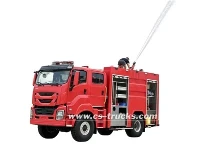
In a water sprinkler truck's working system, the water pump is the core component that enables front flushing, rear spraying, greening irrigation, and fire water discharge. The key device that drives the pump is the PTO. The water sprinkler truck PTO's function is to transfer engine power from the vehicle chassis to the water pump, allowing the pump to draw, pressurize, and deliver water without relying on an independent power source.
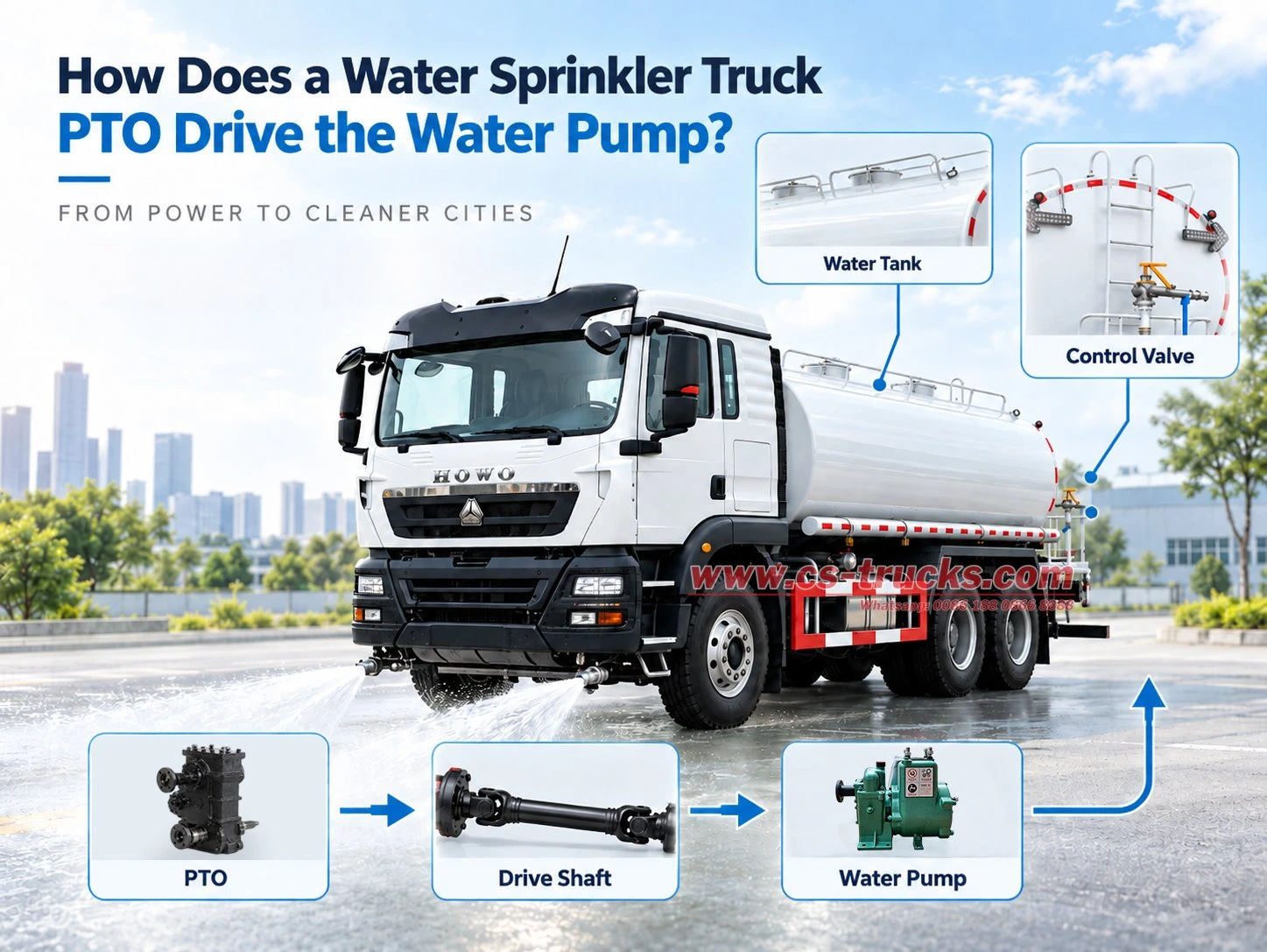
For sprinkler truck users, procurement specialists, fleet managers, and after-sales maintenance personnel, understanding how the PTO drives the water pump helps ensure correct operation, reduce failures, extend pump service life, and improve overall vehicle efficiency.
Quick Answer
The water sprinkler truck PTO is mounted on the gearbox and draws power from the engine. When engaged, it transfers torque through a drive shaft to the water pump, causing the pump to rotate and generate water pressure. The operator must first fill the pump with priming water (especially on first use or after the tank is emptied), depress the clutch, engage the PTO, and slowly release the clutch to start the pump smoothly.
I. What Is a Water Sprinkler Truck PTO?
The PTO is mounted on the vehicle gearbox and is a common power output device for specialized vehicles.
On a water sprinkler truck, the PTO's main functions include:
• Transferring engine power to the water pump
• Controlling pump start and stop
• Providing power support for spraying, flushing, water drawing, and firefighting functions
In other words, without the PTO, the sprinkler truck's water pump cannot operate normally.
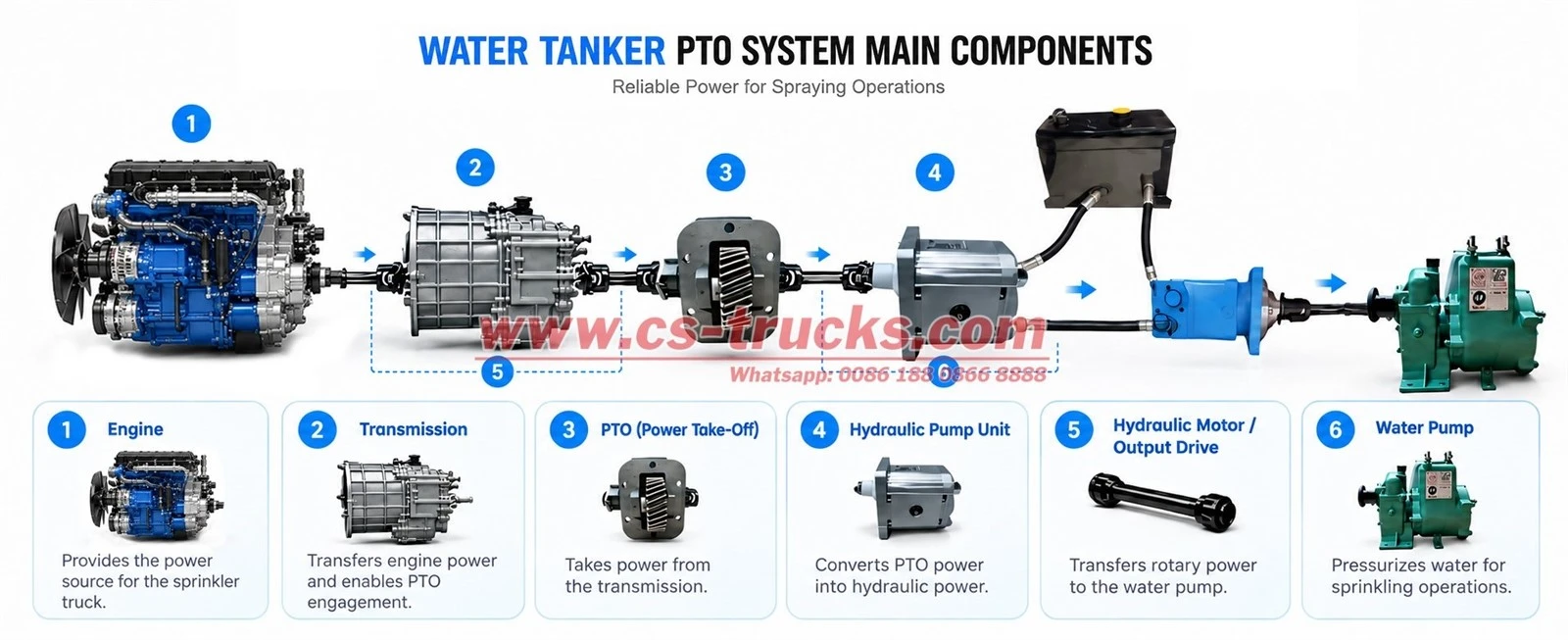
The basic power transmission path of a water sprinkler truck is typically:
Engine → Gearbox → Power Take-Off (PTO) → Drive Shaft → Water Pump → Piping System → Spray/Discharge Devices
II. How Does the Sprinkler Truck PTO Drive the Water Pump?
The process of the PTO driving the water pump is not complicated. The core logic is: the engine provides power, the PTO extracts and outputs it, the drive shaft rotates the pump impeller, and the pump completes water suction and pressurization.
The specific steps are as follows:
1. The engine provides original power
After the sprinkler truck starts, the engine begins running. Under normal conditions, engine power is mainly transmitted to the vehicle's driving system. When spraying, flushing, or water drawing operations are required, the PTO is used to "divert" part of the power specifically to drive the water pump.
2. Engage the PTO and transmit power to the pump
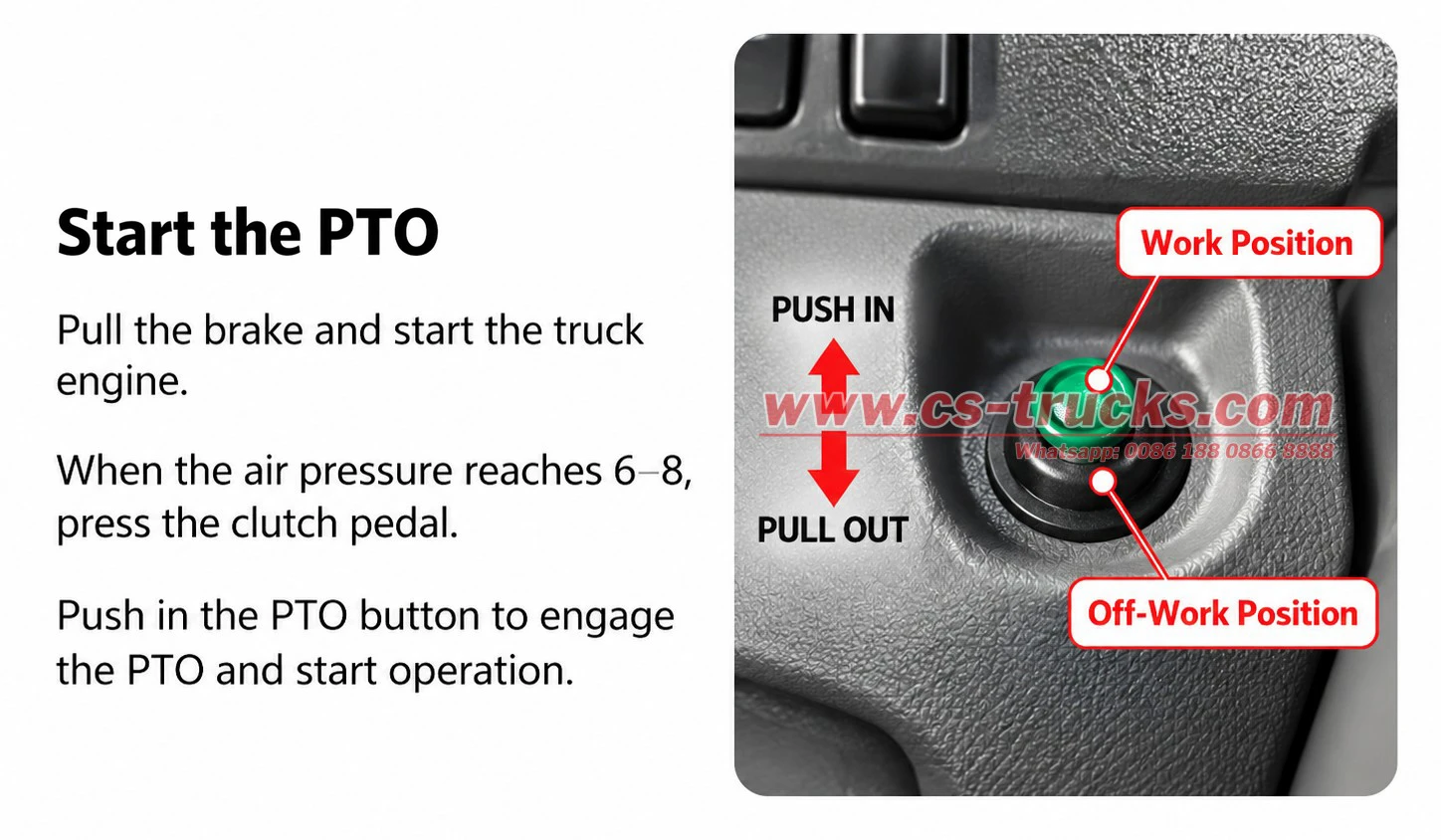
The correct procedure for operating the water pump is:
1. Depress the clutch pedal first
2. Switch on the power take-off
3. Slowly release the clutch pedal so the pump begins to work
This step is critical. If operated too quickly, it can cause impact to the PTO gears, transmission mechanism, and water pump, increasing mechanical wear over time and reducing service life.
3. The pump begins drawing water and building pressure
Once the PTO is engaged, engine power is transmitted through the drive shaft to the water pump, and the pump impeller begins to rotate.
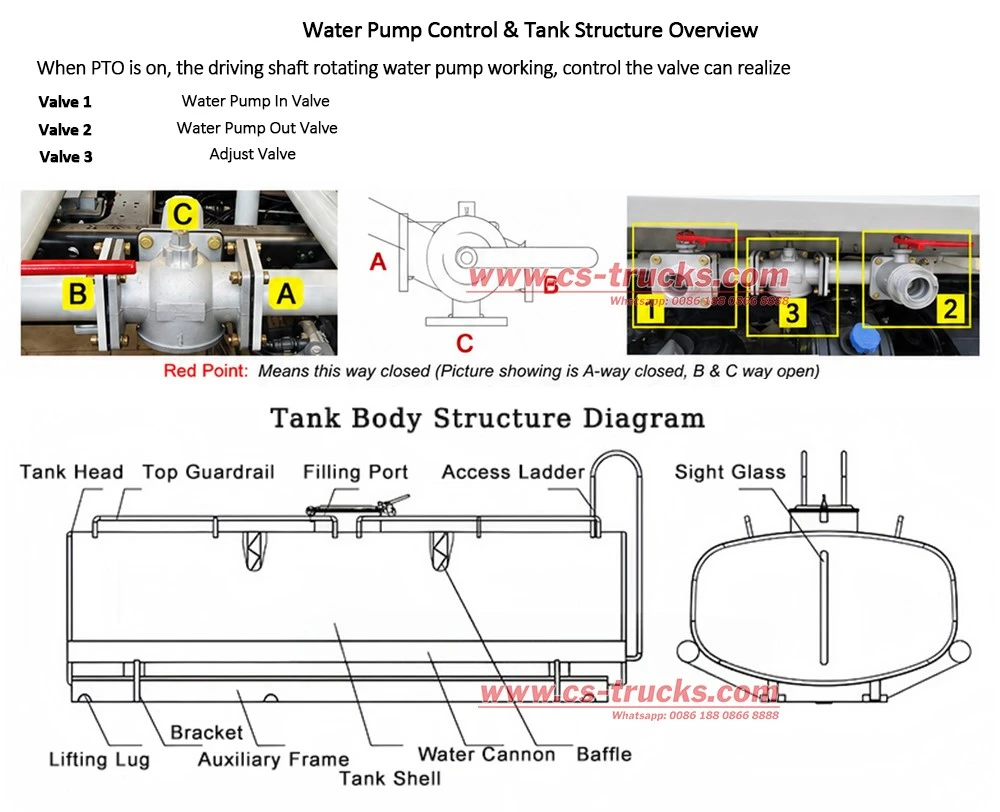
The water flow path is typically:
Water Tank → Suction Line → Filter Screen → Water Pump → Discharge Line → Front Flushing / Rear Spraying / Spray Gun / Fire Inlet
Different working functions are switched by opening and closing valves.
III. Common Working Modes of a Water Sprinkler Truck
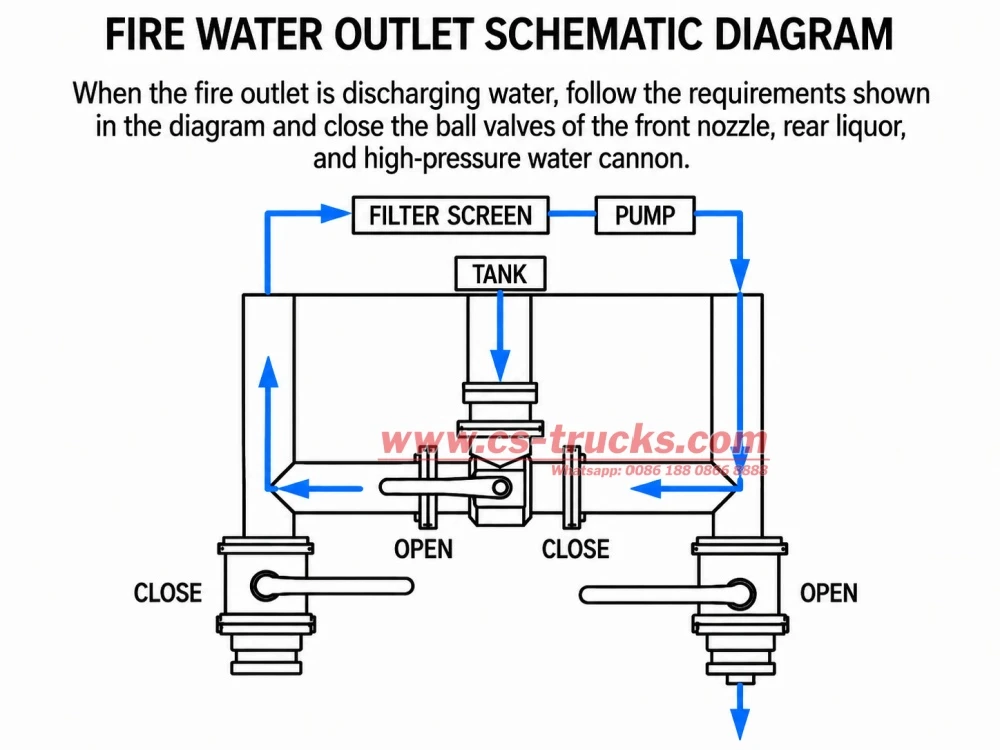
The four diagrams in this article illustrate how valve configuration changes under different working modes.
1) Fire Water Outlet Mode
When the fire outlet is discharging water, close the ball valves of the front nozzle, rear sprinkler, and high-pressure water cannon to ensure concentrated water output. This directs the full pump output to the fire outlet only, improving fire water discharge efficiency.
This mode is suitable for: emergency water supply, temporary firefighting support operations, and fixed-point high-flow water supply operations.
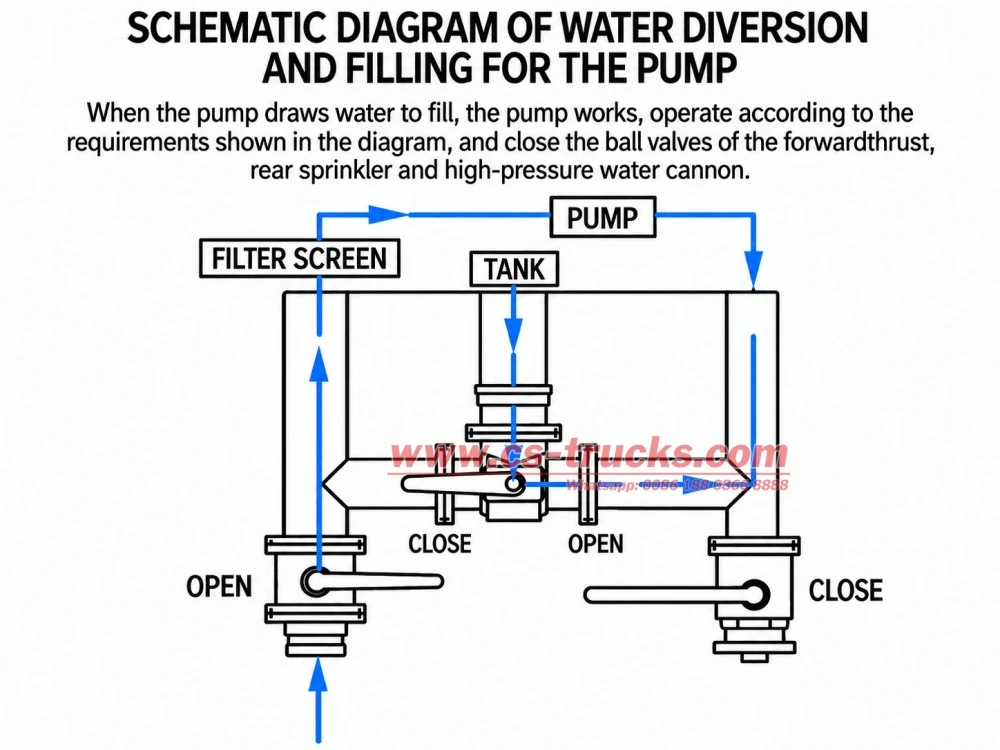
2) Water Diversion and Filling Mode
When the pump draws water to fill the tank, the pump operates. Close the ball valves of the forward thrust, rear sprinkler, and high-pressure water cannon. This routes water from the source through the pump into the tank.
This mode is mainly used for drawing water from external sources or completing priming and filling before formal operations.
In actual use, if the sprinkler function is being used for the first time, or the tank has been emptied, a proper amount of priming water should be added to the pump before operation.
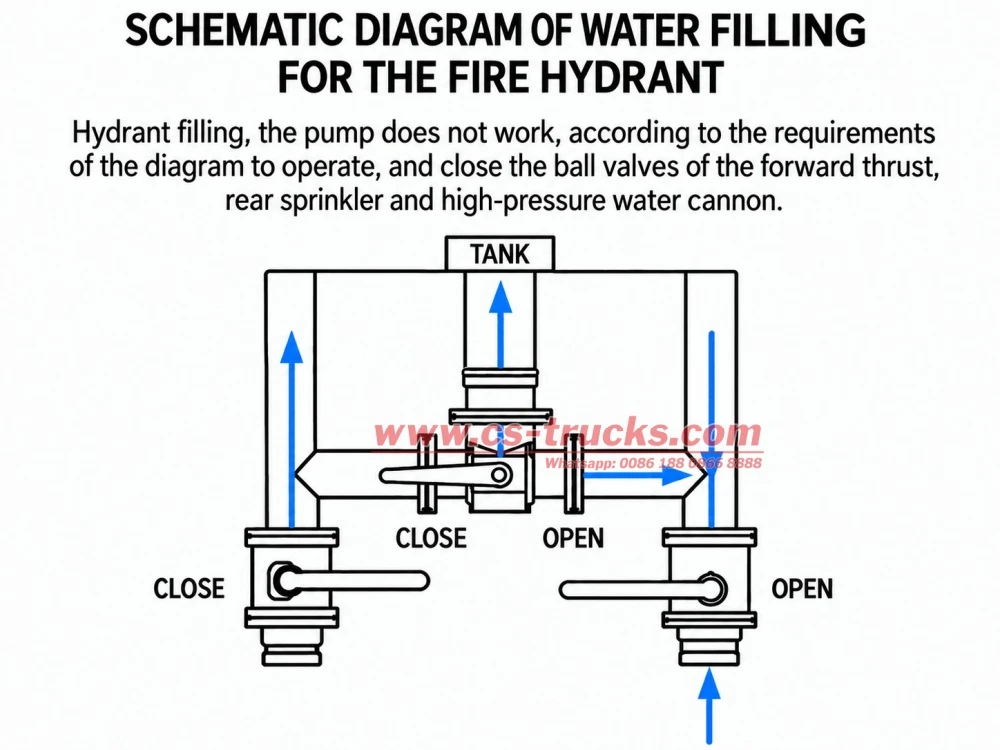
3) Fire Hydrant Filling Mode
When an external pressurized water source (such as a fire hydrant) is available, this mode can be used to fill the tank directly. The pump does not work. Close the ball valves of the forward thrust, rear sprinkler, and high-pressure water cannon. Water flows directly from the hydrant into the tank under municipal pressure.
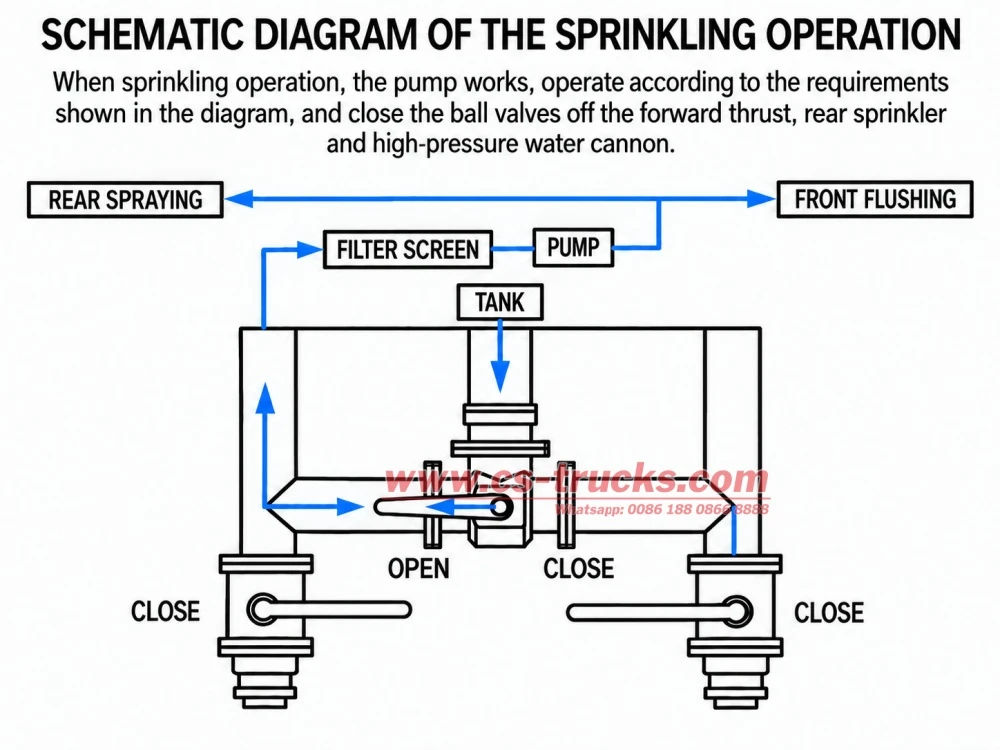
4) Sprinkling Operation Mode
In sprinkling operation mode, the pump operates. Close the ball valves of the forward thrust, rear sprinkler, and high-pressure water cannon. This ensures water is directed to the front flushing and rear spraying nozzles only. Water is drawn from the tank, pressurized, and delivered to the front flushing and rear spraying discharge devices.
This is the most common working mode for sprinkler trucks, suitable for:
• Road flushing
• Road dust suppression
• Landscape irrigation
• Construction site dust control
• Municipal cleaning
IV. Water Pump Operation and Maintenance Notes
1. Prime the pump before first use or after the tank is emptied
When the sprinkler function is used for the first time, or the tank has been emptied, add a proper amount of priming water to the pump before operation. This ensures the pump can establish suction and avoids dry-running damage.
2. Follow the correct PTO engagement sequence
The correct operating procedure is:
• Depress the clutch first
• Engage the power take-off
• Slowly release the clutch so the pump begins to work
This reduces mechanical impact and protects the PTO, drive shaft, and water pump system.
3. Drain residual water when temperatures drop below 0°C
When the ambient temperature is below 0°C, open all pipeline valves in time-including the pipeline drain valve, pump drain valve, and retrofit pneumatic shut-off valve (if equipped)-and drain residual water from the water tank, pipelines, water pump, and valve interiors.
This prevents low-temperature freezing from causing pump cracking, valve cracking, pipeline damage, and seal failure. This is especially critical for winter use in northern regions.
4. Clean the pump inlet filter screen regularly
Clean the pump inlet filter screen regularly to prevent clogging and maintain proper water flow. A clogged filter screen can cause insufficient water intake, reduced spraying pressure, increased pump load, and poor operation results.
It is recommended to include filter screen inspection in daily maintenance, especially after drawing water from rivers or ponds, operating with high-impurity water sources at construction sites, or extended continuous operation.
V. Frequently Asked Questions (FAQ)
Q1: Why doesn't the water pump turn after the PTO is engaged?
A: Common causes include insufficient air or hydraulic pressure for the PTO, PTO gears not fully meshed, or loose or broken drive shaft connections. Check whether vehicle air pressure is normal, whether the PTO control switch is fully engaged, and whether the drive shaft is properly connected.
Q2: Why does the water pump need priming water? What happens without it?
A: The pump relies on impeller rotation to generate centrifugal force for drawing water. If there is no water in the pump, the impeller only rotates in air and cannot create enough vacuum suction to draw water from the tank. Prolonged dry running can also cause mechanical seal overheating and damage. Therefore, priming water must be added before first use or after the tank is emptied.
Q3: How do I prevent the sprinkler truck water pump from freezing in winter?
A: When the temperature is below 0°C, open the pipeline drain valve, pump drain valve, and pneumatic shut-off valve in time to drain all residual water from the tank and pipelines. Water expands when it freezes, which can crack the pump body, rupture pipes, and damage valves. Draining immediately after operation is the most effective freeze prevention measure.
Q4: Why must the clutch be depressed before engaging the PTO?
A: When the PTO gears mesh with the gearbox gears, if the gearbox is still rotating, severe impact occurs between the gears, damaging the PTO gears or gearbox gears. Depressing the clutch cuts off power transmission between the engine and gearbox, allowing the gears to mesh while stationary, protecting the transmission system.
Q5: Can a water sprinkler truck spray while driving?
A: Yes. The front flushing and rear spraying functions typically support operation while driving. The PTO remains engaged, the pump runs continuously, and the driver adjusts the spraying volume through control valves. However, driving speed should not be too fast to avoid unstable water pressure or uneven spraying.
Q6: What causes abnormal noise after the PTO is engaged?
A: Possible causes include worn or poorly meshed PTO gears, damaged drive shaft universal joints, excessive misalignment between the drive shaft and pump, or insufficient bearing lubrication. Stop the machine and check first the drive shaft connection and alignment, then inspect the PTO gears and bearings. If abnormal noise is not addressed promptly, it can lead to gear fracture or drive shaft detachment.
VI. Conclusion
The PTO of a water sprinkler truck is the key power device connecting the engine and the water pump. It extracts power from the chassis power system, drives the water pump, and enables the sprinkler truck to perform front flushing, rear spraying, fire water discharge, water drawing, and refilling functions.
To ensure long-term stable operation of the sprinkler truck, the following points are essential:
• Prime the pump before first use or after the tank is emptied
• Strictly follow the sequence of "depress clutch - engage PTO - slowly release clutch" when starting the pump
• Drain residual water promptly when temperatures drop below 0°C
• Clean the pump inlet filter screen regularly to prevent clogging and maintain flow
Only by correctly understanding and using the PTO drive system can the sprinkler truck's working efficiency be fully realized, failure rates reduced, and equipment life extended.