

Oil fires are classified as Class B flammable liquid fires. Ordinary water tender fire trucks are ineffective at extinguishing oil fires, while foam fire trucks are widely recognized as the primary firefighting equipment in petrochemical, oil depot, and fuel transfer sites. Many purchasing customers only know that foam trucks can extinguish oil fires, but lack sufficient understanding of their working principles and usage limitations.
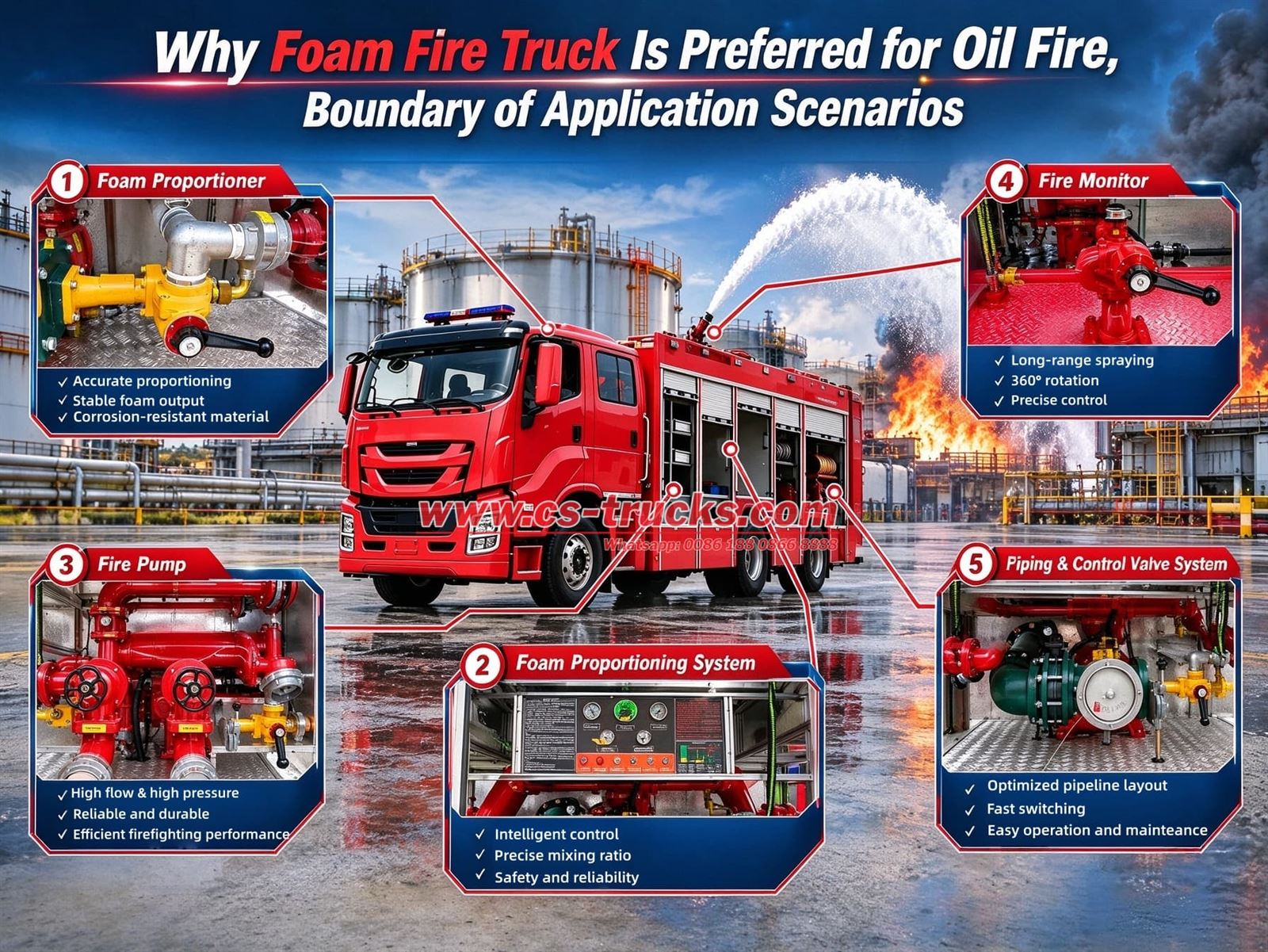
This article explains the underlying principles of how foam can extinguish oil fires, and clarifies the applicable and prohibited scenarios for foam fire trucks.
Why Foam Fire Truck Works For Oil Fires
Most oils have a lower density than water. If water is sprayed onto the surface of burning oil, the water will sink below the oil layer; the high temperature of the flame will cause the water to boil instantly, causing the burning oil to splatter and further spread the fire. This is the fundamental reason why water cannot extinguish oil fires.
The foam produced by foam fire trucks is a mixture of foam concentrate, water, and air. When sprayed onto the oil surface, it forms a continuous, floating foam layer covering the burning liquid:
1) Oxygen Isolation: A dense foam layer covers the oil surface, cutting off contact between flammable oil vapors and air, thus suffocating the fire.
2) Cooling Effect: The moisture contained in the foam absorbs heat, lowering the surface temperature of the fuel.
3) Inhibiting Fuel Evaporation: The foam layer inhibits fuel vapor evaporation, preventing reignition after the fire is extinguished.
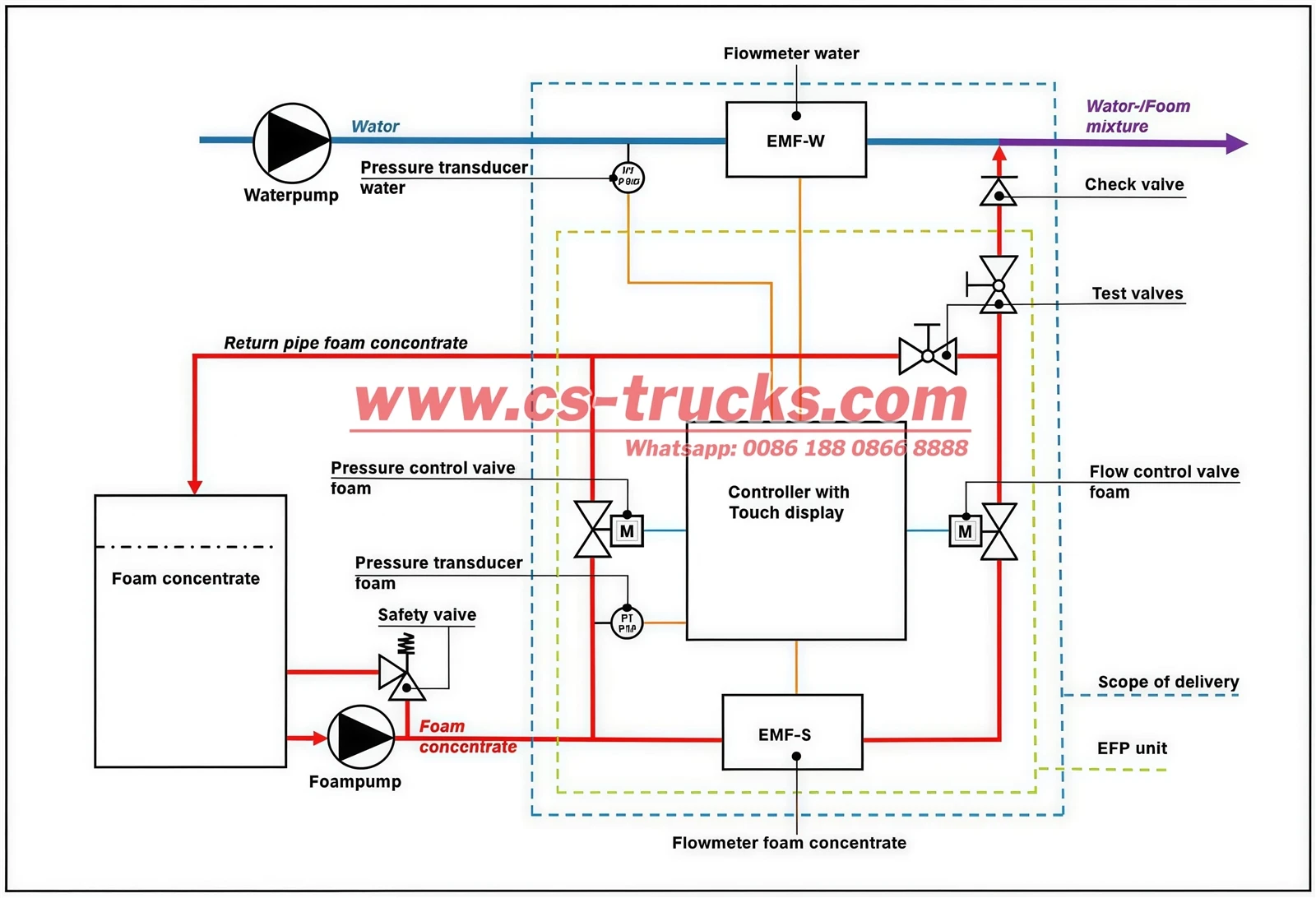
Core Components Supporting Oil Fire Fighting
This is the technical details section for equipment purchasers:
- Foam Tank: Stores foam concentrate (protein foam, aqueous film forming foam AFFF, etc.) and is compatible with different types of oils.
- Foam Proportioning Mixer: Automatically mixes foam concentrate and water in a fixed ratio; a core component ensuring foam quality.
- Fire Pump + Foam Monitor: Delivers the foam mixture and sprays stable foam to cover the liquid surface.
- Pipeline and Control Valve System: Includes independent water and foam pipelines, allowing switching between pure water and foam modes.
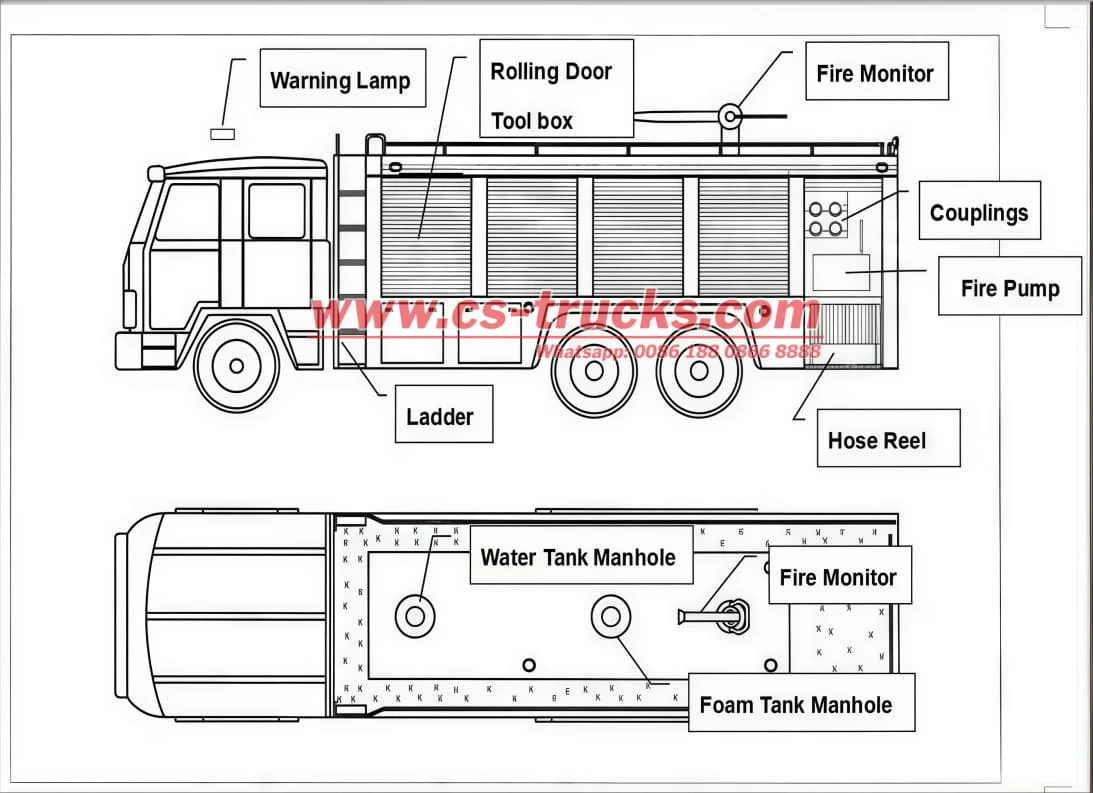
Typical Application Scenarios Of Foam Fire Trucks
Foam fire trucks are primarily used for Class B flammable liquid fires and are widely deployed in the following scenarios:
1️⃣Petrochemical Facilities: Refineries, crude oil storage tank areas, refined oil depots, and liquid oil workshops in chemical plants; handling tank overflows, pipeline ruptures, and tank leaks leading to fires.
2️⃣Transportation Hub Oil Areas: Gas stations, port oil terminals, airport aprons, and highway hazardous chemical transport vehicle accident rescue; handling tanker leaks and fires.
3️⃣Industrial Support Areas: Power plant fuel room, lubricating oil warehouse, asphalt storage workshop, and hazardous chemical logistics warehouse.
4️⃣Additional Scenarios: In addition to oil fires, it can also be used to extinguish Class A fires involving wood, cardboard boxes, and other solid materials, achieving multipurpose functionality and suitable for emergency protection in comprehensive plant areas.
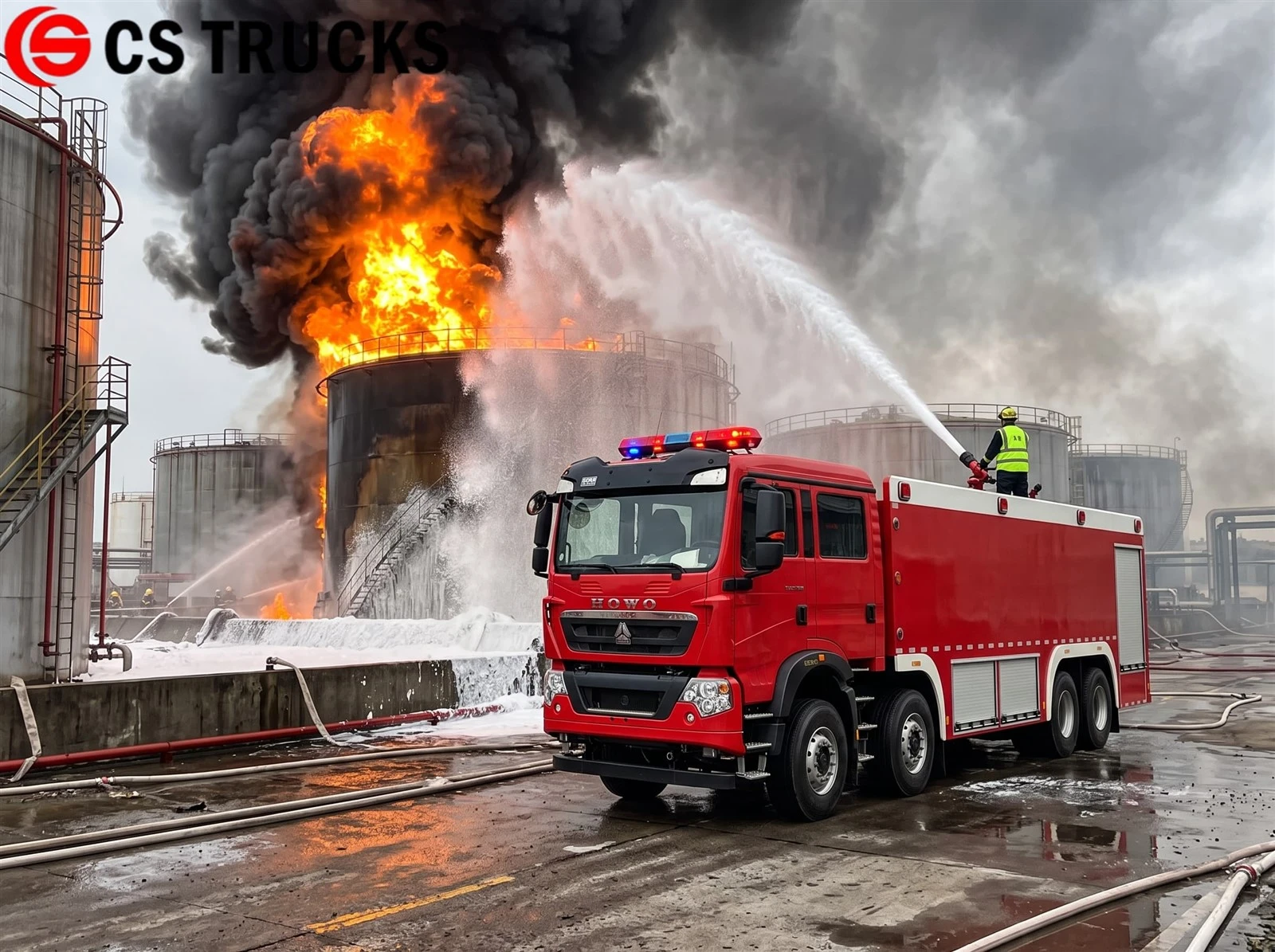
Important Boundary: Scenarios Not Suitable For Foam Fire Trucks
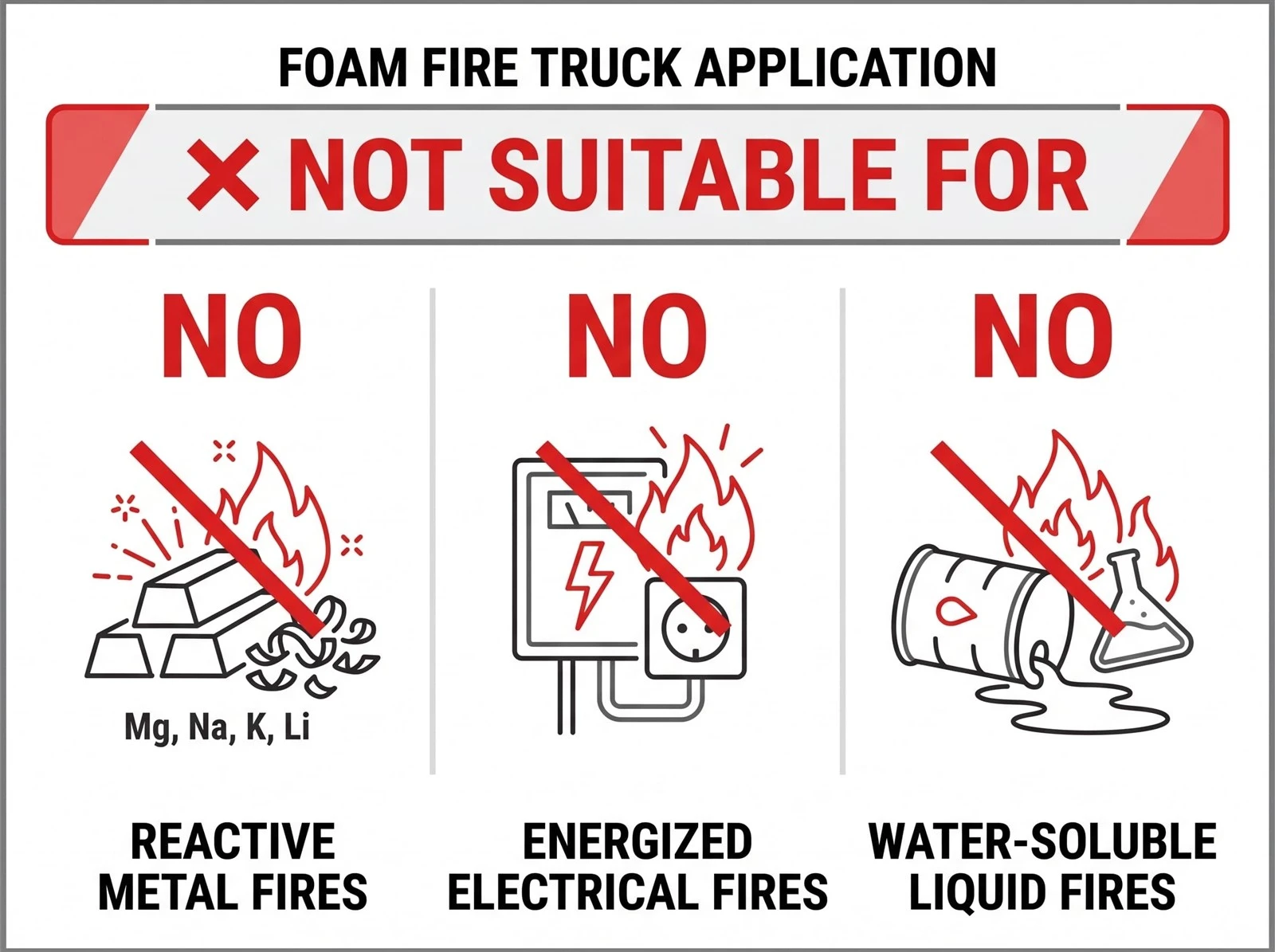
Foam fire trucks are not a panacea for firefighting and have clear limitations on their use. These limitations must be considered in procurement and emergency plans.
- Class A metal fires: Fires involving reactive metals such as magnesium and sodium. The water in the foam will react with the high-temperature metal to produce flammable hydrogen, exacerbating the fire.
- Selfsupplied High Energy Chemical Fires: Fires involving chemicals that can burn without oxygen; foam suffocation is ineffective.
- Electrified Fires: Ordinary foam is conductive. Power must be disconnected before spraying foam, or a special insulating foam should be used.
- Water Soluble Flammable Liquid Fires: Fires involving alcohol, acetone, and methanol. Ordinary foam dissolves rapidly and cannot form an effective covering layer; it must be used in conjunction with an alcohol-resistant foam concentrate.
Selection Tips For Buyers
| Selection Scenarios | Recommended Configuration | Key Verification Items | Important Notes |
| Hydrocarbon based petroleum products (gasoline, diesel) | Aqueous film-forming foam (AFFF) fire truck | Foam mixing accuracy, foam tank volume, foam cannon range | Standard and universal configuration, suitable for most oil fires |
| Alcohol based oil products (ethanol, methanol) storage sites | Fire trucks equipped with anti-foam systems | Anti-solvent foam concentrate stock level and mixing ratio setting | Ordinary foam dissolves quickly; therefore, solvent-resistant foam must be selected. |
| Oil depots and petrochemical tank farms | High flow foam cannon + large capacity foam tank model | Foam cannon flow rate and range, multiple independent pipelines | It is necessary to assess the capacity for sustained bubble supply to prevent supply disruptions. |
| Routine firefighting at city fire stations | Foam/Water Dual-Use Switching Model | Independent switching logic between water path and foam path | Suitable for both water and foam fire suppression scenarios |
| Procurement compliance | / | Local fire safety certification, foam system test report | Verify local fire safety certification requirements |
Quick Reference for Selection Guide:
- For Conventional Petroleum Products: AFFF aqueous film-forming foam fire trucks are the preferred choice.
- For Alcohol Storage: an alcohol resistant foam system is mandatory.
- Key Parameters: foam proportioning accuracy, foam tank volume, foam cannon range.
Conclusion
Foam fire trucks are the preferred equipment for oil fires because of their combined extinguishing mechanism of foam coverage (suffocation), cooling, and flow suppression, compensating for the shortcomings of pure water in Class B liquid fires. In high risk locations such as oil depots, chemical plants, airports, and ports, deploying foam fire trucks can significantly improve emergency response capabilities for liquid fuel fires.
However, equipment selection must not be divorced from the specific scenario. The purchasing party and safety team need to differentiate between the types of media, distinguish between applicable and prohibited scenarios, select matching foam agents, and choose equipment based on on site conditions. Establishing regular maintenance and agent testing mechanisms is also crucial to ensure the vehicle's stable protective effectiveness during a fire.
Frequently Asked Questions
Q1: When using a foam fire truck to extinguish an oil fire, can foam and water be sprayed simultaneously?
A: Switching between them is supported. During the extinguishing phase, foam should be sprayed first. After the fire is under control, water cooling equipment can be used to prevent reignition. Do not flush large amounts of water over the formed foam layer to avoid damaging the foam film.
Q2: Can ordinary foam extinguish ethanol and methanol fires?
A: No. Ordinary foam will be destroyed by water-soluble solvents. Alcohol fires require the use of alcohol resistant foam extinguishing agents.
Q3: Can a foam fire truck directly extinguish a fire involving electrically charged oil products?
A: Conventional foam contains water and is conductive. Direct spraying is prohibited if the power is not disconnected. Power must be cut off before operation.
Q4: How often should the foam concentrate be replaced?
A: The shelf life is generally 3-5 years. Performance should be checked annually, and expired concentrate must be replaced.
Q5: Are small gas stations required to purchase foam fire trucks?
A: Based on local fire regulations and risk level assessments, small stations can choose mobile foam devices, while large storage areas are advised to install vehicle mounted foam systems.


