Aerial manlift work platform trucks are widely used in curtain wall construction, factory maintenance, municipal repairs, stadium construction, and power system maintenance. Many purchasing and leasing customers focus only on the maximum working height when selecting equipment, neglecting the limitations of rated load attenuation and working radius. This leads to problems such as equipment not being able to reach designated locations, overloading causing lockouts, and safety non compliance issues after the equipment arrives on site.

This article provides a practical selection strategy based on three core parameters: working height, rated load, and working radius.
Key Points
1) Three Core Selection Factors: operating height, rated load, and operating radius. These three are interdependent and cannot be considered in isolation.
2) Height Distinction: Platform height ≠ operating height. A 1-2m safety margin should be allowed in the operating height.
3) Load Considerations: The rated load on the nameplate is the value under the retracted boom condition. The further the boom extends and the higher the lifting height, the lower the allowable load. The load curve must be checked against the specifications.
4) Working Radius: Determines whether obstacles can be crossed. Scissor lifts have no effective obstacle crossing radius; articulated booms are suitable for obstacle maneuvers, while straight booms are suitable for long distance open environments.
5) Supporting Factors Verification: When selecting a model, confirm the ground conditions, power type, access width, product certifications, and after sales service.
6) Key Pitfalls To Avoid: Do not only look at the maximum height; do not directly calculate based on the nameplate load; select a model according to your needs; ensure a reasonable safety margin; and verify site conditions in advance.

Working Height vs Platform Height: What's the Difference
This is the most basic concept where you're most likely to make a mistake.
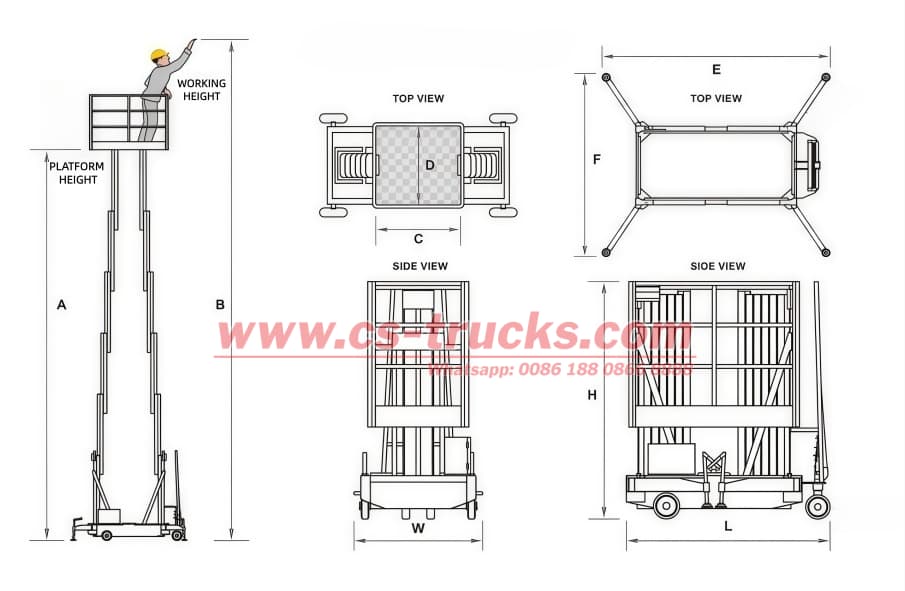
Platform height refers to the vertical distance from the ground to the platform base.
Working height = platform height + height that a person can reach while standing (usually calculated as 1.8m), which is the maximum working point height that the operator can reach.
When selecting a model, prioritize the actual operating height required for the project, allowing for a reasonable safety margin. Avoid overly large models. A margin of 1-2 meters is generally sufficient. Excessive margin not only increases procurement, transportation, and site access costs, but also reduces the allowable load capacity and reach of some models at their maximum height.
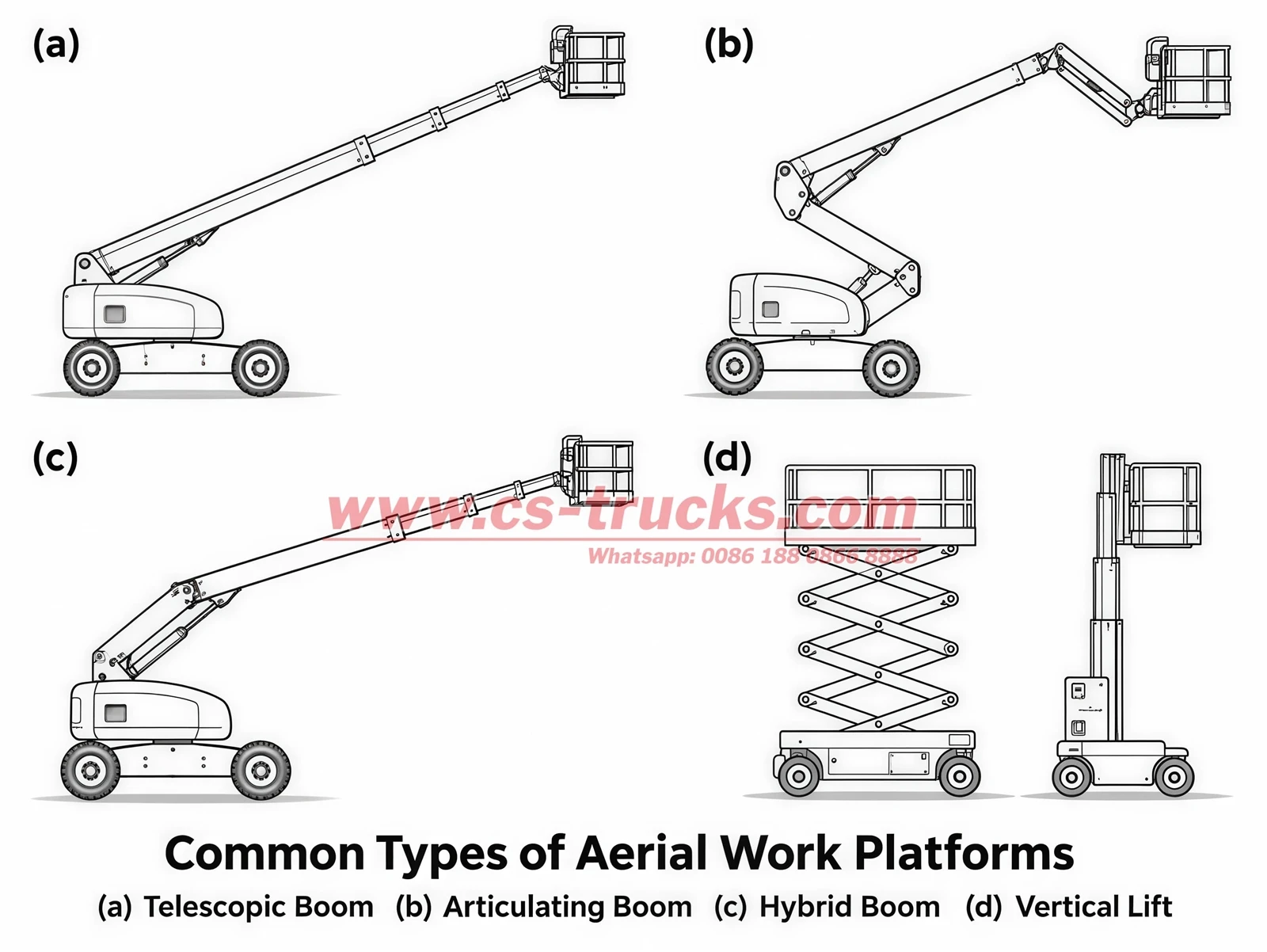
- Scissor Lift: Primarily used for low level vertical operations, with a typical working height of 6–18m. It lacks effective horizontal reach and is suitable for scenarios where there are no obstructions directly above the work site.
- Articulated Boom/straight Boom: Working height ranges from 10–60m+, with horizontal reach, used to traverse walls, steel beams, and obstacles. It is the preferred choice for exterior wall and steel structure projects.
Load Capacity: Do Not Rely Only On Rated Maximum Load
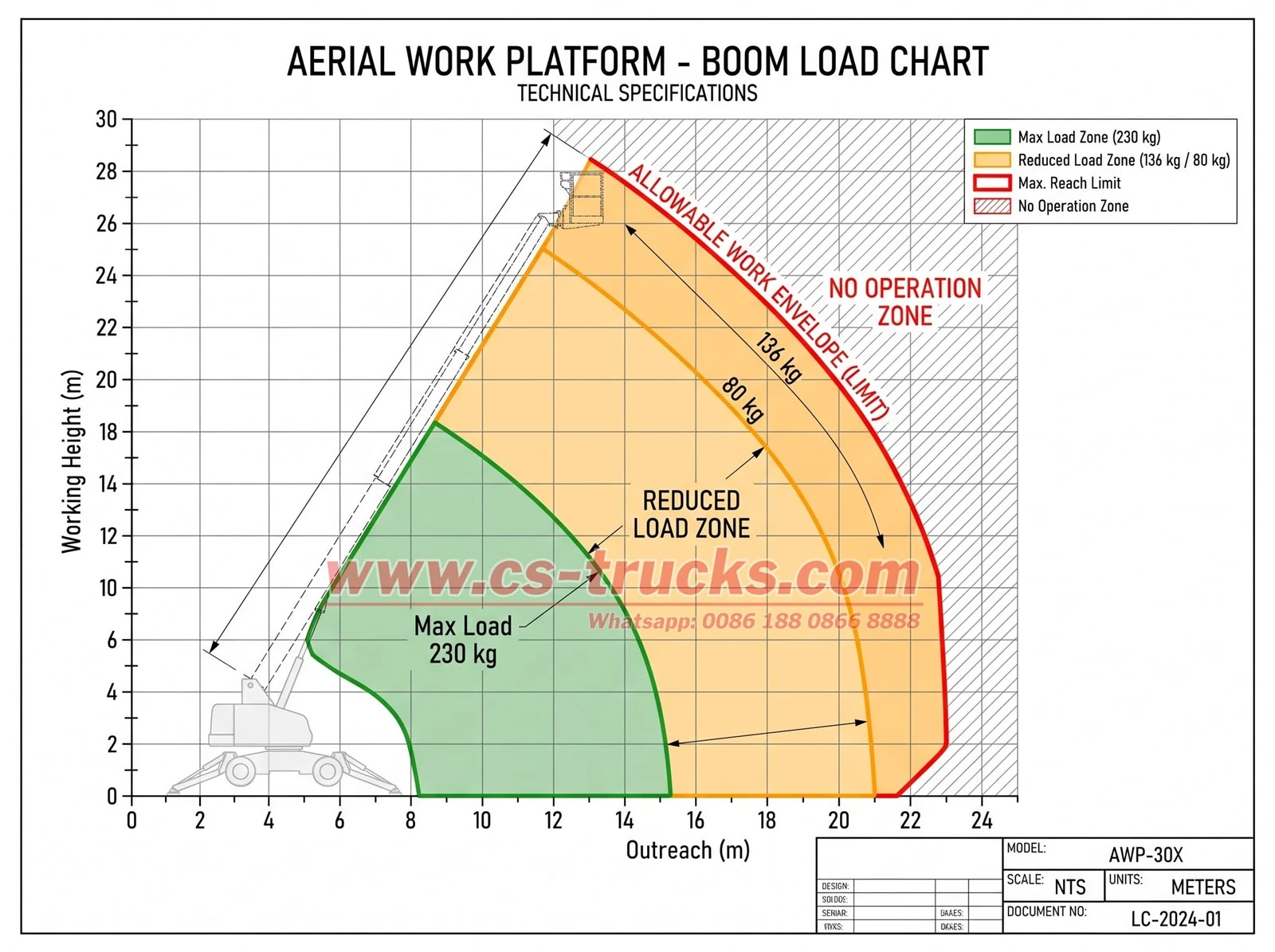
Load parameters are not fixed values. Most boom platforms have load charts: the farther they extend and the higher they lift, the lower the allowable load. This is a hard limitation of hydraulic and structural safety and cannot be ignored.
When calculating the total load, the worker's own weight should not be considered alone; all factors must be taken into account: operator, safety helmet and protective equipment, power tools, pipes, fittings, and auxiliary materials. It is recommended to reserve a 20% to 30% safety margin based on the calculated total weight to mitigate the risks associated with dynamic impacts.
- Scissor Lifts: Large platform area, significant load capacity advantage, commonly 300–680kg, suitable for simultaneous operation by multiple people and materials.
- Articulated Boom Lifts/straight Boom Lifts: Rated load capacity generally 230–450kg, mostly supporting 1–2 people, not suitable for large volume material transport.
📌Important Reminder: The maximum load capacity indicated on the nameplate is usually the value under conditions of boom retraction and close range operation, not the full range usable load capacity. Always request a load curve diagram to verify the operating conditions before placing an order.
Outreach: The Key to Work Past Obstacles
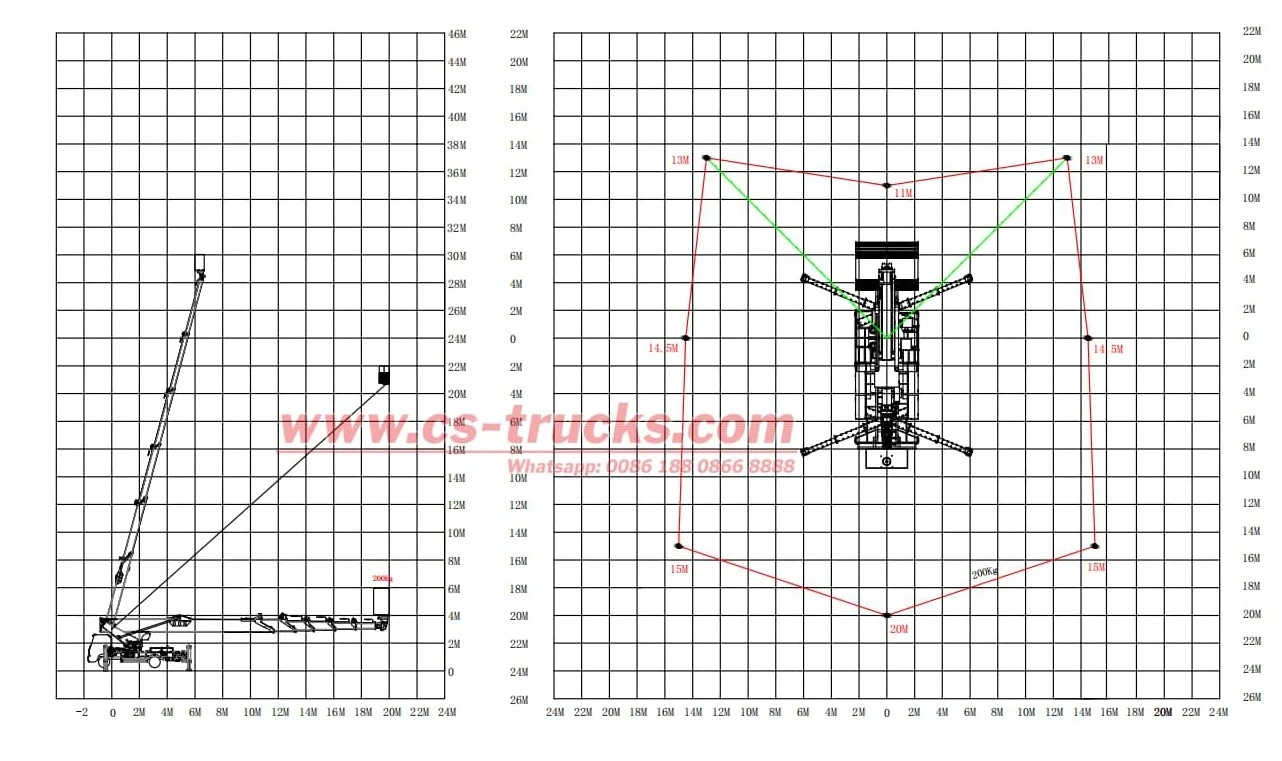
The working radius, referring to the maximum horizontal distance from the center of rotation to the work platform, is a key differentiator between scissor lifts and boom lifts.
Scissor lifts only offer vertical lifting and have no effective working radius; the chassis must be close to the work surface to operate. The value of articulated and telescopic boom lifts lies in their ability to reach the work point by overcoming obstacles when the chassis cannot get close to the wall.
- Straight boom aerial work platform: Extends in a straight line, providing a longer working radius, suitable for open construction sites, large area curtain wall work, and bridge operations.
- Articulated boom aerial work platform: Features multiple folding joints, allowing for flexible maneuvering around obstructions such as pipelines, balconies, and trees, suitable for stadiums, residential areas, and confined, complex sites with dense pipelines.
📌The principle of three way linkage: maximum working height, full working radius, and full rated load are usually not achievable simultaneously. All three parameters must fall within the safe range of the load curve at the same time.
Quick Comparison Table by Machine Type
| Type | Working Height | Load Performance | Outreach | Suitable Scenarios |
| Scissor Lift | 6–18m, vertical lifting | High, multiple people carrying materials | Almost no obstacle crossing range | Factory maintenance, ceiling installation, indoor pipeline installation, and vertical floor leveling |
| Articulated Boom Lift | 10–45m | Medium, 1–2 people + tools | Medium, can go around obstacles | Irregularly shaped facade, obstruction by trees/pipelines, and maintenance in confined spaces. |
| Telescopic Boom Lift | 15–60m+ | medium | Long horizontal extension | High rise curtain walls, steel structures, bridges, and large open construction sites |
Additional Site & Application Checks
After determining the height, load capacity, and reach, verify the site conditions to avoid rework.
- Ground Conditions: For flat indoor cement floors, choose the electric, quiet model; for muddy or sloping construction sites, choose the off road model, paying attention to climbing ability and ground pressure.
- Power Type: Lithium ion electric motors are suitable for indoor use, requiring low noise and zero emissions; diesel models are suitable for long term outdoor use in remote construction sites.
- Machine Dimensions: Doorways, passageways, elevators, and width/height restrictions determine whether the machine can be installed on site.
- Compliance Certifications: Target market safety standards, CE certification, spare parts supply, and after sales maintenance.
Common Selection Mistakes
| Common Mistakes | Risk | Correct Approach |
| Focusing only on the working height, ignoring the working radius | Unable to reach the work point | Simultaneously confirm the height and horizontal extension |
| Calculate directly based on nameplate load | Overload lock after boom extension | Verify the load against the load curve |
| Choose a scissor lift for obstacle crossing scenarios | Unable to overcome obstacles, equipment rendered unusable | Selecting an Articulated Arm or Straight Arm Aerial Work Platform |
| Too much margin | High cost and low utilization rate | Allow 1-2m of reasonable margin |
| Ignoring the site passageways and ground | Unable to enter the market, poor stability | Precheck access routes and ground conditions |
Conclusion
Working height, rated load, and working radius are the core triangle for selecting an aerial work platform. These three parameters are interdependent, and higher values are not always better. The appropriate model requires a balance between safety compliance, construction needs, and project cost, taking into account the location of the work site, the distribution of obstacles, and the weight of the materials. During procurement, it is essential to provide a simplified diagram of the site conditions, the required working height and horizontal distance, and the weight of the materials. Verifying these against the load curve will help avoid delays and safety hazards.
FAQ
Why is it permissible to reduce the load capacity when the boom is fully extended to its maximum radius?
After the boom extends, the overturning moment increases, and the load curve automatically adjusts the allowable load downward, which is a forced safety protection logic.
Exterior Wall Renovation: Should You Choose an Articulated Boom or Straight Boom Aerial Work Platform?
If the site is open and unobstructed, choose a straight arm model; if the exterior of the building is obstructed by balconies, utility lines, or trees, prioritize a curved arm model.
Can scissor lifts be used for exterior wall construction?
It is only suitable for locations where the chassis can be flush with the wall and horizontal crossing is not required. It cannot be used when there are obstacles.
Is the load curve diagram standard documentation?
Reputable manufacturers can provide these; it is recommended to proactively request and verify them during the procurement, leasing, and on site acceptance stages.