Truck mounted cranes are essential in modern construction, industrial operations, and municipal services. They combine mobility with lifting power that fixed cranes simply cannot match in many job site conditions. Dropside trucks with cranes are among the most widely used options in this category, known for structural strength, operational flexibility, and reliable performance in demanding environments.
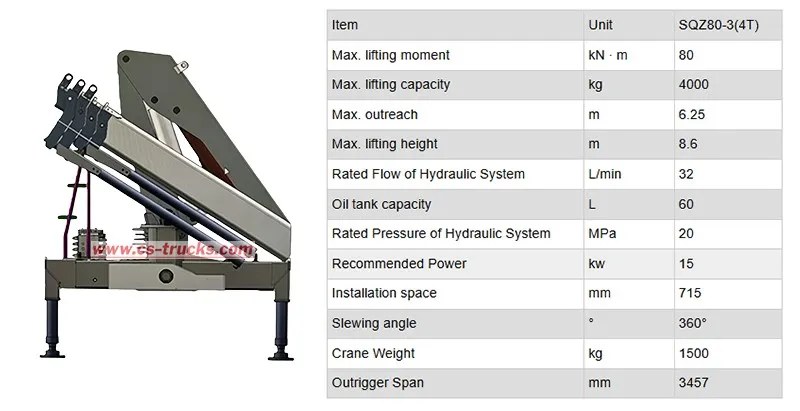
For example, this Beiben 6x6 offroad dropside truck with crane is equipped with an SQZ80-3 crane rated at 4,000 kg (4 tons). This represents the medium-duty segment, ideal for logistics and infrastructure work.
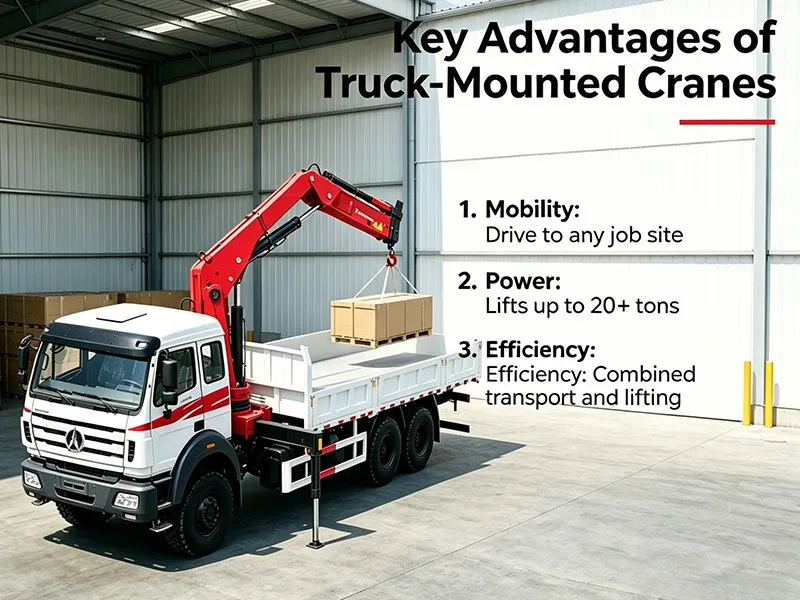
» I.Factors That Determine Lifting Capacity
Lifting capacity depends on mechanical design, stability systems, and operating conditions working together.
1. Chassis Strength and Truck Rating
The foundation of lifting capacity starts with the truck chassis.
- Light-duty cranes on medium chassis typically lift 2 to 5 tons, suitable for urban maintenance and light construction.
- Heavy-duty cranes on reinforced industrial chassis can handle 10 to 20 tons or more.
- The chassis must withstand not only static load weight but also dynamic forces during lifting, extending, and rotating.
Beiben 2642 6x6 off-road chassis
● Cabin: NG80 long cab, 2 seats with one sleeper berth, with A/C
● Engine: Weichai WP12.420E32, 420 HP, inline 6 cylinder, 11.596 L displacement, Euro III
● Transmission:FAST 9JS150A, 9-speed forward and 1-speed reverse
● Front Axle Load:7 ton drive axle
● Rear Axle Load:13 ton × 2, Beiben double reduction axles
● Cargo Box Dimensions:6000 × 2550 × 550 mm, dropside type
● Tires: 14.00R20, 6 wheels plus 1 spare
2. Hydraulic Crane System Design
The hydraulic system powers the lifting operation. High-pressure cylinders provide lifting force, while control systems regulate movement for smooth operation. Modern cranes use multi-section telescopic booms, allowing operators to adjust reach and angle while maintaining load stability.
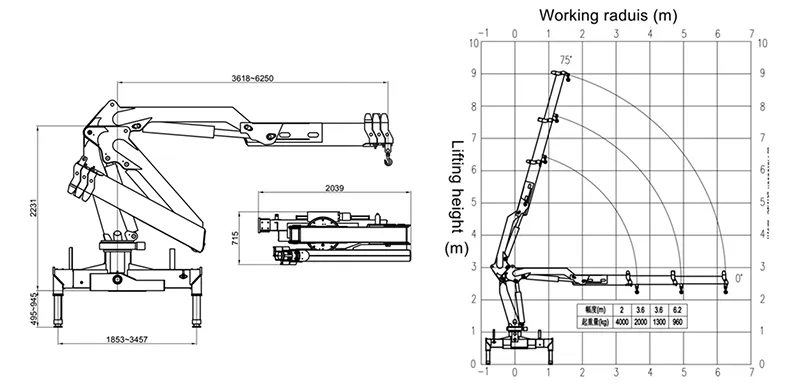
However, as the boom extends, lifting capacity decreases due to leverage - maximum weight is typically achieved at shorter boom lengths.
The SQZ80-3 crane on this Loader crane operates at 20 MPa hydraulic pressure, with a rated flow of 32 L/min and a 60 L oil tank. Its maximum lifting capacity of 4,000 kg is achieved at shorter radii

3. Outriggers and Stability Support
Stability is one of the most critical factors. Outriggers spread the load across a wider area and prevent tipping. Without proper outrigger deployment, lifting capacity drops significantly because the truck relies only on its chassis weight for balance.
» II. Typical Lifting Ranges by Truck Crane Type
| Truck Crane Type | Lifting Capacity | Best Applications |
|---|---|---|
| Light-duty | 2 - 5 tons | Municipal services, small construction, utility work |
| Medium-duty | 5 - 10 tons | Logistics, construction, infrastructure maintenance |
| Heavy-duty | 10 - 20+ tons | Ports, large construction sites, industrial projects |
» III. Operational Factors That Affect Lifting Capacity
Boom Extension and Load Radius
As the boom extends further from the truck, effective lifting capacity decreases due to increased leverage and reduced stability. Operators must calculate load radius carefully, especially when working at maximum extension.
Ground Conditions and Environment
Soft or uneven terrain significantly reduces safe lifting capacity. Proper ground preparation and outrigger placement are essential. Weather conditions like strong winds also affect lifting safety.
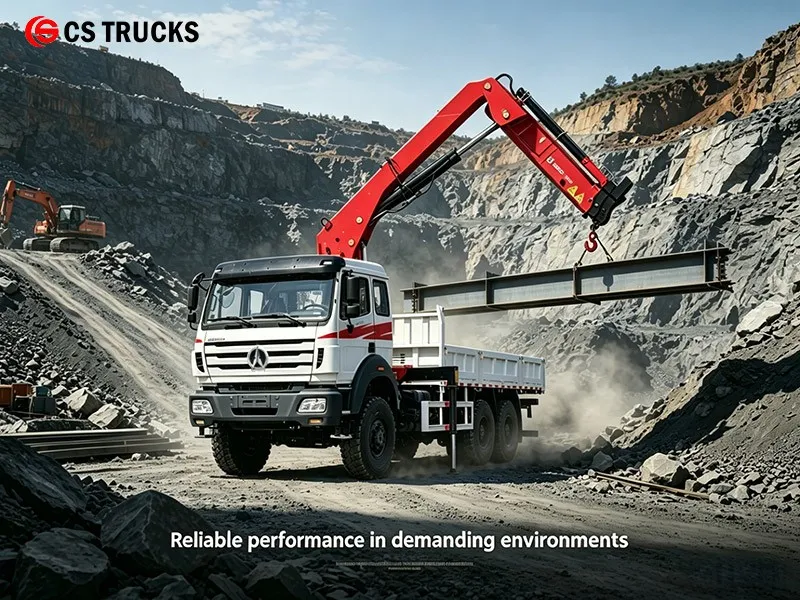
This Crane truck is built for offroad conditions with a 6x6 drive system, 14.00R20 tires, 29° approach angle, and 52° departure angle. However, ground preparation remains essential for safe crane operation.
Operator Skill and Safety Procedures
Even the most advanced crane depends on skilled operators who understand load dynamics and equipment limits. Proper training and strict safety procedures prevent accidents and equipment damage.
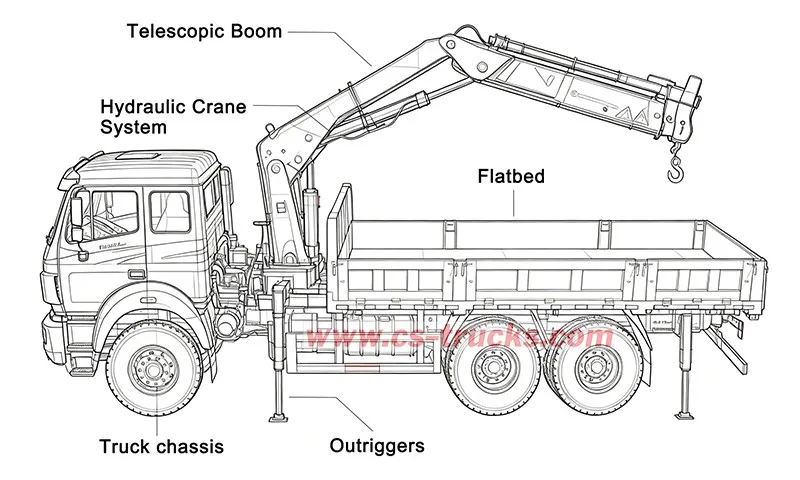
» IV. Key Components of a Truck-Mounted Crane
| Component | Function |
|---|---|
| Truck Chassis | Structural foundation; provides mobility |
| Hydraulic Crane System | Powers lifting; converts hydraulic pressure to mechanical force |
| Telescopic or Articulated Boom | Reaches and lifts loads; telescopic for height, articulated for tight spaces |
| Outriggers | Stabilizes vehicle; prevents tipping during lifting |
| Load Handling Attachments | Hooks, slings, winches; secures and lifts materials |
» V. Applications Across Industries
Construction and Infrastructure
Truck-mounted cranes lift steel beams, concrete panels, and heavy machinery components. Their mobility allows quick movement between job sites, reducing downtime. They are especially valuable in urban projects where space is limited and fixed cranes are impractical.
Utility and Municipal Services
Municipal operations rely on these cranes for lifting utility poles, installing equipment, and supporting emergency repairs. Their flexibility makes them indispensable for maintaining public infrastructure.
Industrial and Logistics
In industrial settings, these cranes load and unload heavy equipment, machinery, and transport materials. They operate independently without fixed infrastructure, making them ideal for dynamic job sites.
» VI. Conclusion
The lifting capacity of a CS truck-mounted crane ranges from 2 tons to over 20 tons, depending on chassis configuration, hydraulic system design, boom type, and outrigger stability. Light-duty models serve urban maintenance and small construction. Medium-duty cranes handle logistics and infrastructure work. Heavy-duty units manage industrial projects and large-scale construction.