Water sprinkler trucks and dust suppression trucks are widely used in municipal sanitation, construction sites, industrial facilities, mining operations, and road maintenance. While both types of vehicles use water spray systems to control dust and improve environmental conditions, their design purposes and operating methods differ. Water sprinkler trucks are primarily used for road washing, ground watering, cooling, and routine dust prevention. Dust suppression trucks, on the other hand, are specifically designed to reduce suspended dust in the air by generating fine water mist to capture suspended particles, promoting dust settling.
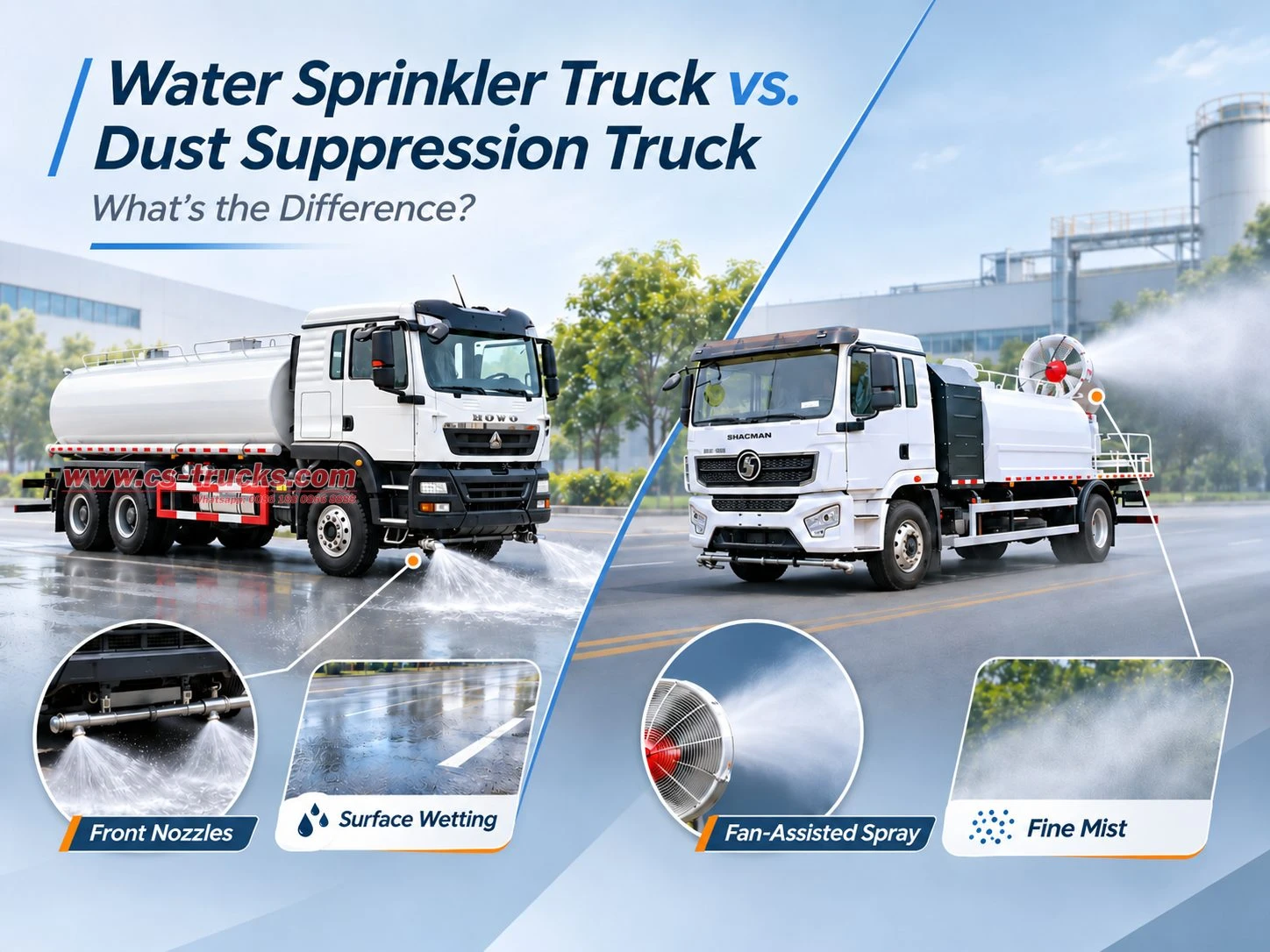
Understanding the differences between these two types of vehicles can help municipal departments and industrial enterprises select the appropriate equipment based on their actual operating environment.
» I. What is a Water Spraying Truck?
A water spraying truck, also known as a street cleaning truck or water tanker truck, is a specialized vehicle primarily used for road sprinkling, street cleaning, dust control, and green space irrigation. It mainly consists of a water tank, water pump, piping system, nozzles, and water cannon. Depending on the vehicle configuration, it can perform water spraying operations through front flushing, rear spraying, side spraying, and rear-mounted or top-mounted water cannons.
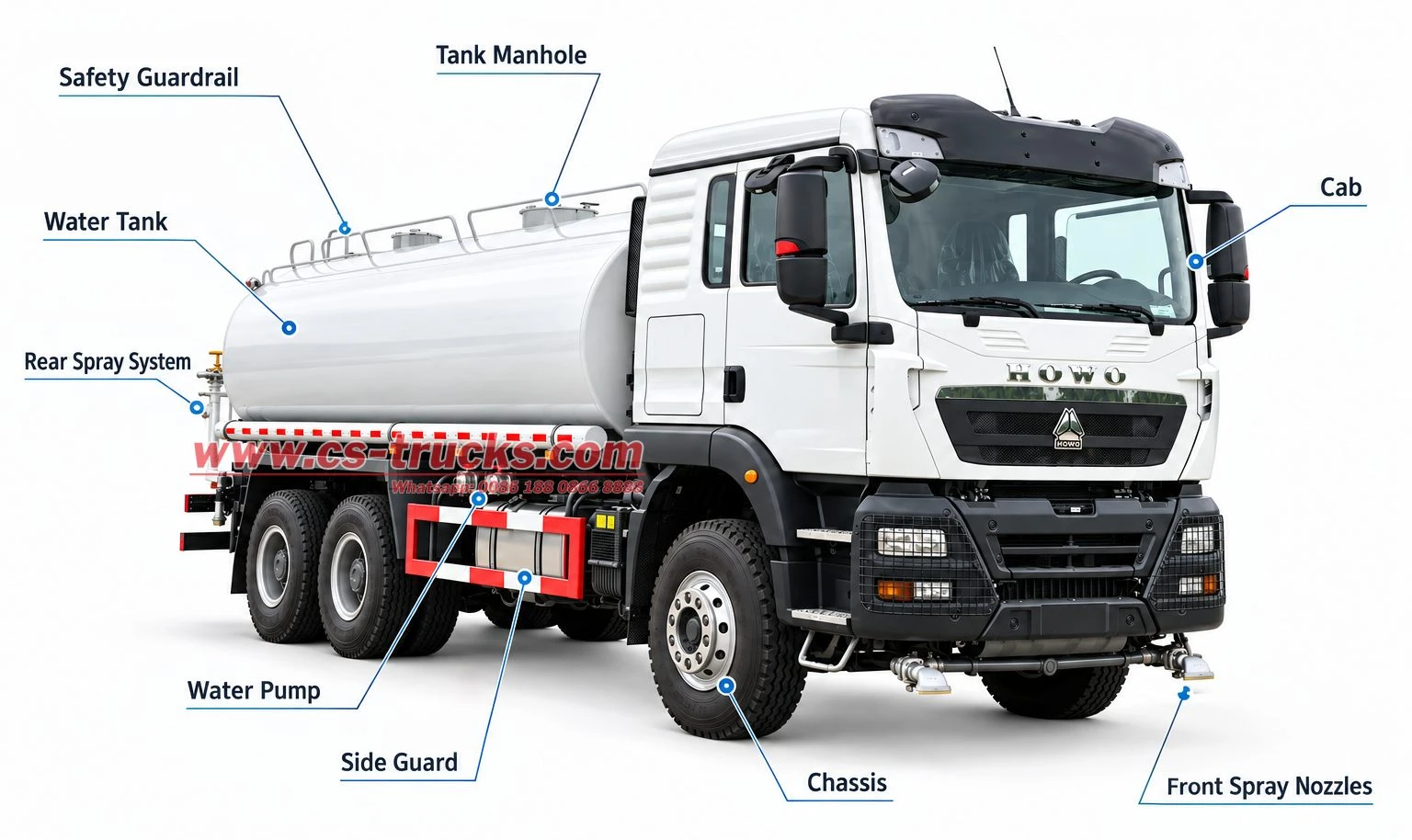
During operation, the water pump draws water from the tank and delivers it through the piping system to different spraying devices, spraying the water onto the road surface to keep the ground moist and reduce dust stirred up by vehicles and wind.
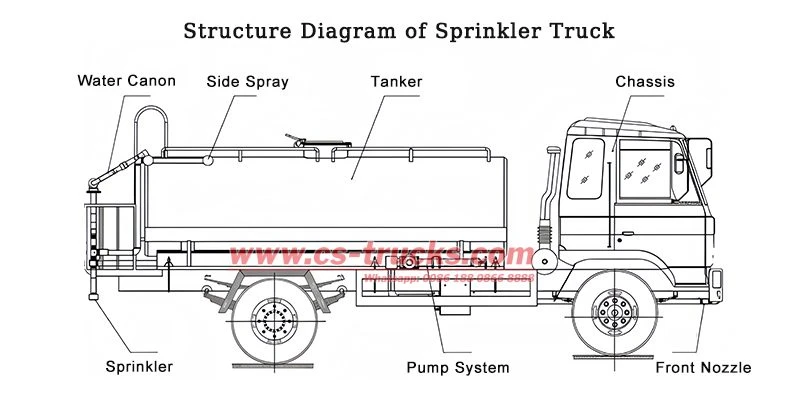
Main Components of a Water Sprinkler Truck
| Component. | Function |
| Water Tank | Stores water for spraying operations |
| Water Pump | Supplies water pressure and flow |
| Front Sprinklers | Spray water onto the road ahead |
| Rear Spray Bar | Distributes water across the road surface |
| Side Spraying Nozzles | Spray water toward roadside areas |
| Water Cannon | Provides directional water spraying |
» II. What Is a Dust Suppression Truck?
A dust suppression truck is a specialized vehicle designed to reduce airborne dust and control dust pollution. It is primarily used in construction sites, mines, coal yards, industrial plants, and other dusty working environments.
Unlike ordinary water trucks, dust suppression trucks can be configured with different types of spraying systems depending on the working environment and dust control needs.
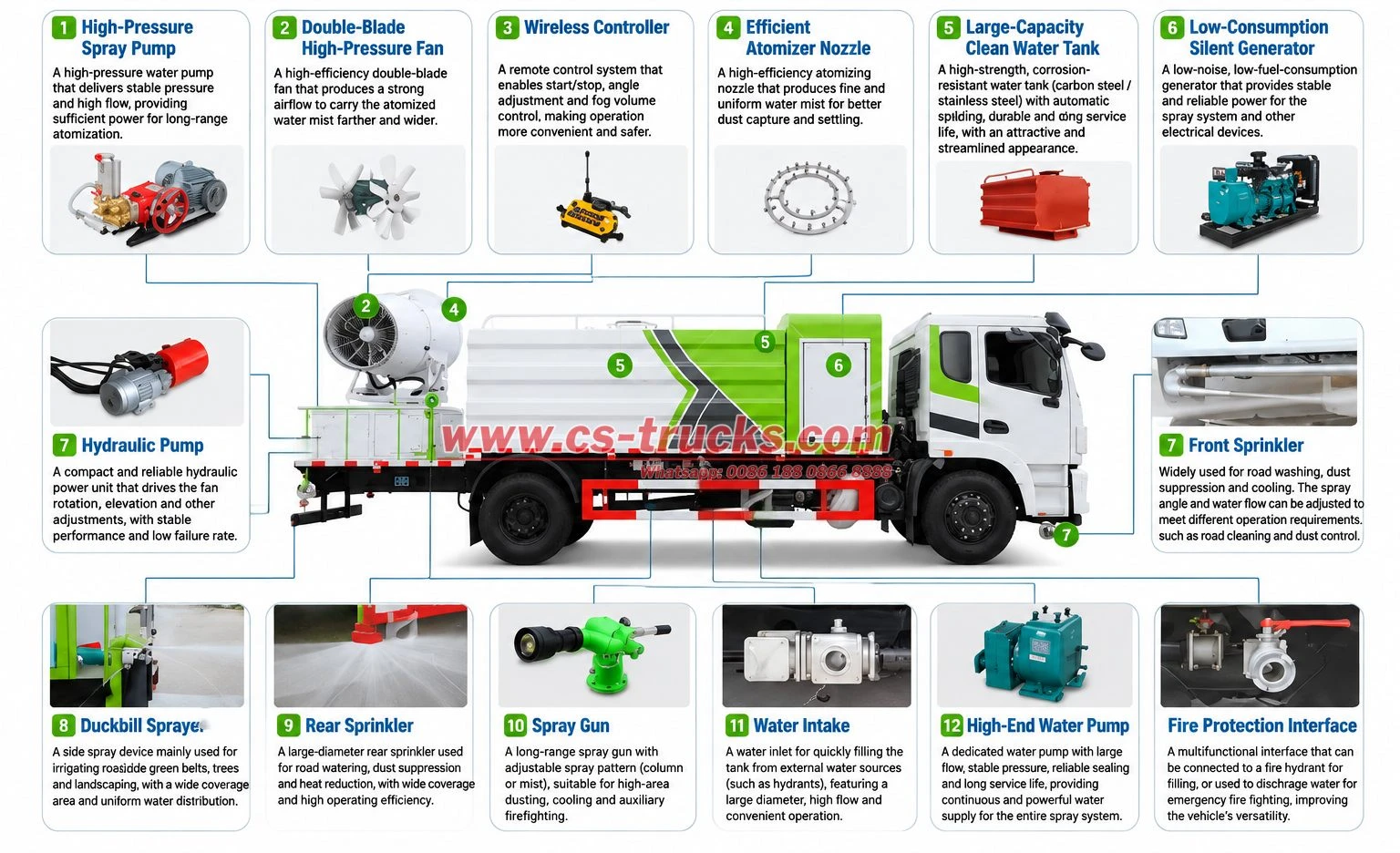
Common configurations include:
- Multiple Spray Nozzles: Multiple nozzles are installed on the top water supply line to spray water or dust suppressant in different directions.
- Spray Bar System: Multiple nozzles are arranged along the pipeline to achieve large-area spraying.
- Atomizing Spray System: Specialized nozzles produce finer water droplets for dust control.
- Fog Cannon System: Utilizes a fan and atomizing nozzles to deliver fine water mist to dusty areas over a greater distance.
Some dust suppression trucks use ordinary water as the spraying medium, while others are specifically designed for spraying chemical dust suppressants. The specific spraying medium and equipment configuration depend on the vehicle design and actual application requirements.
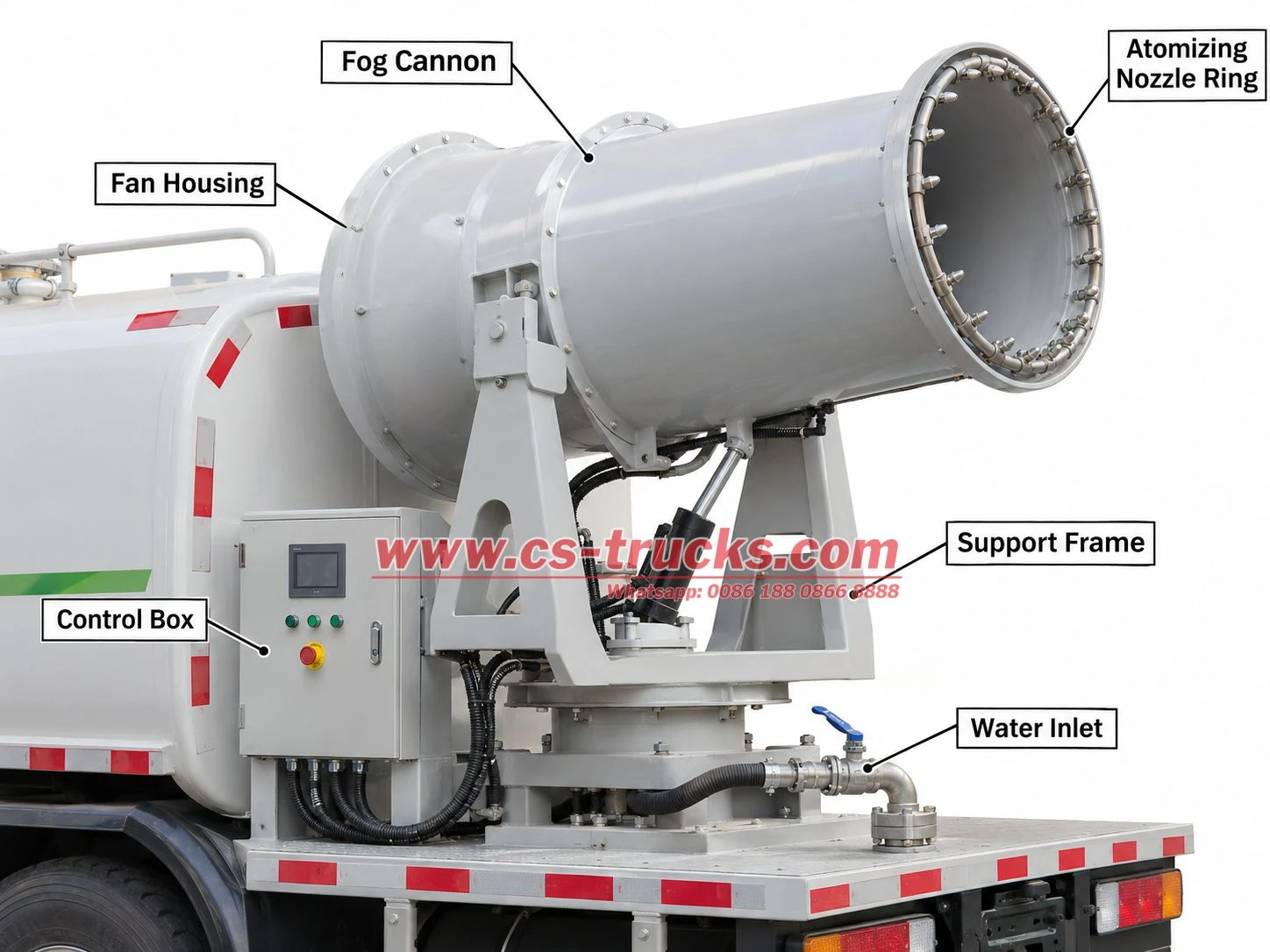
1. Multiple-Nozzle Spraying System
Multiple nozzles are installed along a top-mounted pipeline to provide multi-directional spraying. Suitable for vehicles designed to distribute dust suppressant or water over a wide area.
2. Spray Bar System
Multiple nozzles are arranged along a spray pipe to cover roads, ground surfaces, or designated working areas.
3. Atomizing Spray System
Specialized nozzles break liquid into smaller droplets to improve contact with airborne dust.
4. Fog Cannon System
A fan-assisted system projects atomized water over a longer distance toward targeted dust sources.
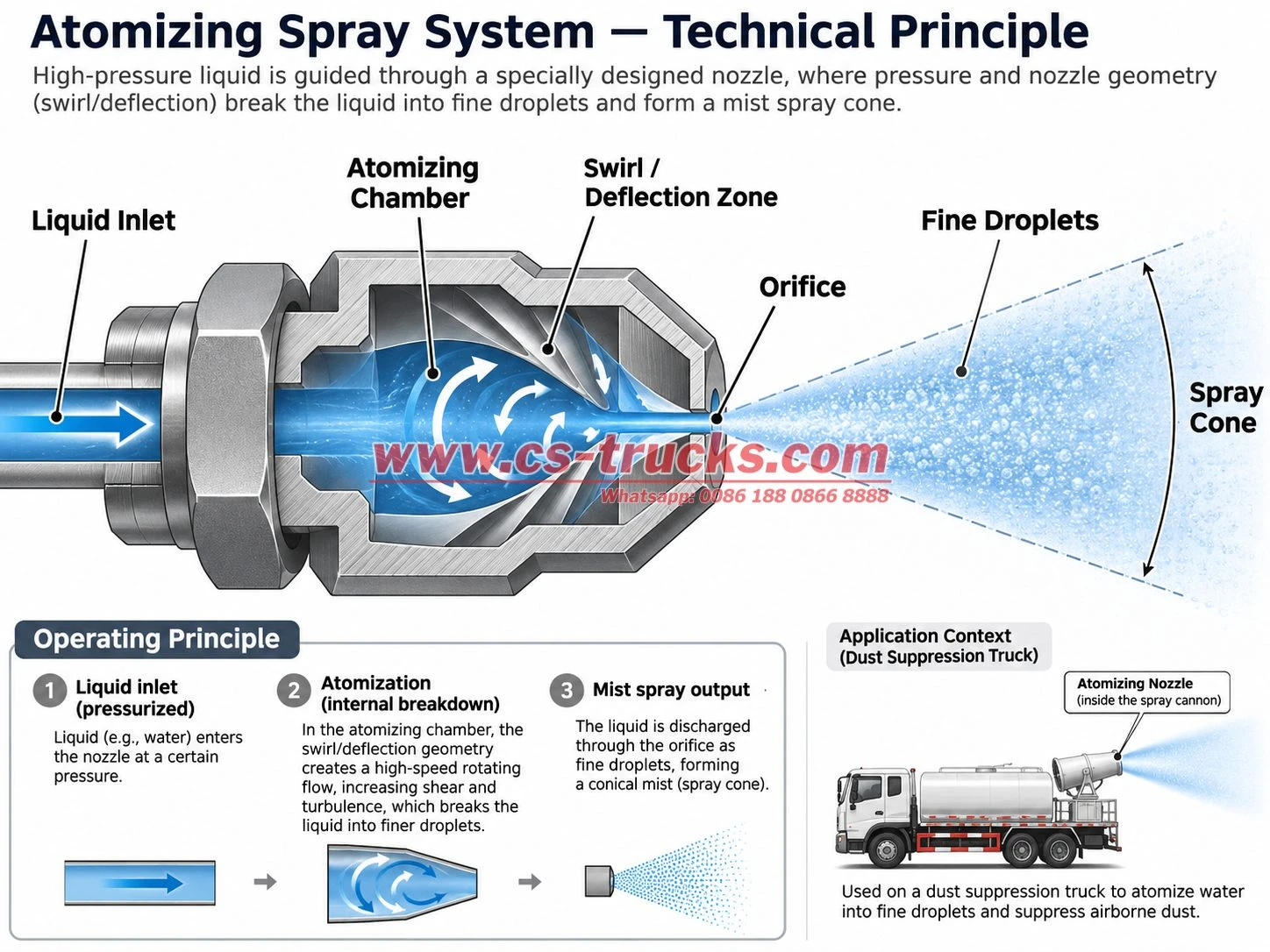
Main Components of a Dust Suppression Truck
| Component | Function |
| Storage Tank | Stores water or dust suppressant solution |
| Water Pump | Delivers liquid to the spraying system |
| Pipeline System | Transfers liquid to the spray outlets |
| Spray Nozzles | Distribute liquid over the target area |
| Control System | Controls spraying operations |
| Fog Cannon | Projects fine mist over a longer distance |
» III. Main differences between water sprinkler trucks and dust suppression trucks
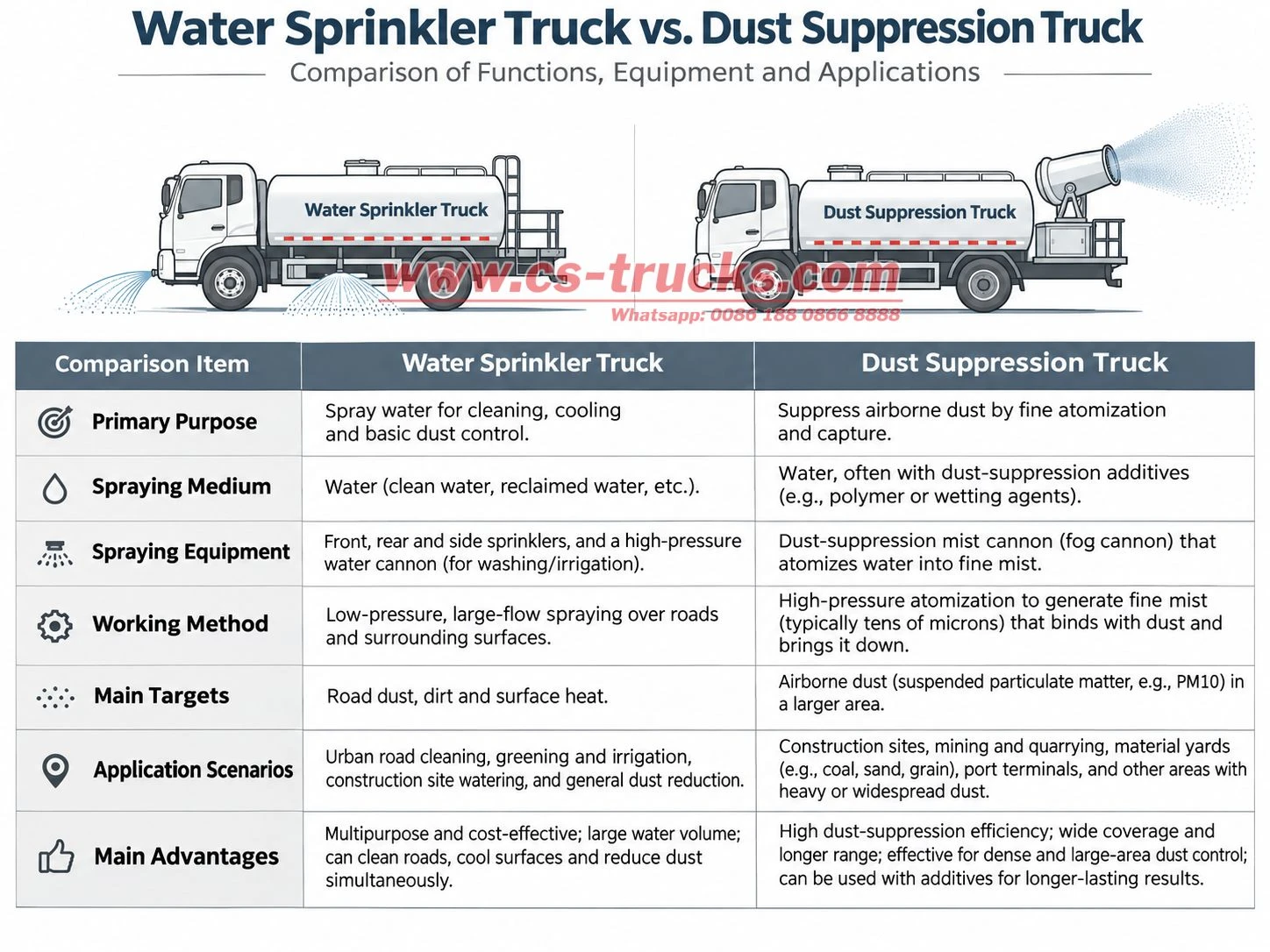
Although both types of vehicles achieve dust suppression through liquid spraying systems, their primary purposes and equipment configurations differ.
| Comparison Item | Water Sprinkler Truck | Dust Suppression Truck |
| Primary Purpose | Road watering and cleaning | Dust pollution control |
| Spraying Medium | Mainly water | Water or chemical dust suppressants |
| Spraying Equipment | Front spray, rear spray, side spray, water cannon | Multiple nozzles, spray bars, atomization systems, optional fog cannon |
| Working Method | Wetting road surfaces, washing away dirt | Wetting, capturing, binding, or stabilizing dust according to the characteristics of the medium |
| Main Targets | Roads and ground surfaces | Dust generation areas and airborne dust |
| Application Scenarios | Municipal roads, streets, green areas | Mines, coal yards, construction sites, industrial plants |
| Main Advantages | Road cleaning and routine watering | Specialized dust control configuration |
» IV. What are the differences in the working principles of the two types of vehicles?
How a Water Sprinkler Truck Works:
A water sprinkler truck completes its spraying operation through a water storage, pumping, and piping distribution system.
1. Water is stored in a water tank.
2. A water pump draws water from the tank.
3. The pressurized water is delivered through the piping system.
4. The water is discharged through front, rear, or side spray nozzles.
5. The water covers the road surface, reducing loose dust and washing away dirt.
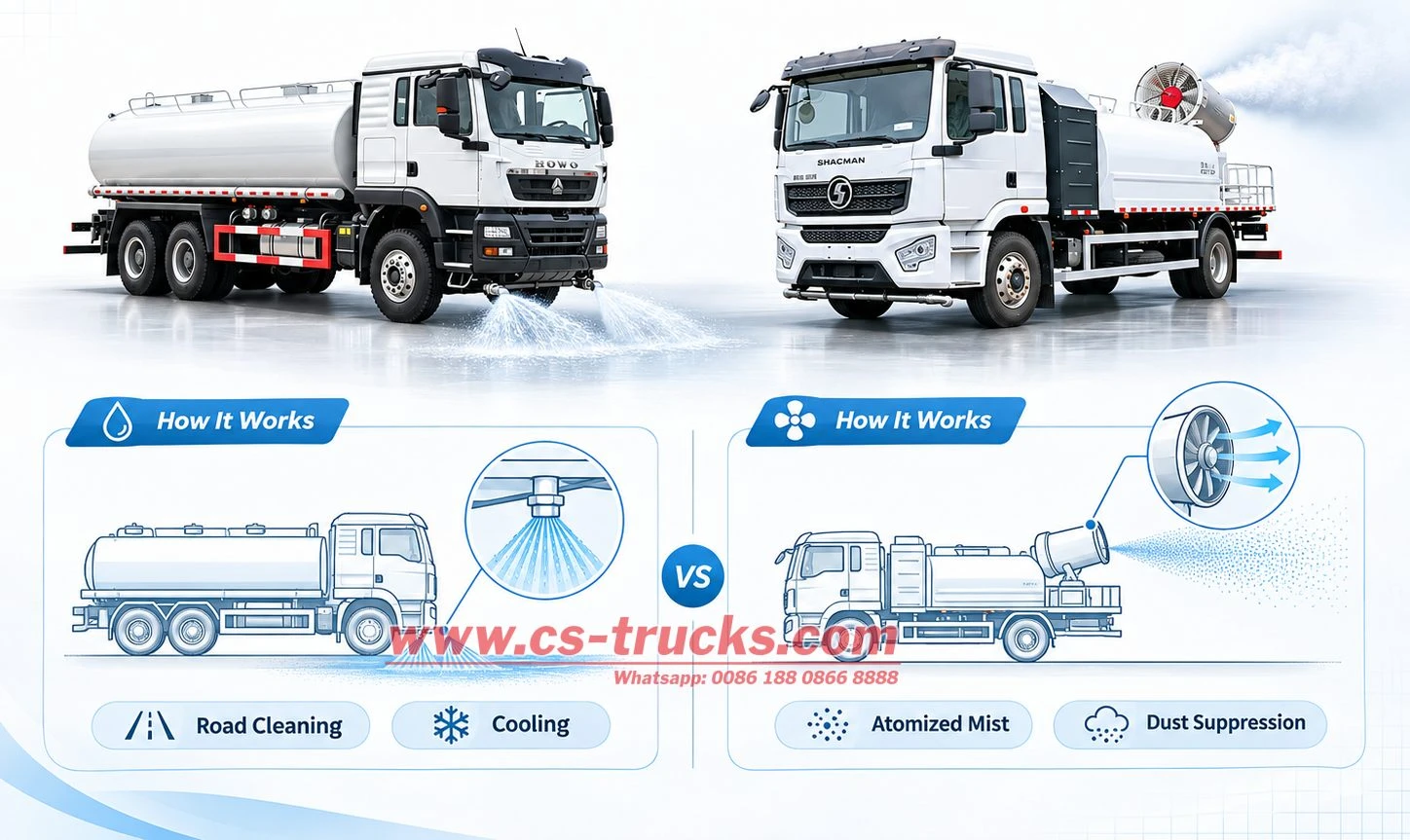
Dust Suppression Truck Working Principle:
Dust suppression trucks use a specialized spraying system to deliver water or dust suppressant solution to designated dust-generating areas.
1. Water or prepared dust suppressant solution is stored in a tank.
2. A water pump draws liquid from the tank.
3. The liquid is delivered to the spraying device via pipelines.
4. Multiple nozzles, spray pipes, or atomizing devices spray the liquid onto the target area.
5. Depending on its formulation, the liquid controls dust through wetting, trapping, binding, or surface stabilization.
How Does a Dust Suppressant Work?
Some chemical dust suppressants, in addition to the wetting effect of ordinary water, can provide additional dust control effects.
- Wetting effect: Helps the liquid spread and contact dust particles and material surfaces.
- Binding effect: Some formulations can enhance the adhesion between dust particles.
- Surface stabilizing effect: Some products form a protective layer after spraying and drying, reducing wind erosion and secondary dust generation.
» V. Different Applications
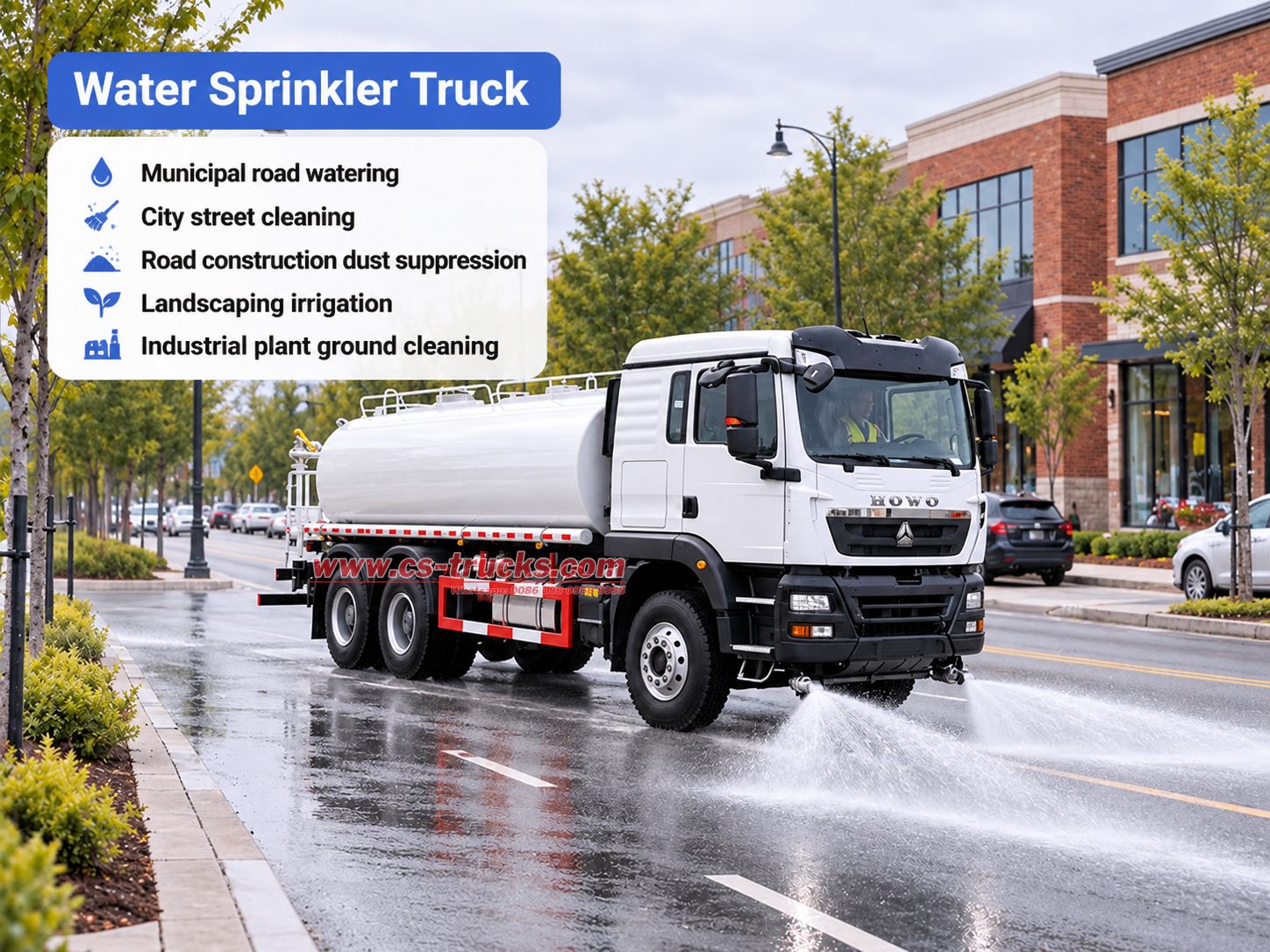
Water sprinkler trucks are mainly used for:
- Municipal road watering
- City street cleaning
- Road construction dust suppression
- Landscaping irrigation
- Industrial plant ground cleaning
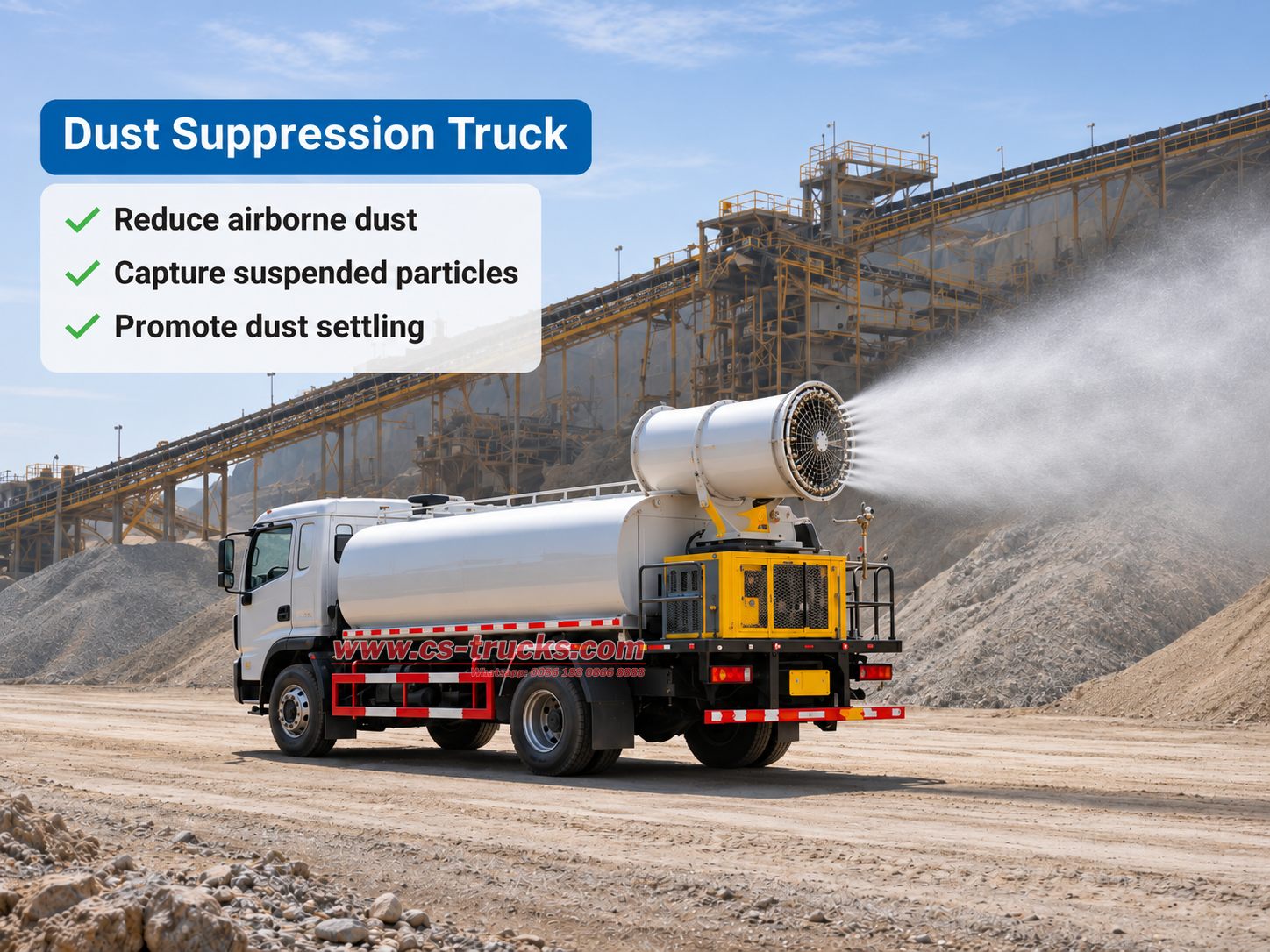
Dust suppression trucks are mainly used for:
- Mines and quarries
- Coal yards and material storage yards
- Construction and demolition sites
- Cement plants and industrial plantsPorts and bulk material loading and unloading areas
» VI. Frequently Asked Questions
Q1: Can water trucks be used for dust suppression?
A: Yes. Water trucks can reduce dust by wetting roads and exposed ground. However, for industrial dust control or large material storage yards, dedicated dust suppression trucks usually offer more suitable spraying equipment and treatment methods. (Note: For airborne dust at long distances or heights, their control capabilities are generally not as good as mist cannon systems.)
Q2: Are all dust suppression trucks equipped with mist cannons?
A: No. Mist cannons are just one type of dust suppression equipment. Depending on the actual application requirements, dust suppression trucks can also use different configurations such as multiple nozzles, spray pipes, atomization systems, or mist cannons.
Q3: Can dust suppression trucks spray chemical dust suppressants?
A: Yes. Some dust suppression trucks are specifically designed for spraying chemical dust suppressants. The vehicle's tank, water pump, pipelines, and nozzles need to be matched with the selected dust suppressant and its concentration.
Q4: Can dust suppression trucks also be used for road watering?
A: Yes. Some dust suppression vehicles are also equipped with front spray, rear spray, and side spray devices, enabling them to simultaneously perform dust suppression with mist cannons and ordinary road watering operations. (Specific details depend on vehicle configuration.)
Q5: What is the difference between a mist cannon and a water spray nozzle?
A: Water spray nozzles primarily spray water onto the ground, while mist cannons deliver fine water droplets to the target area through atomizing nozzles and airflow.
Q6: Which type of vehicle is more suitable for dust suppression in mines?
A: For airborne dust generated in mining operations, material storage yards, and crushing areas, dust suppression vehicles equipped with appropriate mist cannons are generally more suitable. Water spray trucks can be used in conjunction with mist cannons to spray water on mining transport roads for dust suppression.
» VII. Summary
Suitable Situations for Using Water Sprinkler Trucks:
Primarily used for road watering and washing.
The main task is to reduce dust from dry road surfaces.
Needs to water roadside greenery.
Needs multi-functional vehicles for routine maintenance of municipal roads.
Suitable Situations for Using Dust Suppression Trucks:
Needs to control dust in mining or industrial areas.
Dust mainly originates from material transportation, crushing, or stockpiling.
Requires specialized spraying equipment for targeted dust control.
Operation requires the use of water or chemical dust suppressants.