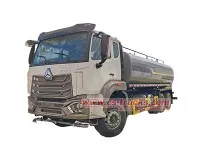
Compactor garbage trucks are the mainstream collection and transportation equipment for municipal and commercial sanitation projects worldwide. The efficiency of their operation largely depends on the compatibility between the garbage bins and the tipping and lifting mechanism. Different countries and regions use garbage bins with significantly different specifications and materials. If the bin's lifting lugs or dimensions are incompatible, problems such as inability to hook and lift, obstruction during dumping, and equipment damage may occur.

This article outlines the mainstream bin types compatible with compactor garbage trucks, optional mechanisms, and key procurement considerations to help sanitation operators and buyers quickly select the right equipment.
Main Types of Garbage Bins Compatible with Compactor Trucks
1. Standard Wheeled Plastic Garbage Bins
This is the standard compatible bin type for rear loader and side loader compactor garbage trucks, which meets EN international sanitation standards. It is equipped with lifting lugs and rollers, and automatically completes the grabbing, lifting and dumping operations by relying on the hydraulic bin hanging mechanism at the rear of the vehicle.
- 120L: Suitable for small residential locations with low waste volume.
- 240L: The standard bin type for urban communities and streets worldwide; standard configuration for most compactor garbage trucks.
- 660L: Suitable for large capacity collection in commercial locations such as shopping malls, schools, and industrial parks.
- 1100L: Suitable for high volume waste collection points in large commercial districts and industrial parks; requires an optional reinforced lifting mechanism.

2. Steel Garbage Bins
300L standard steel trash bin, wear resistant and impact-resistant, suitable for construction waste and heavy mixed waste, suitable for harsh working conditions, and requires a certain load bearing strength of the lifting frame.
Note: Metal buckets are heavier, so you need to confirm the rated load capacity of the lifting mechanism when purchasing.
3. Large Commercial Dumpster Metal Case
Large capacity steel commercial waste bins, typically 2-6 yd³, are mostly used in factories and large commercial areas. They require additional modification to a large forklift/tipping mechanism; ordinary bin hanging devices cannot be used directly.
4. Alternative Loading Hoppers (for sites without standard bins)
In construction sites and rural towns where standardized trash cans are unavailable, the hanging bin mechanism can be removed and replaced with various types of hoppers, allowing for direct material loading without the need for trash cans.
- Triangular bucket: Collects construction waste and large, loose debris.
- Large floor bucket: For centralized loading of bulk waste; can be used with a loader.
| Container Type | Common Specification | Matching Mechanism | Application Scenarios |
| Wheeled Plastic Bins | 120L/240L/660L/1100L | Standard bin lifting unit | Residential areas, streets, shops, and school campuses |
| Steel Garbage Bins | 300L | Reinforced bin lifting unit | Heavy waste, harsh working conditions |
| Commercial Steel Dumpster | 2-6 yd³ | Special tipper mechanism | Large commercial and industrial parks |
| Triangular / Floor mounted Hopper | 1-5m³ | Hopper attachment | Construction sites, areas without standardized trash cans |
Key Factors Affecting Bin Compatibility
1. Lifting Lug Structure
The lifting lugs are crucial. The opening size and spacing of the lugs must match the vehicle's lifting forklift. Even with the same volume, different lugs will prevent us from using the garbage can. For overseas projects, it's essential to confirm whether the local EN1501 sanitation standard is being implemented.

2. Weight Limit
The lifting mechanism has a rated load capacity. The total weight after being filled with garbage cannot exceed the mechanism's parameters. For large capacity metal bins, the load capacity needs to be verified.
3. Vehicle Loading Mechanism Configuration
Basic compactor garbage trucks generally only come standard with a 240L hanging bin; 660L, 1100L, and large iron bins are optional and must be specified when ordering.
4. Garbage Type
For kitchen waste and high moisture garbage, thickened, corrosion resistant bins are preferred to extend their service life.
Selection Advice for Different Scenarios
| Application Scenarios | Recommended Bin Type | Compatibility Requirements |
| Residential areas, municipal streets | 120L/240L Wheeled Plastic Bins | Standard upgrade mechanism, globally compatible |
| Shopping malls, industrial parks, and campuses | 660L/1100L Large Plastic Bins | A reinforced lifting device is required |
| Industrial plant area, heavy waste | 300L Steel Garbage Bins | Equipped with a high load bearing reinforced frame |
| Large commercial and factory areas | 2-6 yd³ Steel Dumpster | Customized dedicated box flipping system |
| Construction sites, rural areas | Triangular Hopper/floor Hopper | Remove the bucket hanging mechanism and replace the hopper device. |

Common Misconceptions
1. Focusing only on volume
Even with the same 240L garbage bin, different manufacturers may have different lifting lug spacing, potentially making it impossible to hang.
2. Defaulting to all bin types
Many buyers mistakenly believe that compactor garbage trucks come with compatibility for all bin types, considering large bins as optional extras.
3. Ignoring total weight
Focusing only on the empty weight of the garbage bin, ignoring the total weight when full, can easily cause deformation and damage to the lifting mechanism.

Conclusion
Compactor garbage trucks are compatible with plastic wheeled garbage bins, steel garbage bins, large commercial iron boxes, and various bulk hoppers. 240L plastic bins offer the most universal compatibility globally; larger capacity, metal containers require additional support and improved lifting mechanisms.
When procuring sanitation projects, it is essential to collect the lifting lugs and dimensions of garbage bins currently in use locally and provide this information to equipment manufacturers for compatibility confirmation, ensuring the equipment can be immediately put into operation upon arrival.
Frequently Asked Questions
Q1: What is the standard size of the garbage bins used by compactor trucks?
A: The globally common mainstream size is 240L plastic garbage bins, which are standard on most compactor trucks.
Q2: Can 660L and 1100L bins be used directly?
A: No, they cannot be used directly; a reinforced lifting mechanism is required as an optional extra.
Q3: What is the difference between plastic and steel bins?
A: Plastic bins are universal and lightweight; steel bins have a stronger load bearer capacity and are suitable for heavy garbage, but require a reinforced bin-hanging frame.
Q4: What is the most common reason for garbage bin mismatch?
A: Mismatch in lifting lug spacing and opening size, unrelated to bin volume.
Q5: Which compactor truck, side loader or rear loader, is more compatible with bin types?
A: Rear loader trucks have wider compatibility and can support large capacity bins; side loader trucks are more suitable for standard 240L small bins.