

Hooklift garbage trucks, with their detachable containers, high efficiency transport, and ability to handle multiple containers per truck, are the mainstream equipment for municipal sanitation, community cleaning, industrial parks, and garbage transfer stations worldwide. However, in long term use, the most frequent customer complaints are weak lifting, slow container hooking, inability to lift when fully loaded, and stopping mid lifting. Many maintenance personnel mistakenly believe it's a hydraulic pump failure and blindly replace it, which neither repairs the problem nor reduces costs.
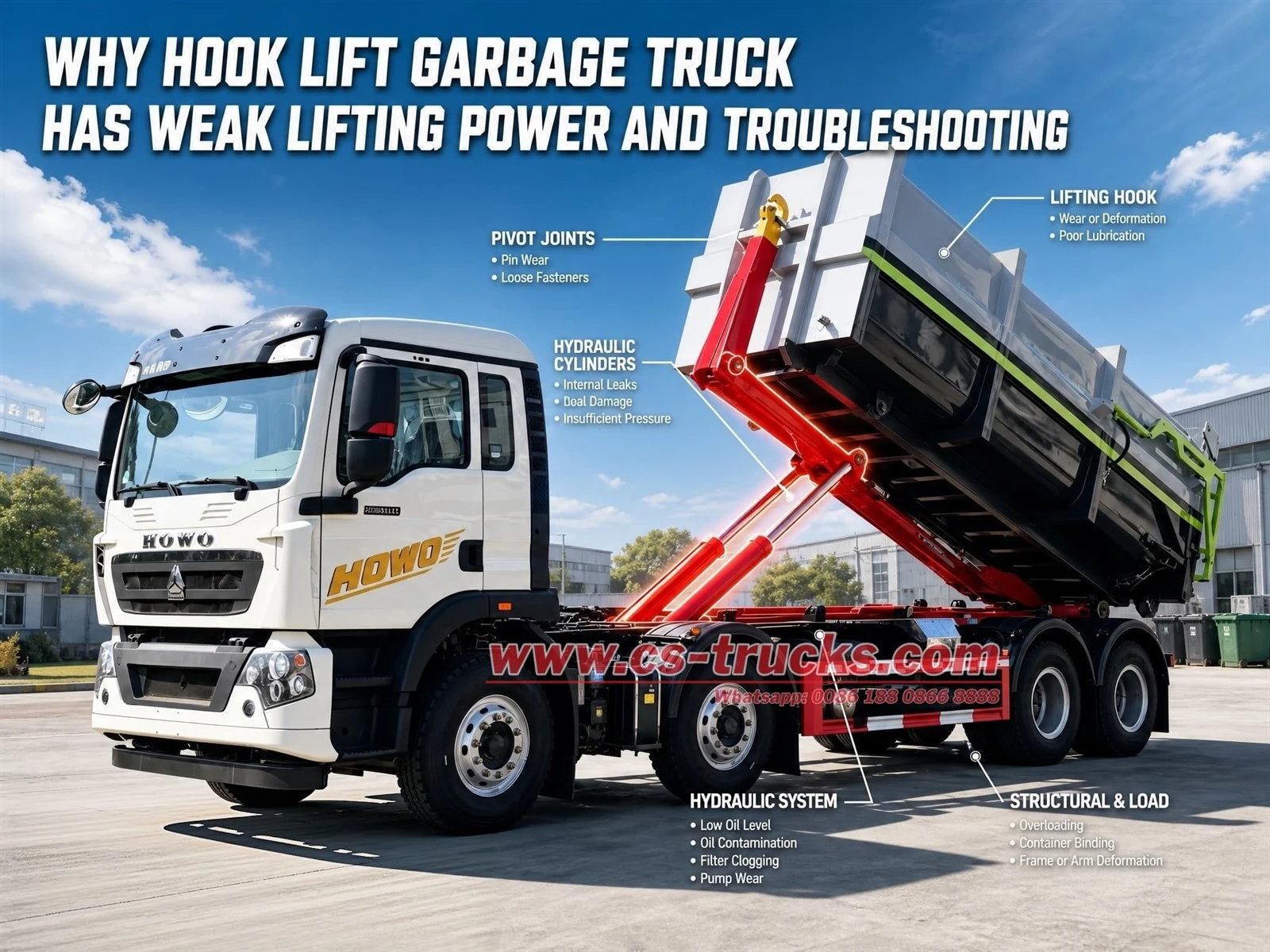
This article will systematically break down the core problem of weak lifting of hooklift garbage trucks from four dimensions: high frequency fault root causes, hierarchical troubleshooting logic, precise solutions, and daily prevention plans. It is adapted to overseas construction site practical maintenance, equipment procurement and acceptance, and fleet daily operation and maintenance scenarios, helping customers to quickly self-check and repair faults at low cost.
How to Distinguish Normal Slow Lifting and Equipment Failure
Before troubleshooting, distinguish between normal phenomena and equipment malfunctions to avoid ineffective repairs.
- Normal Operating Conditions: Unloaded lifting speed is normal, while fully loaded speed is slightly slower, which is within the reasonable load loss range of the hydraulic system.
- Faulty Operating Conditions: Unloaded lifting is noticeably choppy, fully loaded lifting is completely impossible, pressure is released and the vehicle falls back during lifting, and hydraulic action is sluggish and weak. These are equipment malfunctions requiring professional repair.
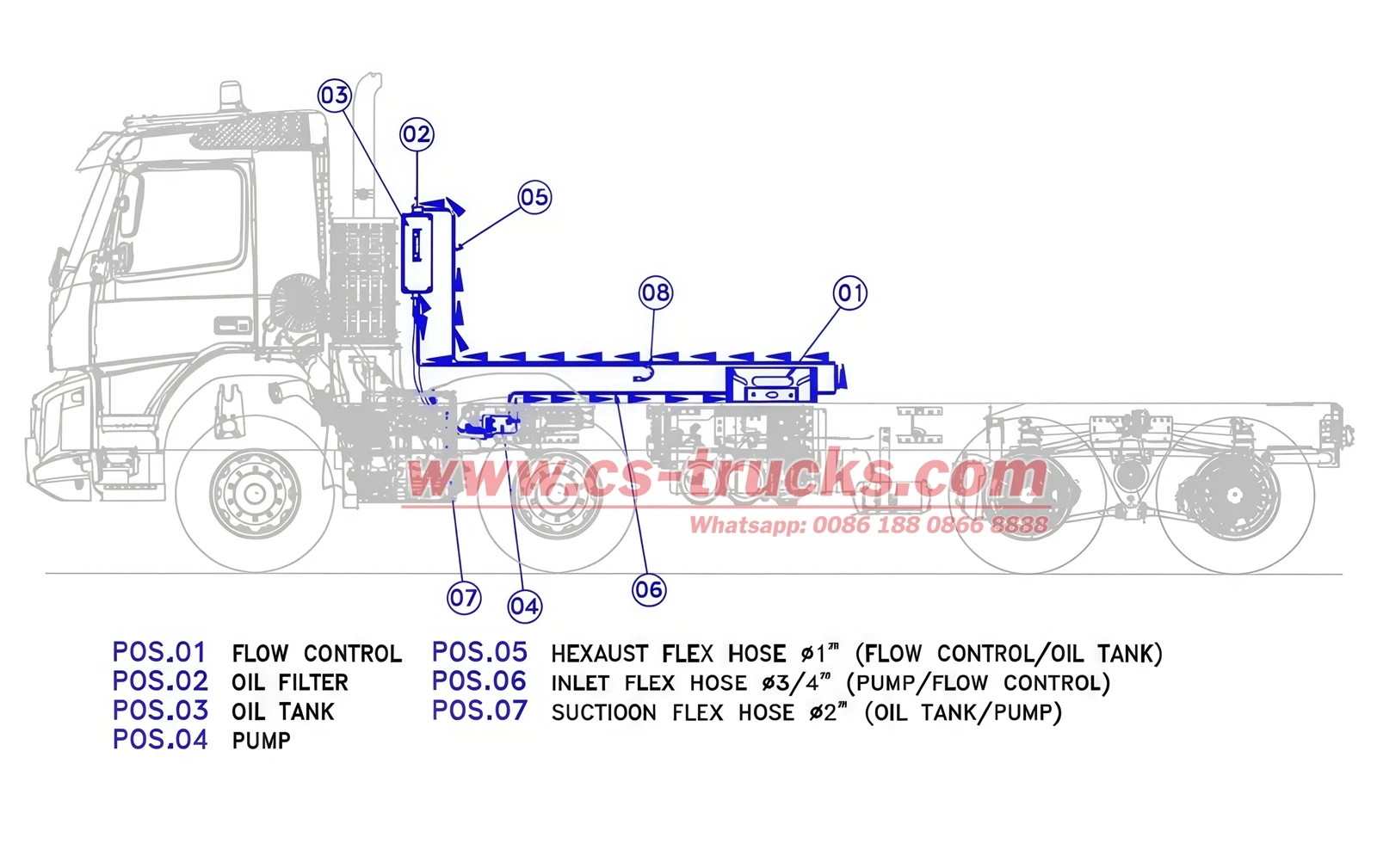
The lifting system of a hooklift garbage truck relies on the coordinated work of a hydraulic pump, multi way valve, hydraulic cylinder, hydraulic oil, seals, and power take off transmission system. Any abnormality in any of these components will directly lead to insufficient lifting power.
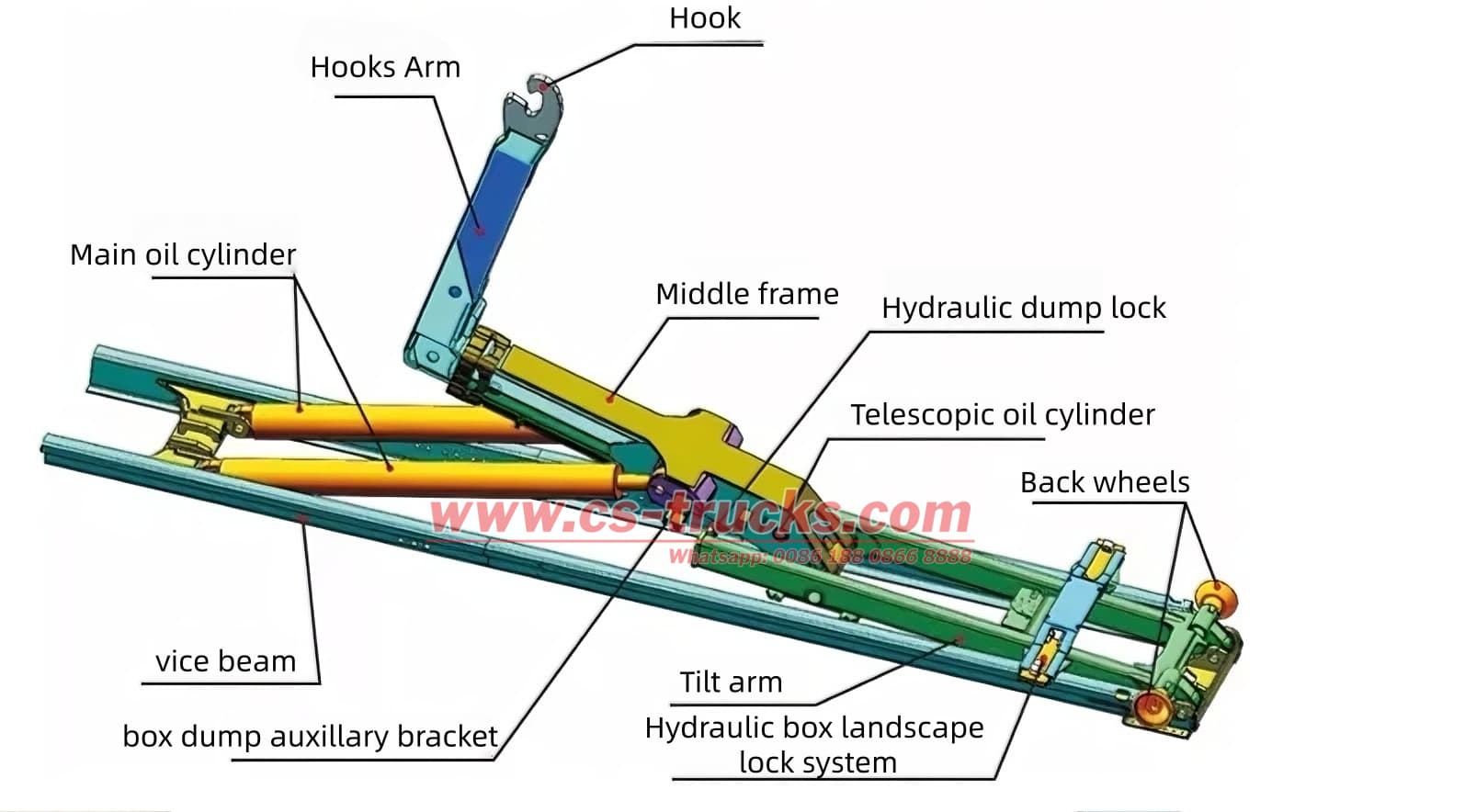
Why Does the Hook Arm Lack Lifting Power?
1. Hydraulic Oil Problem
Hydraulic oil is the power medium of a hydraulic system and also the most common source of failure.
- Insufficient hydraulic oil level: Low oil level leads to cavitation, failure to build pressure, and a significant reduction in lifting power;
- Deteriorated hydraulic oil, water contamination, or excessive impurities: Inadequate oil viscosity can cause blockages in the oil circuit and obstructed pressure transmission;
- Incompatible oil type: Using low temperature hydraulic oil in high-temperature countries can lead to unstable oil pressure and weak lifting.
Outdoor operations, prolonged exposure to sunlight, and moisture during the rainy season greatly accelerate the aging and deterioration of hydraulic oil, a common problem for customers in Southeast Asia, Africa, and the Middle East.
2. Hydraulic Pump Wear And Oil Suction Failure
The hydraulic pump is the power source for the entire lifting system. Prolonged high frequency operation and contaminated oil can cause wear on the pump gears and internal pressure leakage:
- Oil suction filter blockage: Insufficient oil supply, pressure cannot be reached
- Pump body internal wear, excessive clearance: Internal leakage, inability to build up rated pressure
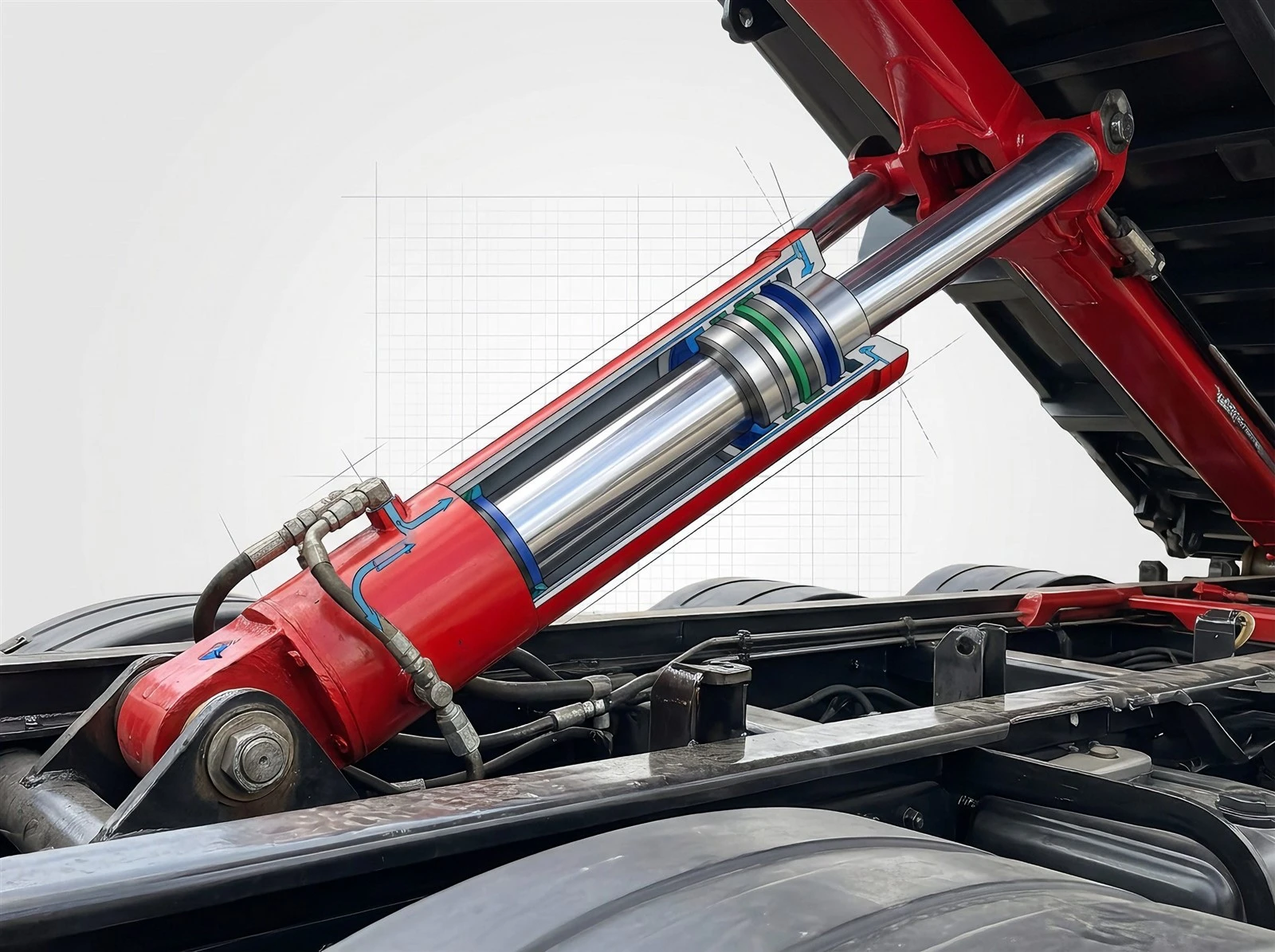
3. Internal Leakage In The Hydraulic Cylinder And Aging Of Seals
The main hydraulic cylinder and telescopic hydraulic cylinder rely on oil seals for pressure maintenance. High temperature aging and wear from impurities can cause the oil seals to break.This manifests as slow lifting, falling back halfway up the crane, and inability to lift under heavy loads. This is a core fault in older fleets and high frequency rental equipment.
4. Abnormal Pressure Regulation Of Multi Way Valve, Valve Core Blockage
The multiway valve controls the distribution and pressure regulation of the hydraulic oil circuit:
- Fatigue of the pressure regulating spring or excessively low pressure adjustment results in the system's working pressure failing to meet lifting requirements;
- Clogged valve cores due to sludge and impurities obstruct oil flow, directly causing sluggish hook arm movement and insufficient power, making it impossible to pull a fully loaded garbage bin.
5. PTO And Transmission System Malfunction
Incomplete PTO engagement, slippage, or a loose drive shaft can prevent the engine power from being fully transmitted to the hydraulic pump. What appears to be a hydraulic fault is actually a power transmission fault.
6. Air Leaks, Oil Leaks, And Pressure Drops In Pipelines
Aging and cracking of oil pipes, loose joints, and damaged gaskets can cause air to enter the oil circuit and oil leaks, resulting in unstable pressure, weak lifting vibration, and inability to complete heavy load lifting.
Standard Troubleshooting Steps
✅Basic Appearance And Oil Inspection
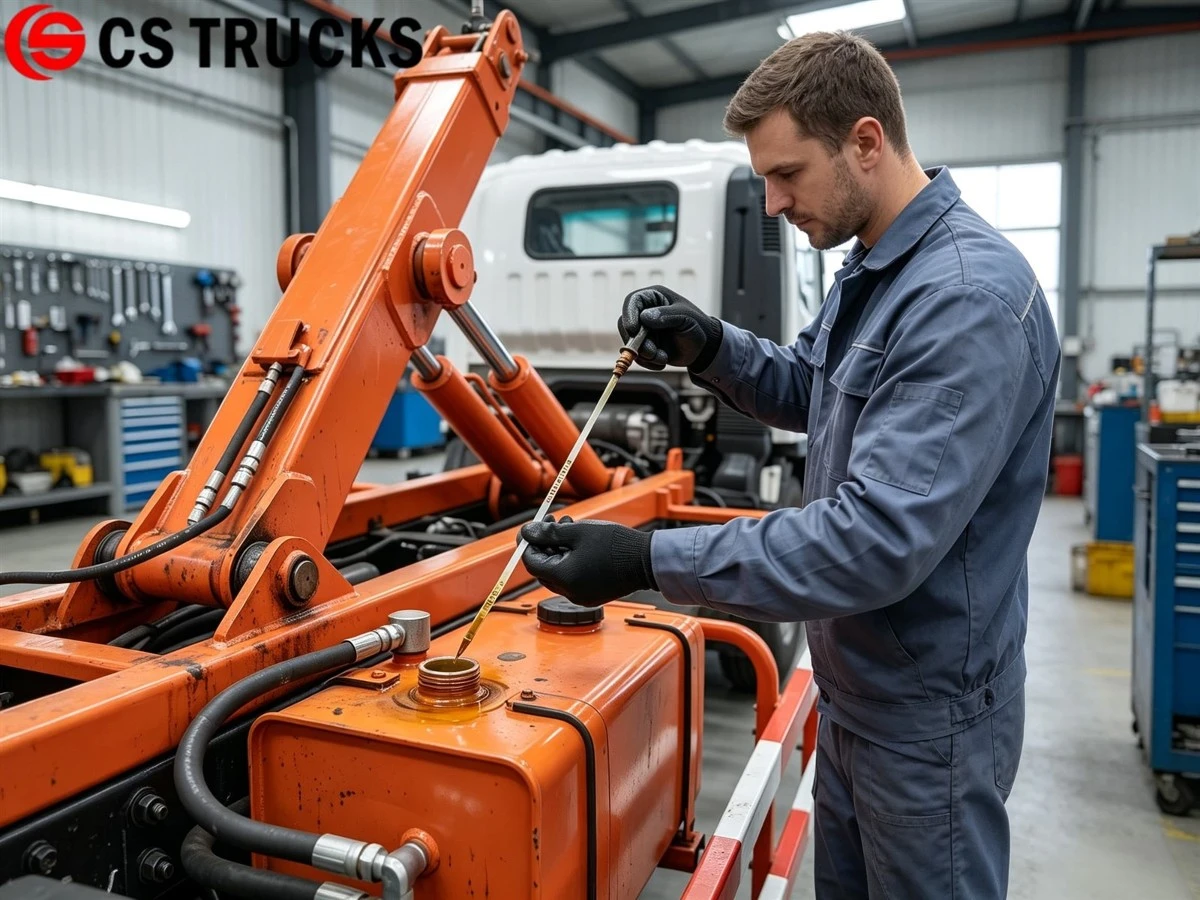
Check the hydraulic oil level and replenish to the standard mark; observe the oil color, replace it immediately if it is black, white, or cloudy; check all oil pipes and joints on the vehicle, check for oil leaks and air intake, and tighten any loose joints.
✅Inspect Pto And Power Transmission
Start the vehicle, engage the PTO, confirm that the PTO is fully engaged and there is no slippage or abnormal noise, check the tightness of the drive shaft, and ensure that the power input is normal.
✅Inspect The Filter Element And Oil Supply System
Disassemble the suction filter and return filter, clean the sludge and impurities, and replace them directly if the blockage is severe to solve the problem of insufficient oil supply.
✅Pressure Adjustment And Multiway Valve Inspection
Adjust the pressure regulating valve of the multiway valve according to the instruction manual to bring the system pressure to the manufacturer's rated value; clean impurities from the valve core and restore the oil circuit to smooth flow.
✅Hydraulic Cylinder And Hydraulic Pump Depth Inspection
If the above checks are ineffective, check for internal leakage in the hydraulic cylinder and damage to the oil seal; test the hydraulic pump pressure, and replace the pump body parts if the wear is severe.
Accurate Solutions for Each Fault
Choose the appropriate repair method based on the type of fault, and avoid blindly replacing core components.
| Faults | How to Solve |
| Fuel product malfunction | Replace with new hydraulic oil suitable for the local temperature, replace the entire set of hydraulic filters, and clean the oil tank. |
| PTO transmission failure | Re-engage the power take off, tighten the drive shaft, and replace worn parts promptly. |
| Pipeline depressurization | Replace aging oil pipes and gaskets, tighten all oil line joints, and purge air from the oil lines. |
| Insufficient pressure in multiway valve | Standard pressure regulation and cleaning of the valve core; if severely worn, replace the multiway valve assembly. |
| Oil cylinder internal leakage | Replace the entire set of hydraulic cylinder oil seals to restore pressure holding capability. |
| Hydraulic pump damage | Replacing the hydraulic pump with a brand new one completely solved the problem of insufficient power output. |
Daily Maintenance Prevention Guide
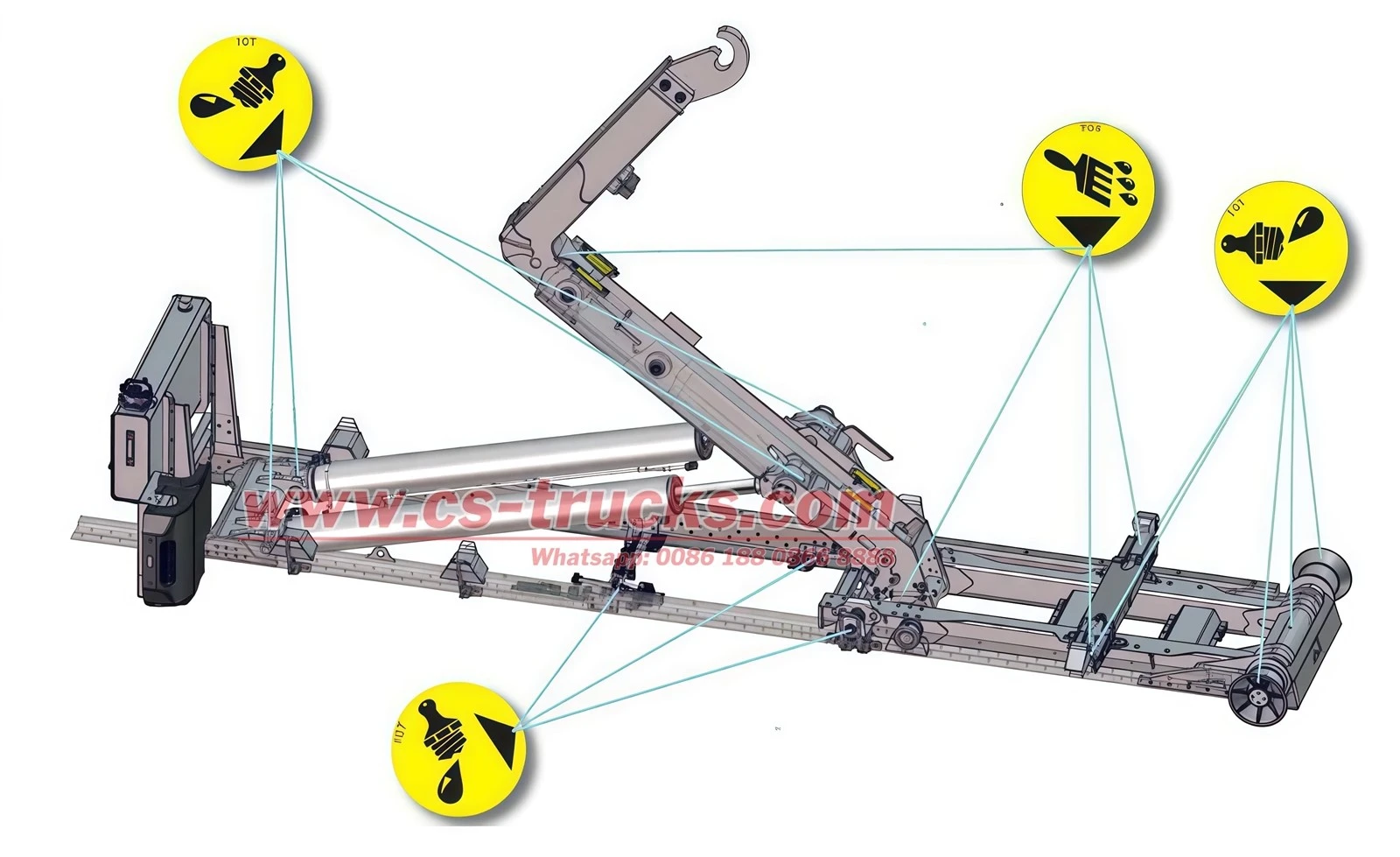
Choose the appropriate oil based on the climate; use high temperature resistant oil in high temperature areas and change the oil every 6–12 months.
Before each operation, check the oil level and pipeline condition to prevent operation when the oil is insufficient.
Prevent impurities from entering the oil circuit and wearing out the components, thus extending the life of the hydraulic system.
Overloading the garbage bin is prohibited to avoid overloading and damaging the oil cylinder and hydraulic pump.
Avoid sudden lifting and lowering to reduce impact and pressure relief in the hydraulic system.
Establish vehicle maintenance logs to facilitate tracking of oil change and filter cleaning cycles.
Frequently Asked Questions
Q: Does a lack of lifting power necessarily mean the hydraulic pump is faulty?
A: Not necessarily. More than 60% of hydraulic failures are caused by clogged hydraulic oil and filters, improper pressure regulation, or pipeline depressurization. Prioritize checking low cost items; there is no need to directly replace the hydraulic pump.
Q: Normal empty lifting but weak full load lifting?
A: It is highly likely that the system pressure is too low, there is a slight internal leak in the hydraulic cylinder, or the filter element is clogged. Under heavy load, the pressure is insufficient to support the lifting operation.
Q: Why does the hook arm jitter during lifting?
A: The problem is usually caused by air entering the hydraulic system or deterioration of the hydraulic fluid. Thoroughly bleeding the fluid and replacing the hydraulic fluid will quickly fix the issue.
Q: How to extend the service life of hook lift hydraulic systems?
A: Regular oil changes, frequent filter replacements, avoiding overloading, and standardized operations are the core ways for overseas fleets to reduce operating and maintenance costs.
Conclusion
The lack of lifting power in hooklift garbage trucks is mostly due to repairable faults caused by improper maintenance, aging parts, incorrect parameter adjustments, or incompatible oil. It is rarely due to the failure of core hardware.
Mastering standardized troubleshooting procedures can quickly resolve 99% of insufficient lifting power issues, significantly reducing maintenance costs for overseas fleets and minimizing equipment downtime.


